
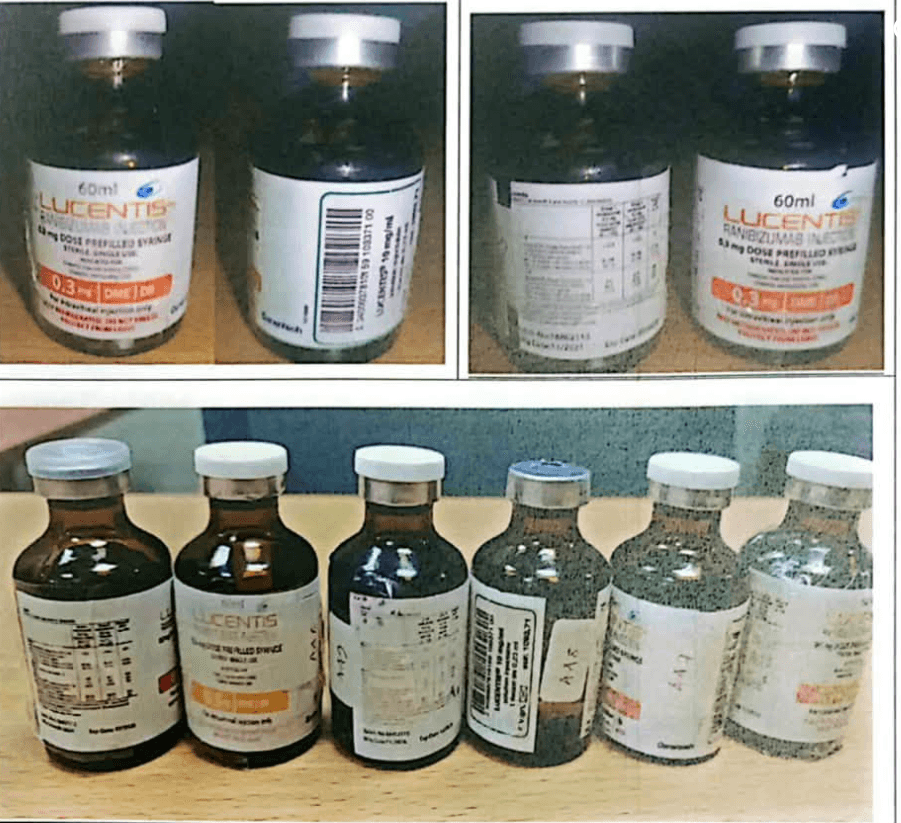
The Pharmacy and Poisons Board has warned the public and healthcare providers against a falsified Lucentis (Ranibizumab) 0.3mg injection that has been detected in circulation in the Kenyan market.
The affected products bear batch numbers 18862110 and 18802112 and misleadingly claim to have been manufactured by Genentech.
Pharmacy and Poisons Board Chief Executive Officer Dr Ahmed Mohamed said the falsified product was identified in the local market following investigations.
The Board compared the suspected falsified product with the genuine product supplied by Novartis Overseas Investment AG and identified several differences.
The falsified product is labelled Lucentis, while the brand registered in Kenya is Patizra. The suspected product is also labelled 0.3mg, while the registered product is labelled 10mg/mL.
There is also a difference in packaging. The falsified product is packed in a dark amber vial, while the genuine product comes in a clear glass vial.
The batch number, manufacturing date and expiry date on the suspected falsified product also do not match the details of the genuine product.
Mohamed warned that the falsified injection could pose a serious risk to patients.
“This batch of falsified Lucentis (Ranibizumab) 0.3mg injection may contain incorrect amounts of the active ingredient, no active ingredient at all, harmful contaminants, or undeclared substances, and therefore may not provide the intended therapeutic effect,” Mohamed said.
The Board has urged healthcare professionals to remain vigilant and verify the authenticity of medicines before dispensing them.
Healthcare facilities and professionals who encounter the suspected products have been advised to quarantine them and avoid dispensing or using them.
Procurement agencies, hospitals, distributors, healthcare professionals and members of the public have also been urged to immediately report any encounter with Lucentis (Ranibizumab) 0.3mg injections bearing batch numbers 18862110 and 18802112.
The Board further advised stakeholders in the pharmaceutical supply chain to procure health products and technologies only from manufacturers, importers, distributors and retailers licensed by the Board.
Stakeholders have also been urged to maintain proper procurement and supply records.
The Board warned that obtaining medicines and other health products from unlicensed sources puts patients at risk and violates the Pharmacy and Poisons Act, Cap 244 of the Laws of Kenya.
Mohamed said investigations into the falsified product had already led to the arrest of one person found in possession of the suspected falsified medicine.
“The Board, in collaboration with the relevant Government investigative and enforcement agencies, has made significant progress in investigations, including the arrest of one individual found in possession of the falsified product,” he said.
Further investigations are underway to establish the source of the product, how it entered Kenya and the extent of its distribution within the supply chain.
“The Board will continue to take firm regulatory and legal action against all persons found to be involved in the manufacture, importation, distribution or supply of falsified health products and technologies,” Mohamed said.
![Where to Access SHA Services in Elgeyo-Marakwet [Full List]](/_next/image?url=https%3A%2F%2Fstorage.googleapis.com%2Ferrands-mwendaa.firebasestorage.app%2Fimages%2Fe8e2dde9d8465cc796b8dfc406f970b595142eda.jpg&w=3840&q=75)
Comments
No comments yet. Be the first to share your thoughts.