
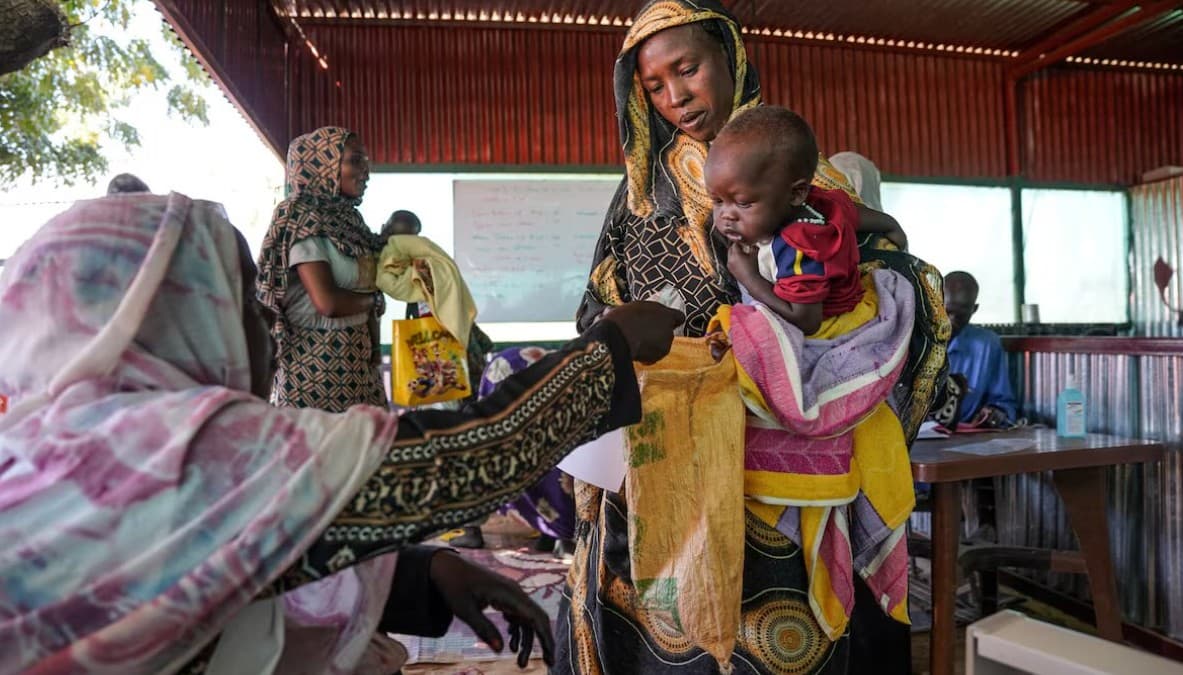
19.5 million people face acute food insecurity in Sudan as famine risk grows

The signatories called on parties to the conflict to remove obstacles to humanitarian operations, guarantee safe and unimpeded access to affected populations, and protect aid workers operating in increasingly difficult conditions.
An estimated 19.5 million people in Sudan are facing acute food insecurity, prompting the European Commissioner for Equality, Preparedness and Crisis Management and 32 governments to call for urgent humanitarian action to avert a potential famine and ensure assistance reaches affected populations.
In a joint statement, the governments of Australia, Austria, Belgium, Bulgaria, Canada, Croatia, Cyprus, the Czech Republic, Denmark, Estonia, Finland, France, Germany, Ireland, Italy, Hungary, Latvia, Luxembourg, Malta, the Netherlands, Norway, Poland, Portugal, Romania, Slovakia, Slovenia, Spain, Sweden, Switzerland, the United States and the United Kingdom warned that about 41 per cent of Sudan’s population is experiencing high levels of acute food insecurity, including five million people facing emergency levels of hunger.
“Conflict is the key driver of Sudan’s hunger crisis, displacing millions of people, damaging critical infrastructure and disrupting healthcare provision, food production, supply chains and markets. The situation is being exacerbated by systematic obstruction of aid and the effects of El Niño, which has resulted in reduced rainfall and increased drought across over half of Sudan,” they said.
They also cited the systematic obstruction of humanitarian assistance and the effects of El Niño as factors worsening food insecurity across more than half of Sudan.
The warning projects that the number of areas facing food insecurity will double from the 14 identified in the initial assessment. Meanwhile, the number of children suffering from severe acute malnutrition could exceed the projected 825,000 without urgent intervention.
The signatories called on parties to the conflict to remove obstacles to humanitarian operations, guarantee safe and unimpeded access to affected populations, and protect aid workers operating in increasingly difficult conditions.
Latest Stories
They urged the authorisation of humanitarian operations through all cross-line and cross-border routes, including air access into Darfur, to enable the rapid delivery of assistance and the timely medical evacuation of humanitarian personnel.
The parties were also urged to facilitate humanitarian operations by reducing delays in visa processing and customs clearance, extending the validity of visas and travel permits, and removing additional permits, taxes and bureaucratic requirements that hinder aid delivery.
The statement further called for an end to attacks on civilian infrastructure, including agricultural facilities and food systems essential to livelihoods and the provision of basic services.
Improved civil-military coordination was identified as critical to protecting humanitarian personnel and facilities and ensuring assistance reaches communities in need.
“In the face of a potential famine, we call on all members of the international community to urgently scale up funding in response to increased needs and support efforts to ensure assistance reaches those most in need,” the statement said.
The signatories also urged development and financial institutions to adapt ongoing programmes to the deteriorating food security situation and prioritise areas with the greatest needs.
They called for support for the winter cropping season and locally led responses to strengthen food production and help communities withstand further shocks.
Despite insecurity and access constraints, humanitarian organisations continue to provide life-saving assistance across Sudan, where conflict and climate-related pressures threaten millions of lives.
The statement stressed that immediate and coordinated international action is needed to prevent further deterioration in food security and avert famine.


Comments
No comments yet. Be the first to share your thoughts.