
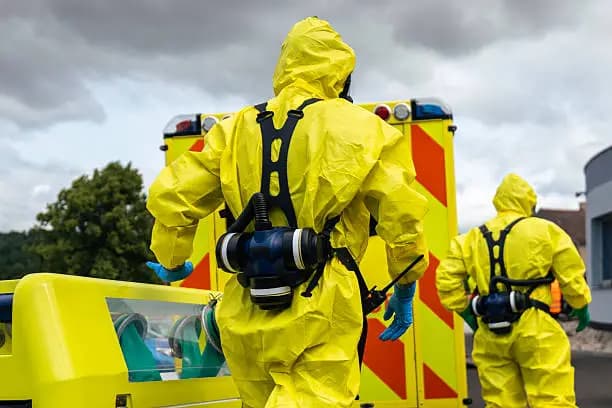
An Ebola outbreak requires a fast, coordinated response from the government and health authorities. Because Ebola can spread through contact with infected body fluids, early detection, isolation, contact tracing and infection prevention are essential. Understanding how government can intervene to curb Ebola spread helps explain the measures that can protect communities, strengthen healthcare systems and prevent outbreaks from becoming widespread.
-
Table of Contents
ToggleStrengthen Disease Surveillance
The government should strengthen surveillance systems to identify suspected Ebola cases as early as possible.
Healthcare facilities, laboratories and community health workers should be equipped to report unusual illnesses and suspected cases quickly.
-
Establish Rapid Response Teams
Specialised emergency response teams can investigate suspected cases and coordinate immediate action.
These teams can include doctors, nurses, laboratory specialists, epidemiologists, public health officers and communication experts.
-
Isolate Suspected and Confirmed Cases
People suspected of having Ebola should be assessed and managed in appropriate healthcare facilities.
Separating suspected or confirmed cases from the wider population can reduce opportunities for transmission.
-
Conduct Contact Tracing
Health authorities should identify people who have been in close contact with confirmed cases.
Contacts can then be monitored for symptoms and provided with clear instructions about what to do if they become ill.
-
Improve Infection Prevention in Healthcare Facilities
Hospitals and clinics need adequate protective equipment, handwashing facilities, disinfectants and appropriate waste-management systems.
Healthcare workers should also receive training on how to safely manage suspected and confirmed Ebola cases.
-
Expand Laboratory Testing
Rapid and reliable testing helps health authorities determine whether suspected cases are infected with Ebola.
The government should ensure that laboratories have the necessary equipment, trained personnel and systems for transporting specimens safely.
-
Provide Appropriate Medical Care
Governments should ensure that treatment centres have adequate staff, medicines, fluids, protective equipment and other supplies.
Early supportive care can be important for patients with Ebola and can improve the ability of health facilities to manage cases safely.
-
Promote Public Health Education
The government should provide clear information about how Ebola spreads, its symptoms and how people can reduce their risk.
Messages should be available through television, radio, social media, community meetings and local health workers.
-
Fight Misinformation
False information can create fear and encourage unsafe practices. Government health authorities should respond quickly to rumours with accurate, understandable information.
Trusted community leaders can also help communicate health messages.
-
Promote Safe and Dignified Burials
People who die from Ebola can remain infectious, making traditional burial practices potentially dangerous.
Trained teams should conduct safe and dignified burials while respecting families and cultural considerations as much as possible.
-
Strengthen Border and Travel Surveillance
During an outbreak, governments may increase health screening and surveillance at airports, ports and border crossings where appropriate.
These measures should focus on identifying people who may have been exposed while following public health guidance.
-
Support Ebola Vaccination Campaigns When Appropriate
Vaccination can be an important part of outbreak control for certain Ebola virus outbreaks. Government health authorities can work with international and local partners to identify eligible groups and organise vaccination campaigns when recommended.
Vaccination strategies should follow the specific virus and outbreak response plan.
-
Protect Healthcare Workers
Healthcare workers face increased exposure risks during Ebola outbreaks. Governments should provide appropriate protective equipment, training, supervision and psychological support.
Protecting healthcare workers also helps maintain essential health services during an outbreak.
-
Work With Communities
Government interventions are more effective when communities participate in them. Local leaders, religious organisations, community health workers and other trusted groups can help explain public health measures and encourage cooperation.
Community involvement can also help identify concerns and reduce stigma.
-
Prepare Before an Outbreak Occurs
Governments should not wait for an outbreak before developing emergency plans. Maintaining disease surveillance, training healthcare workers, stocking essential supplies and conducting emergency exercises can improve preparedness.


Comments
No comments yet. Be the first to share your thoughts.