
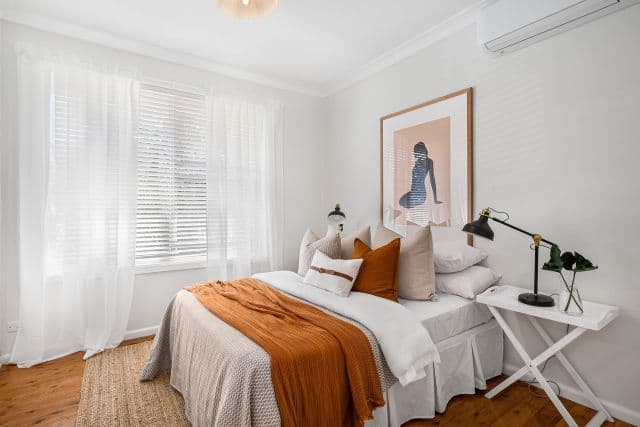
Some apartments feel open before anyone checks the floor plan. You step in, and the room does not push back. The window has space around it. The bed is not fighting the wall. The floor stays visible.
Other apartments feel tight straight away. The same size, more or less, but something feels blocked. Thick curtains sit over the glass. A bed frame rises too high. A wardrobe takes the corner that should have stayed clear. The room is not always small. Sometimes it is arranged badly.
Window Placement and Size Make the Biggest Difference
The window does the first job. After that, the room either helps or gets in the way. A narrow bedroom with one clean window can feel better than a larger one where a chest of drawers sits too close to the frame. You can see it by the shadow line. It lands early, then stays there.
South-facing rooms often hold daylight for longer, especially when nothing outside blocks the glass. East-facing bedrooms wake up bright, then quieten down before the day is done. West-facing spaces can feel flat in the morning and too warm later, depending on the season. North facing rooms have a cooler kind of light. Less glow, more steadiness.
Tall windows help because light reaches more than one surface. It hits the floor, then the opposite wall, then the ceiling if the room lets it. A standard window can still do plenty, but the area around it needs to breathe. No bulky lamp pressed against the sill. No plant stands covering the lower pane. No curtain stack sitting there all day like a folded blanket.
Why Window Orientation Matters More Than Quantity
More windows can still disappoint. A room with three small windows facing a closed wall may feel flatter than one bedroom with a single window and open sky beyond it. The glass is not the whole story. What sits outside the glass matters too.
East-facing rooms suit mornings. Good for people who want a brighter start and do not mind the room softening later. West facing rooms suit late use better, when the living area finally gets warm light after looking flat for hours. In summer, though, that same west light can make the room feel stuffy. Nice for ten minutes. Then less nice.
North-facing rooms often get judged too quickly. They do not flood the bed with warm sun, but they give a calmer, steadier light. For a desk, a reading chair or a bedroom that needs to feel quiet, that can work well. South-facing rooms feel brighter for longer, but they need shade control. Blinds, curtains, something. Brightness turns harsh fast when the sun sits directly on the glass.
Ceiling Height and Room Proportions Affect Light Distribution
Low ceilings keep the room feeling flatter. The light enters, spreads a little, then stops near the window side. Higher ceilings give it more space to move. You do not need a loft apartment for this to show. Even a bit more height makes the upper wall feel less pressed down.
Beds matter here more than people expect. In a small bedroom, the frame can change the whole room. Not the mattress. The frame. A chunky base makes the floor disappear. A tall padded headboard can turn the wall behind it into a heavy block.
In a compact bedroom, the right frame from a bed shop near me can change more than comfort. A lower base keeps more floor visible, while slimmer legs stop the bed from feeling heavy in the middle of the room. The mattress still matters, of course. But the frame decides how much space the room seems to have once everything is in place.
A mattress store near me listing may help with firmness, size and support, but the room still needs its own check. A lower frame leaves more wall visible. Legs under the base show a strip of floor. It sounds like nothing until the room feels less packed. Beds with lift-up storage can help too, because they hide spare bedding without needing drawer space on both sides.
Bed stores near me often show frames in calm display rooms. Real bedrooms are less generous. There is a radiator on one wall, a socket in the wrong place, a wardrobe door that needs swing space, and maybe a laundry basket that never quite leaves. Measure that mess first.
Interior Finishes and Color Choices Increase or Reduce Light
Wall colour changes how much daylight survives once it gets inside. White is the obvious choice, but not the only one. Warm off-white, chalky beige, pale clay, soft cream and other light colours can keep a small room brighter without making the room feel cold or flat.
Dark colours need more care. Deep green behind the bed might work if the rest of the room stays pale. Dark paint on every wall in a one-window bedroom can drag the light down before afternoon. Some rooms can carry it. Many cannot.
Finish matters as much as colour. Flat paint looks calm, but it does not throw much light back. Satin on a door, trim or wardrobe front gives the room a small lift. Not everything needs to shine. Too much shine looks cheap fast. One surface with a soft sheen can do enough.
The floor has a bigger role than people think. Dark wood can look beautiful and still make a narrow room feel lower. Pale wood, light tile and a neutral low-pile rug keep the lower half brighter. Thick dark carpet softens sound, yes, but it also pulls light into itself. You notice on cloudy days first.
Curtains cause a lot of quiet damage. Heavy fabric is fine for sleep, but during the day it needs to clear the whole window. Not just the middle. The whole pane. Sheers work well when privacy matters, especially in flats facing another building, but most bedrooms still need a second layer at night.
Material Choices That Increase Brightness
Mirrors work when they repeat the right thing. Opposite a window, they send daylight back into the room. Opposite a dark wardrobe, they double the problem. Opposite clutter, they make the clutter louder. Simple rule. Check what the mirror sees before you hang it.
Glass furniture helps because it takes up space without looking heavy. A glass coffee table leaves more of the floor visible than a blocky wooden one. A slim metal lamp, a clear vase, a pale ceramic bowl near the window; these small pieces catch daylight without filling the room.
Light bedding does more than make a bed look fresh. The bed is often the largest surface in the bedroom, so the colour there matters. A pale duvet cover sends light back into the room. Navy, charcoal or deep brown bedding can look smart, but in a dim room, the bed lands hard. Sometimes too hard.
Polished concrete, pale tile and light wood can all help, but the finish needs balance. Too glossy and the room feels cold. Too matte and it looks flat. The useful middle has enough light reflectance to catch daylight without shouting.
Building Position and External Obstructions Limit Light Access
Some apartments start with less light because of the building itself. A ground floor flat facing a fence, alley or courtyard will usually have to work harder than a higher flat with more sky outside. Parked cars, balcony rails, garden walls and thick trees all change the light before it reaches the window.
Tall buildings across the street can block the sun for hours. A flat might look fine during a noon viewing, then feel dull later. One visit gives a guess. Two visits tell you more. Morning and late afternoon are the times worth checking.
Dense city blocks make brightness harder to judge. The window can look big, but if the sky view is narrow, the room may still feel dim. Higher floors often get better light because they sit above fences, cars and low walls. Not always. A taller building opposite can still win.
Furniture placement does the last bit of work. Keep large pieces away from windows when the layout allows it. Choose lower beds in tight bedrooms. Use lift-up storage where drawer clearance is poor. Pull curtains fully away from the glass during the day.
A brighter apartment does not always have the biggest windows. Sometimes the bed sits a little lower. The wardrobe moves away from the window wall. The curtains stop stealing that good strip of morning light. Small changes, yes, but they show up fast in a tight room. Less shadow near the floor. More air around the bed. A room that finally feels easier to live in, without anyone knocking down a wall.



Comments
No comments yet. Be the first to share your thoughts.