
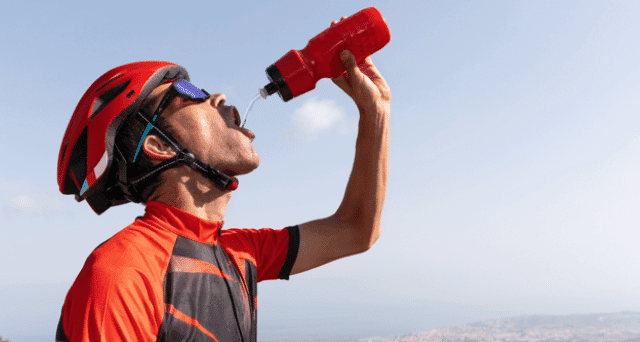
Most runners buy the largest container they can find and assume more capacity is always the safer call. It is the wrong instinct. A full liter of fluid adds roughly a kilogram, and the body feels it on every stride, so the runner who straps on a full hydration pack for a 40-minute jog is carrying a penalty with no payoff. The better question is which bottle fits the run in front of you, and the answer changes from a Tuesday recovery loop to a Saturday long run in August.
Start From the Run, Not the Shelf
Sports-science guidance gives a rough cutoff: on efforts under 60 to 75 minutes, most runners can leave fluid at home, and past that point, carrying it starts to matter. Sweat losses run from about 0.8 liters per hour for a recreational runner in warm weather to over 2 liters per hour for competitive runners in summer heat. Those two numbers frame the whole decision. A short cool-weather run needs almost nothing, while a long hot one can demand more fluid than a single handheld will hold. A single runner often keeps three setups for three kinds of day, because the bottle is a tool matched to a task and no one design covers every task well. Building a small wardrobe of bottles, one per kind of day, is what separates runners who stay comfortable from those who fight their gear.
The Short Road Run
For anything under an hour, a small handheld is usually plenty, and many runners on these efforts skip the bottle entirely. A 10 to 12 ounce flask covers a warm 45-minute loop without weighing down the arm. The trap here is overbuying, since a large insulated bottle on a short run is dead weight that throws off cadence. Keep it small, keep it light, and the run barely feels the load.
The Long Road Run
Past 90 minutes, capacity and carry system both start to matter. This is the range where a waist belt or a vest makes sense, freeing the hands and spreading the load instead of loading one forearm. Among the running water bottles built for this distance, soft flasks have a quiet advantage: they collapse as they empty, so the water stops sloshing in the back half of a run when fatigue already makes every distraction louder. Pair a belt or vest with two soft flasks and a runner can cover 2 hours without a refill in moderate weather. The weight sits low and close to the center of mass, which is why a loaded vest feels lighter than a handheld holding half as much. Once a runner crosses into this range regularly, the belt or vest usually becomes the default and the handheld retires to short days.
The Trail and Ultra Effort
Off-road and over 2 hours, the vest stops being optional. Trail and ultramarathon runners reach for vests because they carry the most fluid while keeping the torso balanced and the arms free for scrambling or pole work. Capacity here climbs past a liter, often split between bladder and front flasks so weight stays centered. The added bonus is storage for fuel and a shell, since a trail runner is often hours from the nearest aid.
Hot Weather Changes the Math
Heat is the variable that breaks every tidy rule. Sweat rates can triple in hot, humid conditions, and warm water becomes hard to drink right when a runner needs it most. Medical guidance on exercising in the heat makes the stakes plain, since a dehydrated body stores heat and core temperature climbs. This is where insulated stainless steel is worth the extra heft, keeping a drink cold for the better part of a day, while a non-insulated bottle leaves a runner choking down bathwater by the halfway mark. In real heat, the cost of carrying a heavier insulated bottle is smaller than the cost of fluid you will not want to drink. Heat also raises how much a runner needs to drink in the first place, so capacity and temperature control both climb together on the hottest days. A summer runner who plans for cool fluid tends to finish stronger than one who guessed the weather would stay mild.
Don’t Forget What’s In the Bottle
A bottle is only half the system, since what fills it matters as much on long efforts. Plain water replaces volume but not the sodium and potassium lost in sweat, and a runner who runs low on electrolytes on a long effort can feel flat even after drinking plenty. A wide-mouth bottle that accepts a tablet or powder without clogging is worth more on a long run than a sleek one built only for water. Match the opening to how you plan to fuel, not only how you plan to drink it.
Drinking Without Breaking Stride
The lid is where a good bottle quietly proves itself. A two-handed cap is the one a tiring runner stops reaching for late in a session, so the mechanisms that matter are the ones built for motion: push-pull spouts and bite valves a rider opens with a quick bite and that reseal on their own. Published tips for athletes suggest sipping small amounts at regular intervals through a run, and a one-handed lid is what makes that habit possible on the move. The right valve turns hydration into something automatic instead of a decision.
A Bottle You Will Actually Maintain
The bottle a runner actually maintains is the one that lasts, because a neglected bottle grows a film of bacteria and mold inside its spout within days. Wide mouths and removable parts make the difference between a bottle that gets scrubbed weekly and one that gets rinsed and forgotten, and any guide on how to clean one starts with taking those parts apart. Dishwasher-safe builds remove the last excuse. A bottle that survives honest maintenance outlasts three cheap ones bought and abandoned in a drawer. Bite valves and narrow spouts are the usual culprits, trapping residue in places a quick rinse never reaches. A design that comes apart for a real scrub is a design a runner keeps using past its first month.
Make the Call Before You Lace Up
Choosing a better bottle comes down to one move: match the purchase to the runs you log most often, and treat the event you might someday enter as a footnote in the decision. A short-run runner wants a light handheld and nothing more, a long-run runner wants a vest and soft flasks, and a summer runner wants insulation at any distance. Settle it once against the calendar you actually keep, and the choice stops nagging you each time you head out the door.
Check out



Comments
No comments yet. Be the first to share your thoughts.