
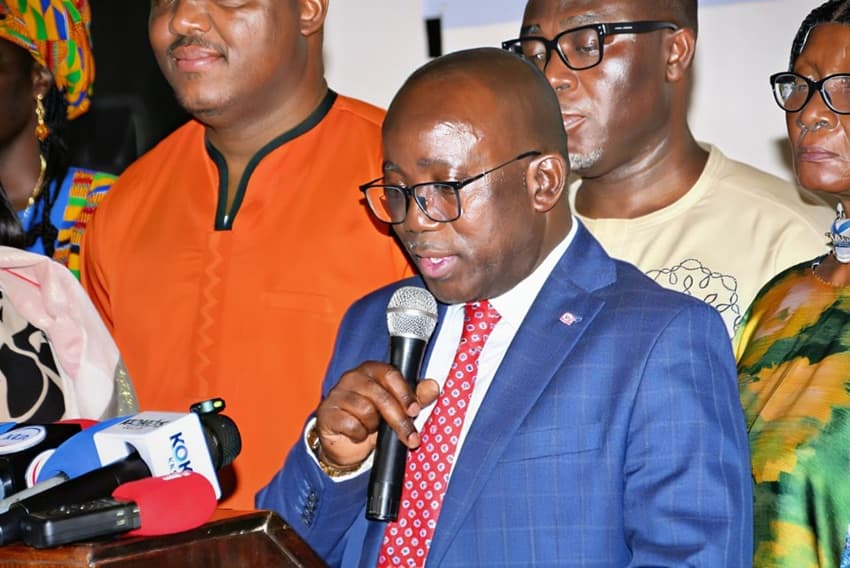
The Central Organisation of Trade Unions (Kenya) (COTU-K) and the International Trade Union Confederation’s African Regional Organisation (ITUC-Africa), alongside union representatives from other African countries, have highlighted the urgent need to address systemic obstacles that undermine trader livelihoods at key border points.
Reading the joint statement on behalf of COTU-K, Adams Barasa, during the launch of the Trade Unions in Africa Advancing Equitable AfCFTA Project in Nairobi, Assistant Secretary General (Administration), stressed the importance of protecting informal traders, many of whom are women and youth, from exploitation and unpredictable trade costs.
“Trade at the borders is the lifeline for many thousands of workers and their families. Yet our recent research, corroborated by testimonies from traders at the Kenya-Uganda Busia border, reveals a harsh reality of unofficial fees, harassment, threats, and poor infrastructure that deprive these workers of their hard-earned income,” said Barasa.
The concerns raised by the Africa Labour Research and Education Institute’s July 2026 study paint a troubling picture: traders often face arbitrary multiple charges and extortionate unofficial payments that reduce their earnings. Harassment in the form of intimidation, threats of arrest, confiscation of goods, and outright theft further endangers their livelihoods.
Moreover, slow customs clearance processes, congested crossings, and inadequate facilities exacerbate delays and create accessibility barriers for persons with disabilities. The lack of clear, accessible information and weak representation further leave informal traders vulnerable and uninformed about their rights and available protections under AfCFTA frameworks.
The unions demanded that African governments immediately adopt a Simplified Trade Facilitation Regime tailored to informal cross-border traders and implement strong measures to end border extortion and arbitrary enforcement actions. These include the institution of transparent charges coupled with mandatory receipts, easy-to-use complaints mechanisms, and robust accountability systems to root out corruption and abuse.
“Without clear protocols and protections, AfCFTA’s promises of seamless, equitable trade remain out of reach for those who rely on borders for their daily survival,” Adams Barasa emphasized.
The statement also called for urgent investment in upgrading border infrastructure to include safe trading spaces, adequate storage, shelter, clean water, sanitation, and facilities accessible to persons with disabilities. Such enhancements are vital to creating an enabling environment where informal traders can operate with dignity, safety, and predictability.
Most notably, the unions insisted on the meaningful inclusion of informal workers, especially women and youth, in decision-making processes related to border management and AfCFTA implementation. Their direct participation, the statement argued, is critical to shaping policies that truly reflect the realities on the ground.
COTU-K further called upon Kenya’s trade and labor ministries, the Kenya Revenue Authority, and Busia County Government to urgently engage with worker and trader organizations to address the urgent concerns highlighted in the research and border testimonies.
As the AfCFTA continues to expand Africa’s economic horizons, trade unions insist that its success must be measured not just in trade volumes or tariff rates, but in decent jobs, safer borders, and the economic security of all workers, formal and informal alike.


Comments
No comments yet. Be the first to share your thoughts.