
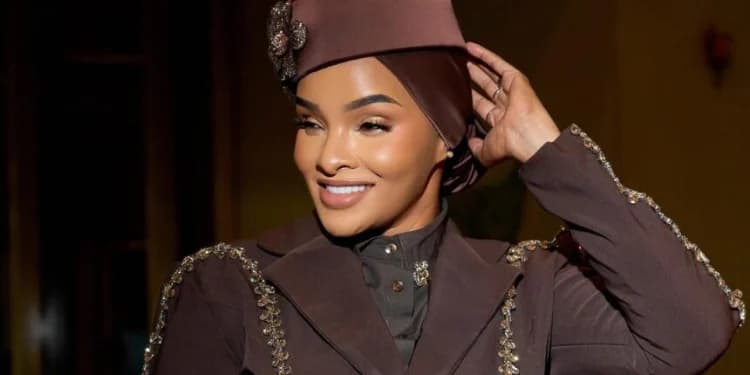
Celebrated Kenyan media personality Lulu Hassan has built a career beyond reading the news on Citizen TV, with income streams spanning television production, brand partnerships, and other business interests.
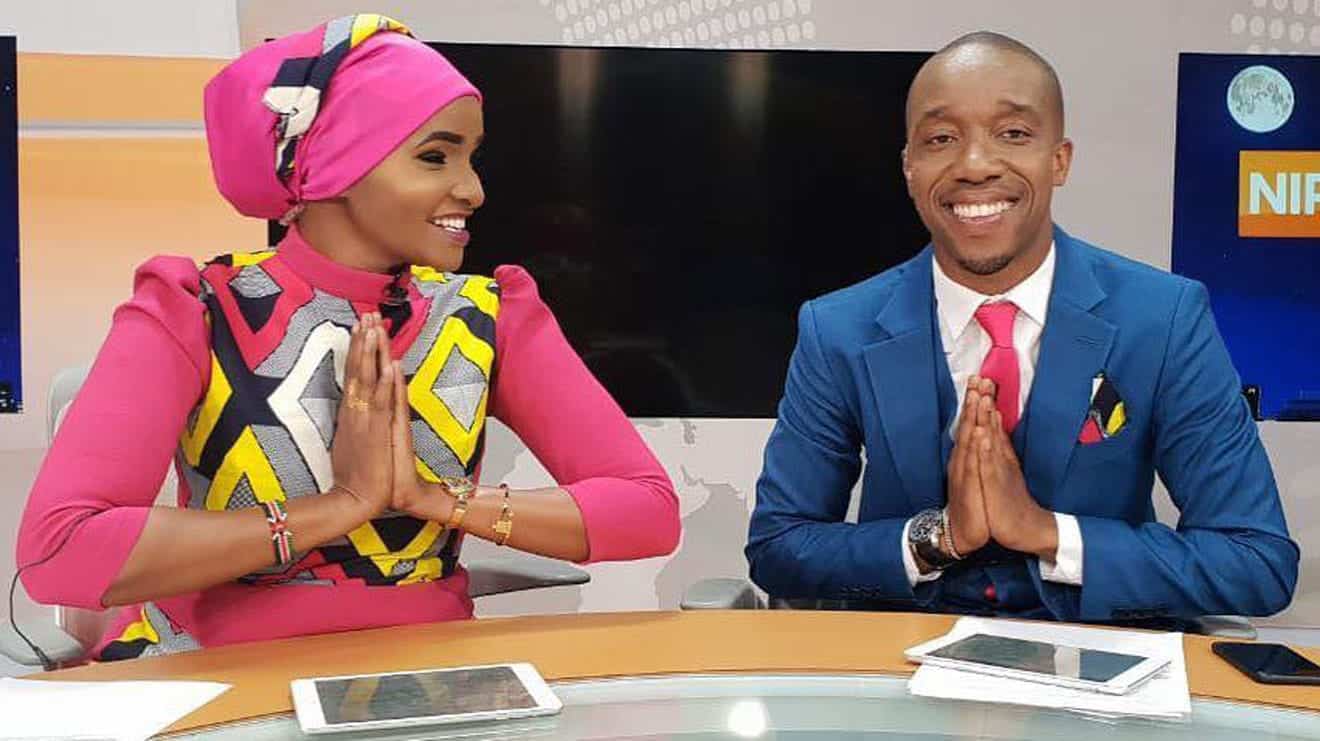
The journalist, whose official name is Khadija Hassan Musa, is the CEO of Jiffy Pictures, a production company she founded with her husband, fellow Citizen TV anchor Rashid Abdallah.
Away from the Citizen TV news desk, Jiffy Pictures has become the biggest part of her business profile, producing popular Swahili dramas that have found audiences in Kenya and across East Africa.
The company is behind shows including Maria, Ayana, Zora, Sultana, Kovu, Maza, Aziza, Huba and Moyo, with its productions appearing on Citizen TV, MultiChoice’s Maisha Magic channels and streaming platforms.
Lulu Hassan and the Jiffy Pictures Empire
Jiffy Pictures is involved in television production, with Hassan and Abdallah developing shows, scouting talent, overseeing productions, and working with broadcasters and other clients.
The company also provides advertising, commercial production, and marketing services, giving Hassan a business stream beyond her work as a journalist.
Hassan has previously explained that the couple did not have the money to establish the production company and had to seek financing.
“We started with zero. We went to several banks; they didn’t understand what we were doing,” she said.
The couple eventually presented their business plan to financial institutions, with Gulf African Bank agreeing to support the venture.
“I gave them our roadmap, what we wanted to do, and they funded us,” Hassan said.
Jiffy Pictures initially relied on hired equipment and other production companies to put together its shows.
As production expanded, the couple decided to invest in their own equipment after the cost of outsourcing became too high.
The early projects also came with financial risks. “Our first show, we made a huge loss,” Hassan said.
Rather than abandoning the business, the couple continued producing content and focused on demonstrating what they could do to secure more projects.
Their production portfolio grew, with Jiffy Pictures going on to produce a string of Swahili dramas that expanded its presence in Kenya and the region.
How the Business Started from Media Career
The idea for Jiffy Pictures came to them while Hassan and Abdallah were both working in broadcasting.
The couple wanted to move beyond presenting programs and news and start creating television content themselves.
Jiffy Pictures established its social media pages in 2016, and the company landed its first major greenlight from MultiChoice in 2017 for Maza.
It later produced Maria, Ayana, Noma, Zora, Sultana, Kovu, Aziza, and Huba.
Other productions include Jiya, Lulu, Zairi, Ka-siri, and Neema.
Some of the company’s productions have been licensed or commissioned by broadcasters and streaming platforms, creating opportunities for the business to earn from its television content.
Hassan serves as Jiffy Pictures CEO.
Brand Partnerships
Television production is not Hassan’s only commercial activity.
The journalist has also worked with major consumer brands, including Downy and Dettol.
In September this year, Hassan spoke about her Downy partnership, revealing that the company approached her through Instagram.
She said the brand flew her, her children, and her stylist to Cape Town as part of the campaign, with the company covering the trip.
In 2013, Hassan was unveiled alongside journalist Julie Gichuru as an ambassador for Dettol’s “Be A Hero” campaign, carried out in partnership with Save the Children.
The campaigns have added commercial partnerships to the income she earns from her media career and production business.
Hassan and Abdallah also own properties in Nairobi and Kwale.
From Receptionist to Media Entrepreneur
Hassan’s business career came after she first found her way into broadcasting through an unexpected encounter at her first job.
She previously revealed that she started working as a receptionist at Tech Biz Limited, a computer company in Mombasa, in 2005.
While answering calls, a man named Anthony noticed her voice and encouraged her to consider radio or television.
“It started in 2005, nilikuwa receptionist in Mombasa company ilikuwa inaitwa Tech Biz Limited, and it dealt with computers. So whenever I picked up calls, there was a guy called Anthony; I’ve never met him, but nakumbuka to date, aliniambia, madam, I love your voice; have you ever thought of doing radio or TV?” she recalled.
The encounter sparked her interest in broadcasting.
Hassan later joined Radio Salaam at the age of 20 after applying for a part-time English newscaster position. She got the job and enrolled in media school around the same period.
Abdallah also began his broadcasting career at Radio Salaam in 2006. He has previously said that he met Hassan on his first day at the Coast-based station and immediately fell in love with her.
Hassan later moved to KTN as a Swahili news anchor, while Abdallah joined NMG’s then-QTV as a Swahili news anchor.
After QTV was shut down, Abdallah moved to NTV, where he continued working as a Swahili news anchor.
Abdallah eventually moved to Citizen TV in 2018, reuniting with Hassan on the same television network.
She is eyeing the Mvita parliamentary seat in 2027.
Follow our and X Account for real-time news updates



Comments
No comments yet. Be the first to share your thoughts.