
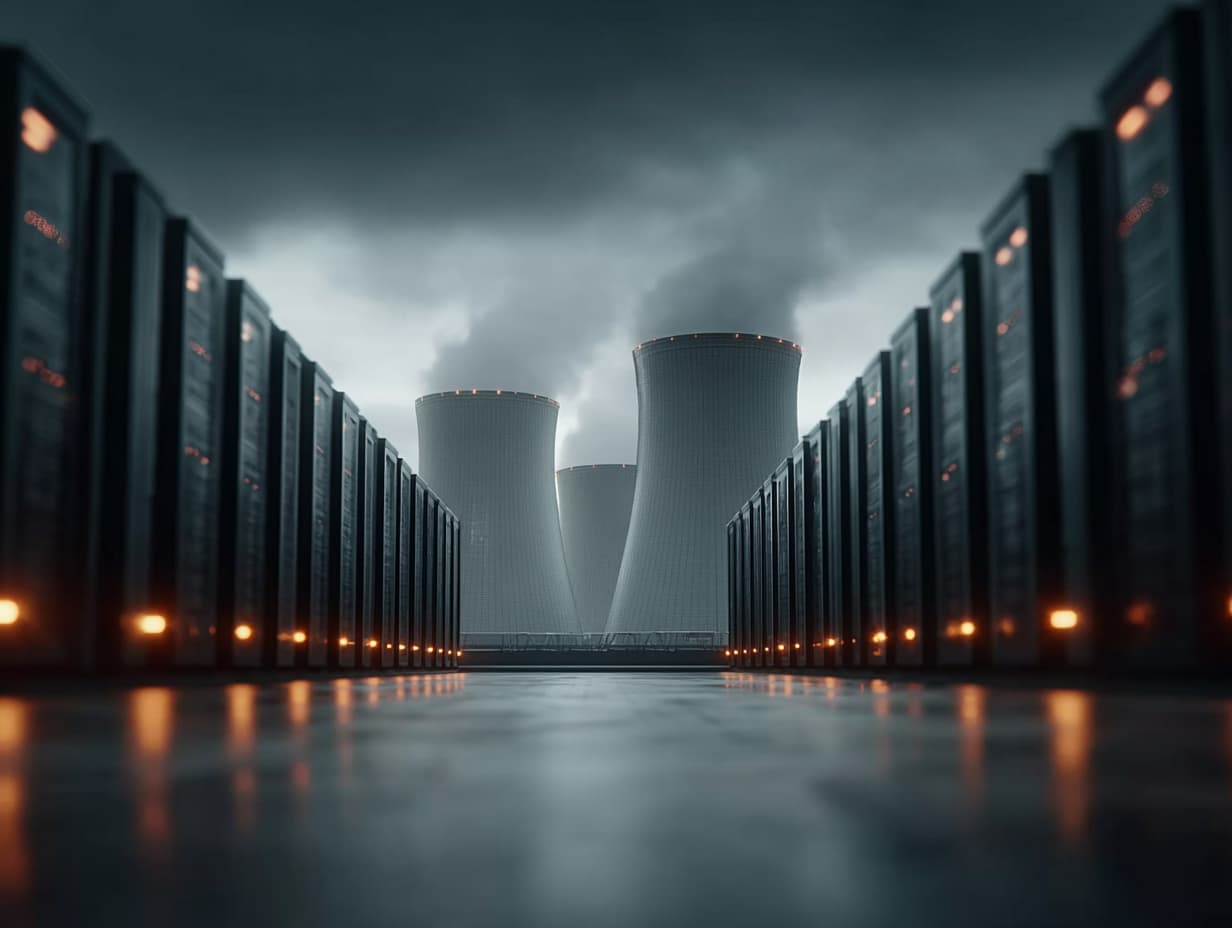
The explosive surge in artificial intelligence and cloud computing is forcing hyper-scale technology companies to confront a stark reality. This is simply because traditional electricity grids cannot keep up with their relentless demand for power. Modern data center campuses require vast amounts of electricity delivered around the clock without interruption. This therefore renders variable renewables like solar and wind insufficient on their own unless paired with expensive storage (Battery Energy Storage Systems).
In order to secure gigawatts of clean, continuous “baseload” power without relying on fossil fuels or waiting up to seven years for traditional grid connections, tech giants are making unprecedented moves to buy power directly from nuclear power plants. This move therefore fundamentally reshapes energy infrastructure across the United States.
Amazon, Microsoft, and Meta Data Centers Lead the Way in Nuclear Power Reliance
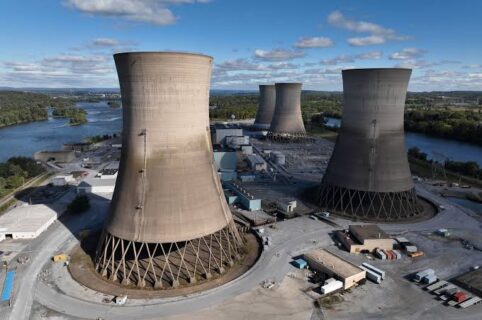
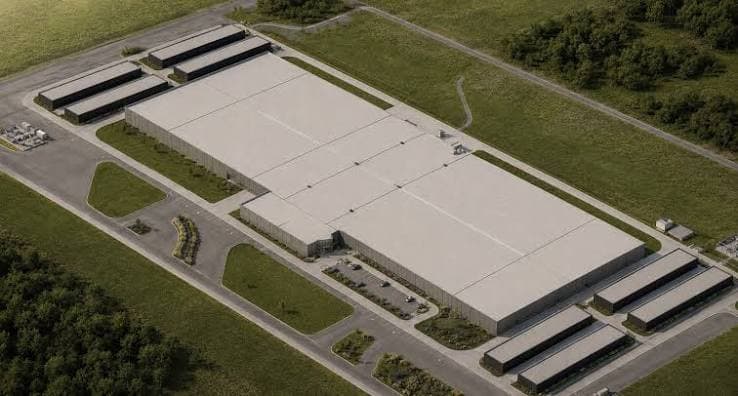
This shift is taking two primary forms. One, it involves tapping existing nuclear assets and investing heavily in next-generation nuclear design. In a landmark move, Amazon Web Services purchased the Cumulus Data Center campus in Pennsylvania for $650 million, connecting its servers directly “behind-the-meter” to Talen Energy’s 2.5-gigawatt Susquehanna Steam Electric Station.
Similarly, Microsoft reached a historic 20-year power purchase agreement with Constellation Energy to finance the restart of the Crane Clean Energy Center (formerly Three Mile Island Unit 1) in Pennsylvania, dedicating its entire output to power Microsoft’s data center footprint. Meanwhile, Meta has lined up long-term agreements with nuclear operators like Vistra Corp to draw capacity from existing plants such as Perry and Davis-Besse. This demonstrates how legacy nuclear facilities are being transformed into dedicated tech utilities.
Data Centers Emerge as a Critical Catalyst of the Nuclear Power Renaissance in the US
Simultaneously, Big Tech is acting as the primary financial catalyst for advanced nuclear technology, most notably through partnerships with Bill Gates-backed TerraPower. TerraPower is currently constructing its flagship Natrium reactor. This is a 345-megawatt sodium-cooled fast reactor with an integrated molten-salt energy storage system, in Kemmerer, Wyoming.
Natrium Reactors Provide the Best Solutions for Powering Data Centers
Because Natrium can boost its output to 500 megawatts to handle rapid load spikes, it is uniquely suited to absorb the volatile power surges characteristic of high-density AI training. Meta signed a landmark deal with TerraPower supporting up to eight Natrium units by 2035, while Google partnered with Kairos Power to deploy a 500-megawatt fleet of Small Modular Reactors (SMRs). By injecting billions of dollars into both legacy restarts and advanced SMR deployment, the data center boom is proving to be the single greatest economic engine driving the future of American nuclear power.
Overview: Nuclear Power and U.S. Data Center Infrastructure
Primary Catalyst: Soaring artificial intelligence (AI) computing workloads, high-density server racking, and clean energy mandates.
Key Power Challenge: Data centers require continuous, 24/7 baseload power that variable renewables (wind/solar) cannot guarantee alone without massive storage.
Emerging Model: “Behind-the-Meter” co-location (direct physical connection to nuclear facilities to bypass public grid interconnect delays).
Key Market Deals and Hyperscaler Investments
Amazon Web Services (AWS):
- Acquisition: Purchased the 960 MW Cumulus Data Center campus for $650 million.
- Nuclear Partner: Talen Energy (Susquehanna Steam Electric Station, PA).
- SMR Pipeline: Direct investments in X-energy to develop Small Modular Reactors.
Microsoft:
- PPA Deal: 20-year power purchase agreement with Constellation Energy.
- Project: Funding the full restart of the 835 MW Crane Clean Energy Center (formerly Three Mile Island Unit 1, PA).
Google:
- SMR Deal: Multi-reactor development agreement with Kairos Power for up to 500 MW of capacity by 2035.
- Advanced Nuclear Pioneer: TerraPower
- Technology: Natrium Reactor (345 MW sodium-cooled fast reactor paired with a molten-salt thermal energy storage system capable of boosting output to 500 MW).
- Flagship Plant: Kemmerer Power Station (Kemmerer, Wyoming).
Data Center Value Proposition: Integrated thermal battery allows flexible power ramping to handle intense AI compute surges without altering core nuclear generation.

Comments
No comments yet. Be the first to share your thoughts.