
Fear of nuclear energy often runs deeper than the facts. But when we look beyond the disasters that dominate public memory, the picture is more complicated: and, in many respects, more reassuring.
Ask Mama Wanjiku why she is suspicious of a microwave oven, and she may give a simple answer: It emits radiation.
Never mind that her phone communicates using electromagnetic waves. Never mind that sunlight itself is a form of electromagnetic radiation. The word radiation carries a particular fear.
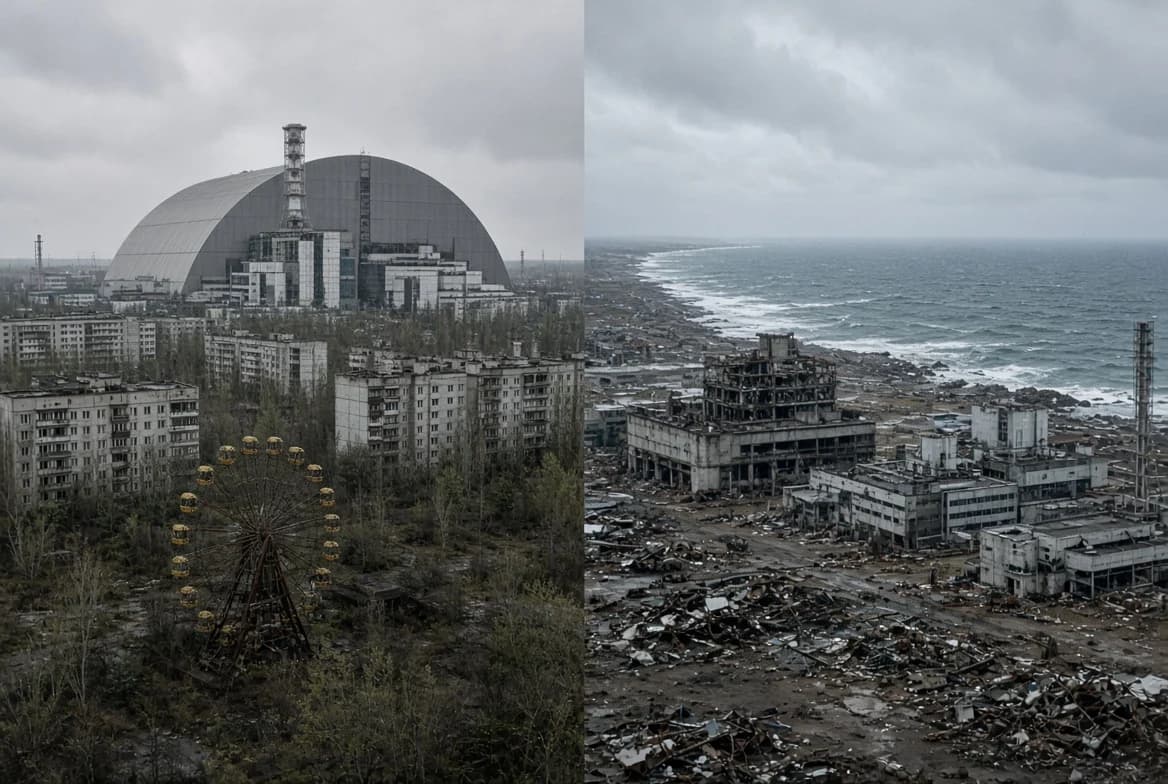
For many people, that fear is shaped by images from Chernobyl and Fukushima.
It is not an irrational fear. Nuclear accidents can have serious consequences.
But fear alone does not tell the whole story.
As Kenya explores nuclear power as part of its long-term energy future, Kenyans deserve a clear and honest answer to a basic question:
Is nuclear power actually safe?
The short answer is that modern nuclear power can be operated safely, but safety is never automatic. It depends on technology, regulation, competent operators, strong institutions and a culture that refuses to compromise on safety.
The Two Accidents That Shaped Public Opinion
When people think about nuclear power, two names usually come to mind.
Chernobyl.
And Fukushima.
Chernobyl, 1986
In April 1986, Reactor Number Four at the Chernobyl Nuclear Power Plant in what is now Ukraine suffered a catastrophic accident during a poorly managed safety test.
A combination of design weaknesses and serious operational failures led to an uncontrolled power surge, explosions and a major release of radioactive material.
Emergency workers and plant personnel died as a direct result of the accident, while the long-term health consequences have been the subject of extensive scientific research and debate.
The accident also contaminated large areas and forced the relocation of thousands of people.
Chernobyl was unquestionably a catastrophe.
But it is important to understand that the reactor involved was a specific Soviet-era RBMK design, operating under a system with serious design and safety weaknesses that are not representative of modern nuclear reactor designs.
Fukushima, 2011
In March 2011, Japan experienced one of the most powerful earthquakes ever recorded.
The earthquake was followed by a devastating tsunami.
The tsunami overwhelmed the Fukushima Daiichi Nuclear Power Plant’s protective systems and disrupted electrical power and cooling systems at several reactors.
Three reactor cores suffered severe damage.
More than 100,000 people were evacuated from surrounding areas, causing significant social, economic and psychological disruption.
The disaster fundamentally changed the global conversation about nuclear safety.
Fukushima demonstrated an important lesson: even technologically advanced countries must prepare for events beyond what engineers initially expect.
It also forced the nuclear industry to re-examine how plants are designed to withstand extreme natural disasters.
The Matatu Analogy
Consider Kenya’s matatu industry.
In the 1990s and early 2000s, public transport vehicles were associated with serious safety concerns.
Overloading, reckless driving, poorly maintained vehicles and weak enforcement contributed to a high number of road accidents.
The response was not to abandon public transport.
Instead, regulations were strengthened.
Speed governors were introduced. Seat belts became mandatory. Licensing and enforcement systems were tightened.
The system did not become perfect.
Matatus are still involved in accidents.
But the lesson is important: technology becomes safer when design, regulation and human behaviour improve.
Nuclear power has followed a similar path.
The nuclear industry has learned from accidents.
Each major accident has led to changes in reactor design, emergency planning, regulation and international cooperation.
The question, therefore, is not whether nuclear technology has ever failed.
It has.
The more relevant question is whether the lessons from those failures have been incorporated into modern systems.
How Modern Nuclear Reactors Are Different
Modern nuclear reactor designs incorporate multiple layers of safety.
Many newer Generation III and Generation III+ designs include what engineers call passive safety systems.
In simple terms, these systems are designed to use natural forces such as gravity, pressure differences and natural circulation to help maintain safety during certain emergencies.
This reduces reliance on pumps, external electricity and immediate human intervention.
However, passive safety does not mean a reactor cannot experience an accident.
No complex industrial technology is completely risk-free.
Instead, modern reactor safety is based on a principle known as defence in depth.
This means several layers of protection are designed to work together.
These can include:
- Strong fuel design
- Multiple physical barriers containing radioactive materials
- Backup cooling systems
- Emergency power supplies
- Containment structures
- Passive safety systems
- Independent regulatory oversight
- Emergency preparedness and response plans
The objective is simple: if one system fails, another system should provide protection.
The Number That Often Surprises People
One of the most interesting ways of comparing energy technologies is to look at deaths associated with the amount of electricity produced.
When researchers compare major energy sources by deaths per unit of electricity generated, nuclear power generally ranks among the safest sources.
Coal and oil cause substantial health impacts, largely because of air pollution.
Natural gas also contributes to air pollution and can be associated with industrial accidents.
Hydropower has historically experienced rare but sometimes catastrophic dam failures.
Solar and wind have comparatively low mortality rates, although construction and maintenance activities can involve occupational risks.
Nuclear power also has a relatively low estimated mortality rate per unit of electricity generated.
The exact figures vary depending on the methodology used and whether researchers include accidents, air pollution and projected long-term health impacts.
That distinction matters.
But the broader conclusion from major comparative studies remains consistent:
Nuclear power has one of the lowest death rates per unit of electricity produced among major energy sources.
Why, then, does it often feel more dangerous?
Because nuclear accidents are dramatic.
They dominate headlines.
Their names become part of global history.
Meanwhile, the health effects of fossil-fuel air pollution are often gradual and less visible.
A single major nuclear accident can remain in public memory for decades.
Millions of cases of pollution-related illness do not receive the same attention.
Our perception of risk is often influenced more by what is memorable than by what is statistically common.
What About Kenya’s Safety Framework?
Kenya is not expected to develop nuclear power without a regulatory framework.
The country has established institutions responsible for different parts of the nuclear programme.
The Nuclear Power and Energy Agency (NuPEA) is responsible for supporting the development of the nuclear power programme.
The Kenya Nuclear Regulatory Authority (KNRA) regulates nuclear and radiation safety.
The separation between the organisation promoting nuclear development and the organisation regulating safety is important.
A regulator must be able to make safety decisions independently.
It must be able to delay, reject or stop activities that do not meet safety requirements.
That independence cannot exist only on paper.
It must exist in practice.
The Real Test for Kenya
Here is the honest part of the conversation.
Kenya’s nuclear institutions are still developing.
That is not necessarily a weakness. Every country entering nuclear power begins by building institutions, expertise and regulatory capacity.
But nuclear safety requires more than laws and agencies.
It requires highly trained scientists and engineers.
It requires experienced inspectors.
It requires independent regulators.
It requires transparent decision-making.
It requires emergency preparedness.
And, perhaps most importantly, it requires a culture in which safety concerns can be raised without political interference or institutional pressure.
A nuclear reactor can be built with advanced technology.
But no technology can replace good governance.
The Bottom Line
Mama Wanjiku’s concerns about radiation should not be dismissed or mocked.
People are right to ask questions about nuclear safety.
The history of Chernobyl and Fukushima shows that serious nuclear accidents can happen.
But those accidents also led to major changes in technology, regulation and international safety practices.
Modern nuclear power is not risk-free.
Neither are coal, oil, natural gas, hydropower, solar power or any other major energy technology.
The evidence from comparative studies suggests, however, that nuclear power has one of the lowest mortality rates per unit of electricity generated.
For Kenya, the question is therefore bigger than whether nuclear technology can be made safe.
It can.
The harder question is whether Kenya can build and maintain the institutions required to ensure safety standards are never compromised.
That is not ultimately a question about uranium.
It is a question about governance.
And that may be the most important safety system of all.
Follow our and X Account for real-time news updates.



Comments
No comments yet. Be the first to share your thoughts.