
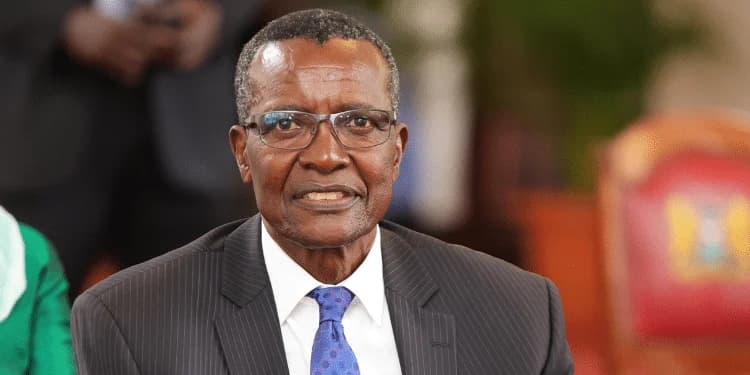
On 15 September 2026, retired Chief Justice David Maraga stood with members of the People’s Coalition on Electoral Reforms at Sarova Panafric Hotel in Nairobi and demanded electoral changes before the 2027 General Election. Their first proposal attracted the most attention: IEBC should not establish a national presidential tallying center at Bomas of Kenya or anywhere else.
Maraga argued that results declared at polling stations and constituencies should not be retallied, reverified or altered by the IEBC chairperson and commissioners in Nairobi. The coalition also demanded an independently audited voter register, tested election technology, stricter action against election offences and reforms affecting IEBC personnel and administration. Some changes were assigned deadlines falling before the end of 2026.
These demands would matter coming from any presidential campaign. They carry unusual weight because Maraga presided over the Supreme Court that annulled the presidential election held on 8 August 2017. He has since entered party politics, established a presidential campaign, and been pre-selected as the United Green Movement flag bearer. The judge who once examined a disputed presidential result may soon ask IEBC to declare him the winner.
Maraga Did Not Annul the Election Alone
Calling Maraga “the judge who cancelled the election” as I did in the title of this piece is convenient shorthand for a writer, but it is not the complete story. The 2017 decision was reached by a six-member Supreme Court bench. Maraga joined Deputy Chief Justice Philomena Mwilu and Justices Smokin Wanjala and Isaac Lenaola in the four-judge majority. Justices Jackton Ojwang and Njoki Ndung’u dissented in their ruling. Maraga presided over the Court and announced its decision, but he did not act alone.
That distinction becomes important now that the election period is turning judicial authority into political authority. Maraga’s campaign can legitimately point to the 2017 judgment as evidence that he defended constitutional procedure under heavy political pressure. It cannot present every proposition he now makes about election administration as though it were another ruling of the Supreme Court. He is no longer speaking from the bench. He is speaking as a man who wants the votes to go his way.
His change of position does not disqualify him from the reform debate. It makes the questions directed at him more exacting.
What the 2017 Judgment Actually Said
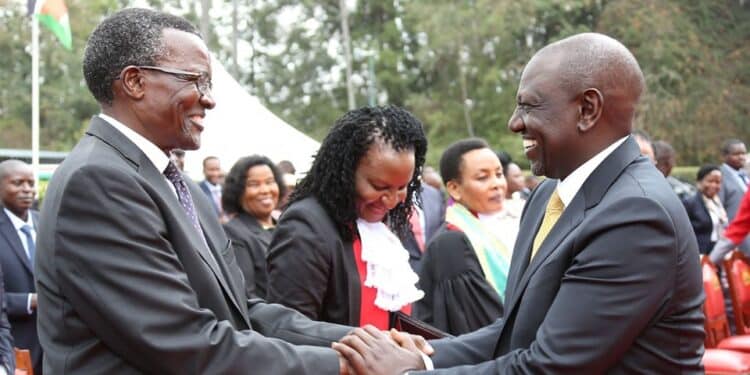
In 2017, the majority held that a presidential election could fail constitutional standards without petitioners proving the precise number of votes taken from one candidate and given to another. IEBC had a duty to conduct an election that was transparent, accurate, accountable and verifiable. The Court found that failures in the process had damaged the integrity of the election deeply enough to invalidate the declared result.
That decision changed Kenyan electoral law, but it has also been misused. Politicians sometimes cite it as authority for the proposition that any breach, unexplained form or failed device should cancel an election. The judgment did not establish such an automatic rule. It examined the character, scale and effect of the failures placed before the Court. It did not make perfection the constitutional standard.
Maraga must now tell Kenyans how he understands that line when he is one of the candidates.
Why Scrapping Bomas Does Not End the Problem
His position on the national tallying center provides an early test. The Maina Kiai decision established that presidential results declared at constituency level are final and cannot be changed by the chairperson at the national center. That protection prevents officials in Nairobi from replacing figures already declared closer to the polling stations. However, finality does not remove the national functions assigned to the IEBC chairperson under Article 138 of the Constitution.
The chairperson must receive the constituency results, add them, determine whether a candidate has obtained more than half of all votes cast, assess the twenty-five per cent requirement in more than half the counties and declare the outcome. If no candidate meets those conditions, the Constitution requires a fresh election. Those calculations cannot be performed separately in 290 constituencies because the constitutional threshold is national.
Bomas of Kenya has acquired more power in the Kenyan imagination than it deserves. Ballots are not counted there, and constituency results should not become provisional merely because they have arrived in Nairobi County. Still, abolishing the physical national center does not abolish the chairperson’s constitutional work. Moving that work to Anniversary Towers or an undisclosed server room would change the address without answering who witnesses the final addition, how objections are recorded and where the national declaration occurs.
Maraga’s coalition should therefore have been more precise. If they wanted Bomas abolished as a political theatre where national officials appear to recreate the result, that argument deserves serious consideration. If they want the chairperson denied any power to alter constituency declarations, the law already provides substantial support. If they meant that national verification and computation should disappear altogether, then they should have explained how Article 138 would operate after the last Form 34B arrives.
The former Chief Justice should be the last candidate to rely upon a reform demand whose legal meaning remains unsettled. He knows how much damage an ambiguous rule can cause once candidates have attached victory or defeat to its interpretation.
The Question Every Candidate Should Answer
The greater opportunity in Maraga’s candidacy lies elsewhere. The country can ask him to state, before polling day, what evidence would make him accept that he had lost.
That question should not be treated as an insult. It should be asked of William Ruto, Edwin Sifuna, Fred Matiang’i and every person seeking the presidency. Candidates usually describe the defects that would make them reject a result. They say little about the evidence that would oblige them to concede defeat. Chief Justice Emeritus Maraga can lead by answering first.
Would he accept a result if every Form 34A were available to his agents, displayed at the polling station and uploaded with identifying metadata? Would agreement among the original form, agents’ copies and the portal image settle the result from that station? Would he accept constituency totals that could be traced back to those forms through published reconciliation files? What discrepancy would he regard as material, and what evidence would persuade him that a correction was innocent rather than fraudulent?
Maraga should also say what he expects from statistical verification. If a professionally conducted parallel vote tabulation placed the declared result within its range, would he treat that as important evidence even if they did not inspect every polling station? If scrutiny found administrative errors but no pattern benefiting one candidate, would he accept that distinction? If the Supreme Court rejected his petition after giving his experts meaningful access to the relevant records, would he concede without inciting supporters that judges had joined a conspiracy?
Those questions turn constitutional language into a political commitment. They also protect Maraga et al. from a problem that has damaged other candidates. Once supporters are told repeatedly that defeat can arise only through theft, conceding becomes politically dangerous even when the evidence is clear.
Reset, Restore, Rebuild — Under Scrutiny
Maraga’s 2017 role in annulling presidential results makes this obligation heavier. That judgment defended the right of citizens to demand proof from IEBC. But it did not give every losing candidate permission to reject proof that contradicts their claim.
Maraga’s campaign slogan is “Reset. Restore. Rebuild.” The words fit neatly on campaign material, though elections are less tidy. A serious reset would require candidates to abandon the habit of defining credibility according to whether they won. Restoring confidence would require them to accept common records and common tests. Rebuilding IEBC would require criticism that names the exact legal or administrative failure instead of treating suspicion as sufficient evidence.
There is also a risk that Maraga’s former office may shelter his political arguments from ordinary examination. Journalists and lawyers may hesitate to challenge his interpretation because he once led the Supreme Court. Supporters may treat disagreement with him as hostility to constitutionalism. That would definitely be an in-reasoning. Maraga is now in an election competition, a field where claims are tested against law and evidence, not judicial biography.
His proposals should therefore receive the same treatment as IEBC’s official assurances. Each must identify the problem, the legal basis for the proposed remedy and the evidence showing that the remedy would work. Scrapping Bomas may remove an inflammatory stage, but it could also move decisive national operations away from public view. Mandatory biometric identification may reduce impersonation, but it requires a lawful answer for eligible voters whose fingerprints cannot be read. More technology may strengthen audit trails, but only if IEBC and independent experts can inspect how it operates.
None of these objections defeats the reform program, but it makes it practical, usable, and believable.
The Real Test Comes After the Votes
This seeming criticism should not be construed to downplay the importance of Maraga’s demands; he has done something politically valuable by placing electoral rules before the campaign becomes fully heated. The country should use that opening to demand reciprocal commitments from IEBC and candidates. IEBC must state what records it will produce. Candidates must state what records they will accept. Observers must explain what their methods can establish. Courts must decide access disputes before the presidential petition clock starts running.
The test of Maraga’s electoral legacy will not be whether he repeats the principles pronounced in 2017. It will come down to whether the 2027 records show that another candidate defeated him or his coalition. At that moment, he will have to decide whether constitutional verification remains binding when its conclusion ends his campaign.
A former Chief Justice seeking State House carries an unusual advantage because he knows how election evidence is examined after the rallies stop. He also carries an unusual burden. Before asking Kenyans to trust him with the presidency, David Maraga should publish the evidence that would lead him to challenge the presidential result, the evidence that would lead him or his coalition to accept defeat, and the line separating the two.
This article was written by George Nyongesa, a lecturer in philosophy and logic at the University of Nairobi and Chuka University.
Follow our WhatsApp Channel and X Account for real-time news updates.

Comments
No comments yet. Be the first to share your thoughts.