
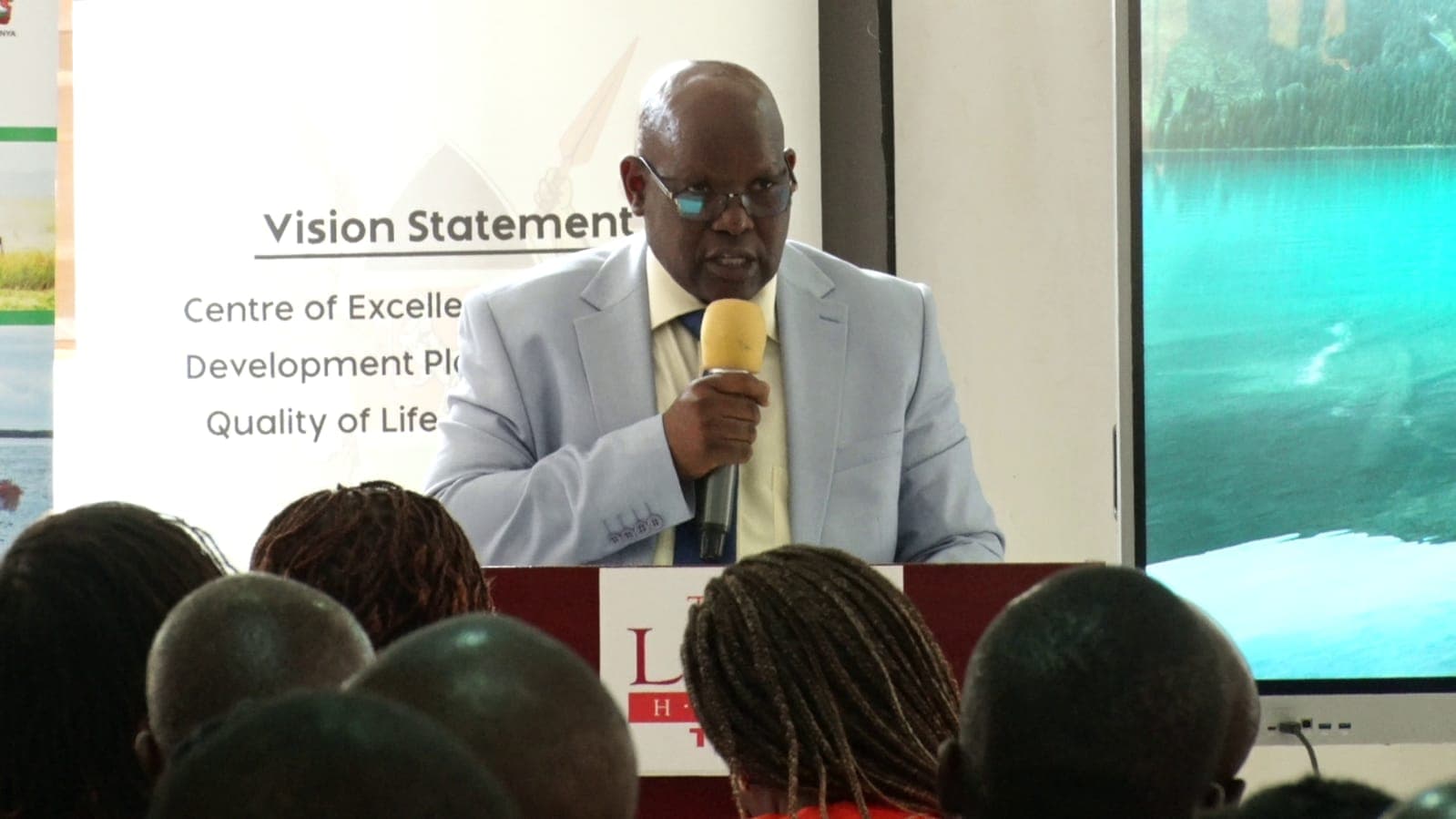
More than 500 National Government Administration Officers (NGAOs) from Kiambu County have been trained on collecting data from residents to help the government understand citizen challenges and improve service delivery.
The officers, from across the county, are being equipped with digital skills that will enable them to gather information directly from communities and transmit it to a centralised government system for analysis and decision-making.
Speaking during the launch of a three-day training workshop for Kiambu County in Thika, Director General for Economic Planning Dr. Masini Ichwara said the programme would strengthen the link between grassroots needs and national planning.
Ichwara said the training was important because many citizens remain unaware of the numerous government programmes, policies, and services available to them, making it difficult for the government to determine whether such interventions are reaching the intended beneficiaries.
He said collecting information directly from residents would give the government a clearer picture of what is happening at the grassroots, including gaps in health, education, infrastructure, and other essential services.
“Government needs to know what is happening on the ground. We want information coming directly from the people so that we can plan and make decisions based on the realities they are facing. For example, why do residents insist that the Social Health Authority (SHA) is not working yet it is? What are the gaps in Kiambu County?” Ichwara said.
He urged residents not to conceal information from administrators for fear that it could be used for political purposes, stressing that the exercise was strictly aimed at supporting government planning and service delivery.
The officers will use a specially developed mobile application to collect and transmit information, allowing senior government officials to access near real-time updates on the availability and delivery of public services.
The digital system will also enable the government to identify emerging gaps and respond more quickly, including shortages of essential supplies and other challenges affecting communities.
The initiative is being implemented in partnership with the State Department for Internal Security and National Administration and State Department for Economic Planning.
The Kiambu training is part of Phase Two covering 25 counties, following the completion of the first phase in 11 counties. The final phase will cover the remaining 11 counties, bringing all 47 counties into the programme.
By Jacklyn Mutuku and Muoki Charles

Comments
No comments yet. Be the first to share your thoughts.