
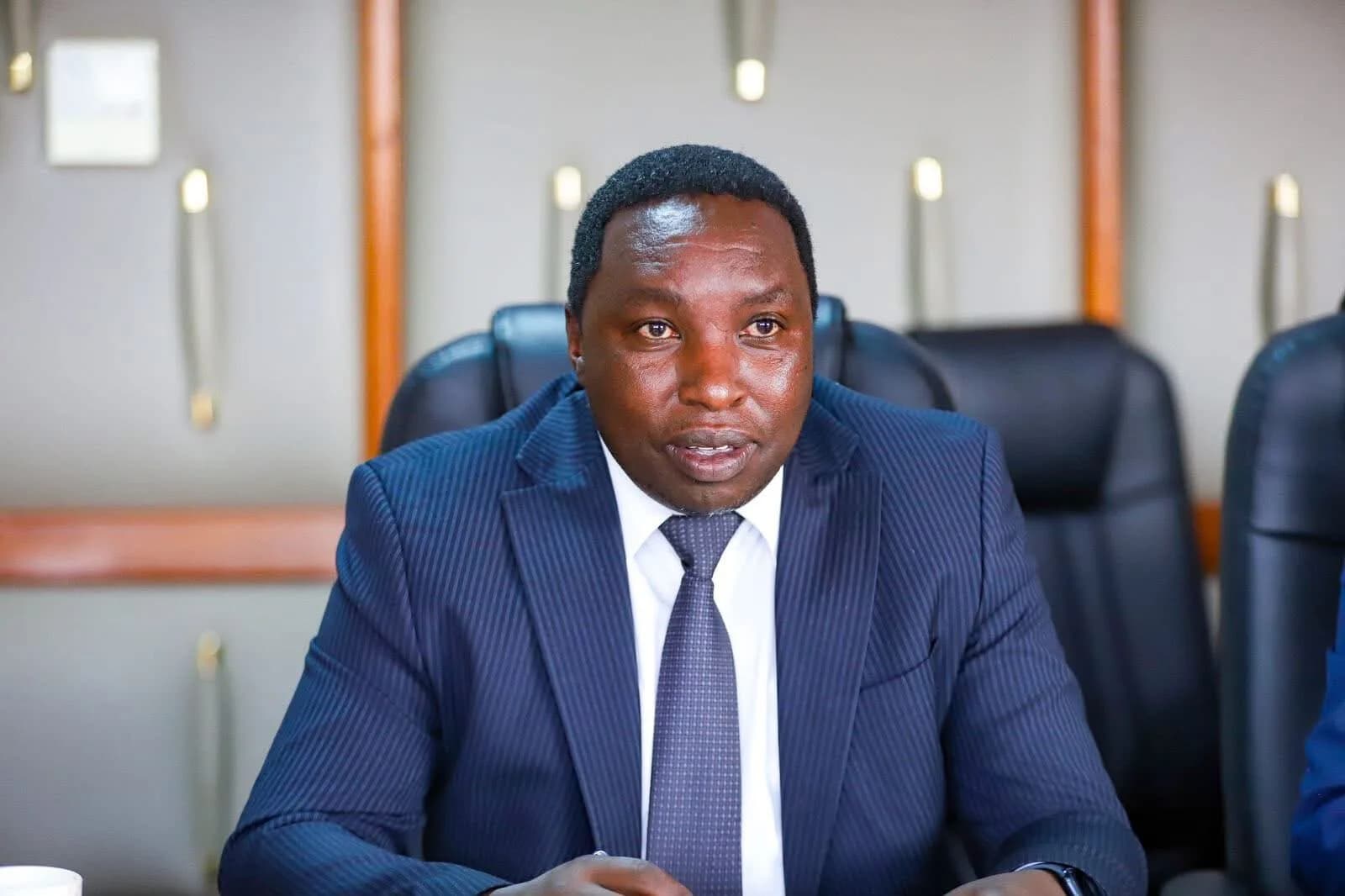
By. Eng. Kipkemoi Kibias,
NAIROBI, Kenya, Oct 6 – After more than two decades in Kenya’s power sector, including leading Kenya Electricity Transmission Company Limited (KETRACO) as the Acting Managing Director for a period of 11 months, here is what I have learned about what it takes to build and sustain the country’s transmission network.
When I assumed the role of Acting Managing Director and CEO on 19 September 2025, I encountered a number of transmission projects that had stalled for years. Some had remained incomplete for more than a decade, despite the significant resources and effort that had already gone into them.
One of the most important responsibilities was therefore not simply to start new projects, but to find ways of unlocking projects that had already consumed years of planning, investment and public expectation.
The 132kV Kitui-Wote transmission project is one example. The project had stalled from 2016, but through concerted efforts to address the challenges that had delayed it, the line was eventually energized on 26 January 2026. Similarly, the 132kV Sondu-Homa Bay, 132kV Lessos-Kabarnet and 132kV Nanyuki-Isiolo transmission lines had been stalled for over 10 years. Within less than a year, the challenges affecting these projects were addressed, allowing them to be completed, energized and commissioned.
In under one year of my leadership, KETRACO completed, energized and invited His Excellency the President of the Republic of Kenya, Hon. Dr. William Samoei Ruto, to commission 10 projects across the 400kV, 220kV and 132kV voltage levels, out of these, six have successfully been commissioned. These milestones were not the result of engineering alone. They required engagement with communities, resolution of wayleave challenges, advocacy with key decision-makers, collaboration with contractors and stakeholders, and efforts to unlock funding and other institutional constraints.
One of the clearest lessons I take away is that transmission lines may be designed by engineers and constructed by contractors, but ultimately, they pass through people’s land and communities. The success of an infrastructure project therefore depends as much on trust, communication and engagement as it does on technical expertise.
Furthermore, infrastructure isn’t delivered merely by engineering drawings, it requires solving the human, financial, institutional and political obstacles around the infrastructure.
During my tenure, we placed particular emphasis on direct engagement with communities and stakeholders, especially where difficulties had previously prevented projects from progressing. In some instances, direct dialogue helped open avenues for resolving longstanding challenges. This experience reinforced my belief that many infrastructure challenges can be addressed when the people affected by projects are listened to and meaningfully engaged.
On the issue of financing, I have consistently advocated for the energy sector to explore alternative sources of financing, particularly as the scale of investment required in transmission infrastructure continues to grow. KETRACO faces a significant financing gap in implementing its transmission master plan. The company has historically relied heavily on local government funding and foreign loans. We are particularly grateful to all our financiers, including the World Bank, African Development Bank, Agence Française de Développement (AFD), German Development Bank (KfW), and JICA, for their financial support towards KETRACO’s projects. However, with the scale of investment required and increasing pressure on public finances, these sources alone are not sufficient to meet the country’s transmission needs. Kenya signed its first Public-Private Partnership (PPP)-funded transmission project through a consortium comprising Africa50 and Power Grid Corporation of India. The introduction of PPP financing therefore came at an important time, providing an additional avenue for mobilizing the capital needed to expand and strengthen the transmission network. I hope this model will provide a foundation for financing more transmission projects in the years ahead.
My experience in system operations also reinforced the importance of having the right technical capacity within the institution. During my tenure as General Manager, System Operation and Power Management, I supported and facilitated the training and development of operation and maintenance teams so that the company could strengthen its ability to undertake power restoration and other critical functions in-house.Infrastructure can only deliver its full value when there are skilled people capable of operating, maintaining and restoring it.
That is why human-capacity development has been an important part of my professional journey. I have always believed that one of the most enduring contributions an engineer can make is to prepare another engineer to take on greater responsibility.
The period I spent as Ag. MD also produced measurable institutional milestones. KETRACO’s asset base value grew from KSh177.02 billion to KSh196.49 billion, representing an increase of KSh19.46 billion.
But numbers and completed projects tell only part of the story.Every infrastructure project has its challenges. Transmission development involves land acquisition and wayleave compensation, financing, procurement, contractors, communities, environmental considerations, safety and, in some cases, disputes and litigation. Not every challenge can be resolved within the period of one administration or one leadership team. Some issues inevitably remain for those who come after.
As my acting period at KETRACO comes to an end, I remain conscious that the work of strengthening Kenya’s transmission network is far from complete. The projects that have been completed are important milestones, but they should be viewed as part of a much larger national undertaking.
There is also a responsibility to ensure that the institution continues to learn from both its successes and its difficulties. Strong institutions are not built by avoiding difficult questions; they are built by confronting them, learning from experience and continuously improving systems, processes and professional capacity.
The writer is the General Manager, Systems Operations and Power Management, at KETRACO

Comments
No comments yet. Be the first to share your thoughts.