
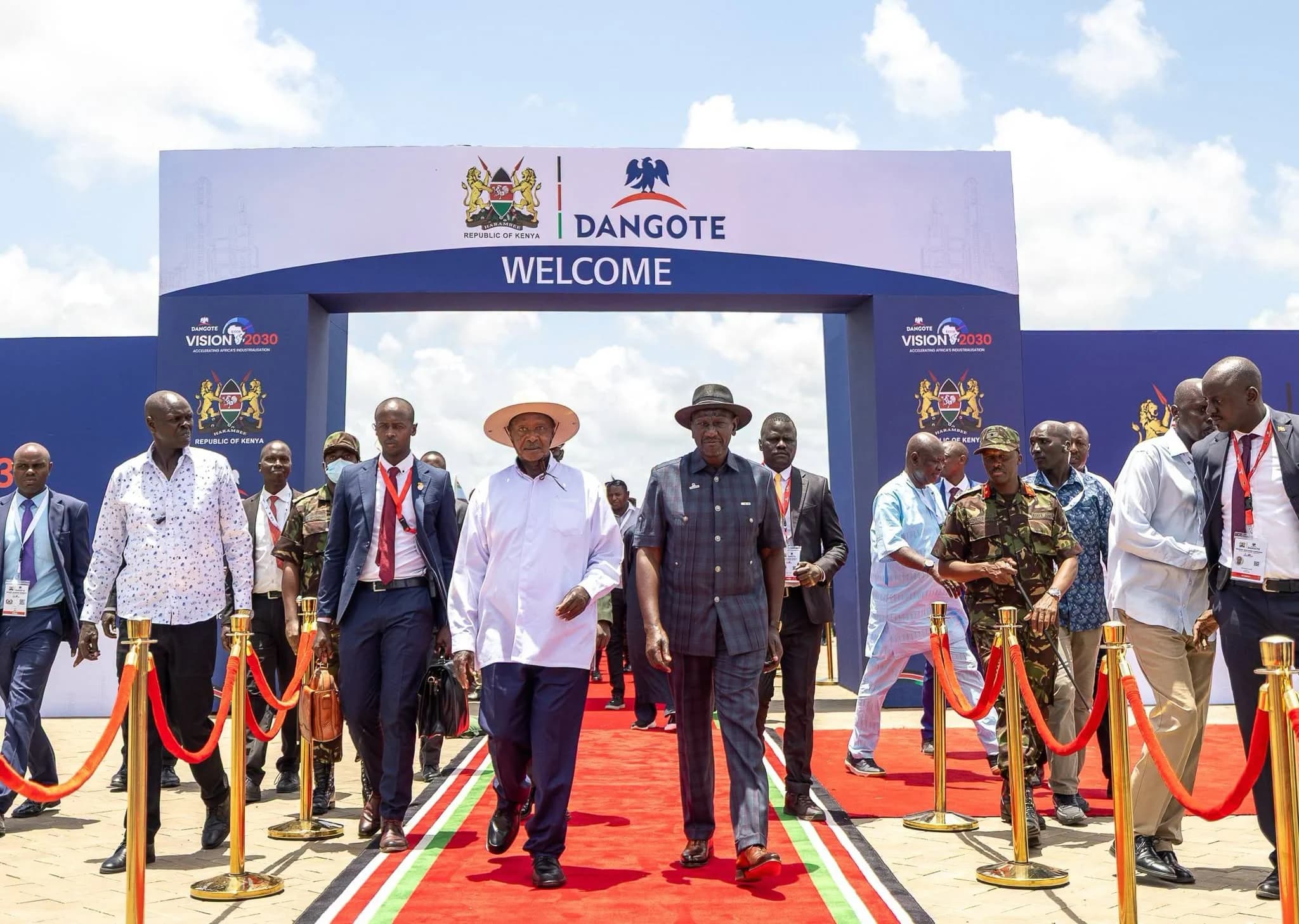
As the $16 billion Dangote East Africa Refinery broke ground in Lamu on September 30, 2026, I found myself thinking about something bigger than the refinery. I started thinking about strategy. Is Kenya quietly building the foundations of its next economy? Politics is usually judged in electoral cycles. Development is judged in generations.
One difficulty in evaluating political leadership is that we judge governments by what hurts, or helps, us today. Some of the most consequential decisions may not show their full value for another ten, fifteen or twenty years.
This is not an argument that legitimate criticism of President William Ruto’s administration should disappear. It should not. Questions on human rights, abductions and disappearances, deaths during protests, taxation, corruption, procurement and public accountability deserve serious scrutiny. The Kenya National Commission on Human Rights has documented violations arising from demonstrations and other incidents.
Kenya’s fiscal position should not be ignored either. Public debt remains elevated, debt servicing consumes substantial public resources, and both the IMF and World Bank have continued to warn about fiscal vulnerabilities.
Kenya should also be having another conversation. It is about strategy. Stand back from the daily politics and several developments start to look less like isolated projects and more like an economic architecture.
Energy and minerals
For more than a decade, Kenya has invested in geothermal power. That did not begin with this administration. It is continuity across governments, and that is the point.
According to the Energy and Petroleum Regulatory Authority, geothermal produced about 39.5% of Kenya’s electricity in 2024/25, with installed capacity at about 944 MW. In July–December 2025, it remained the largest source, at just over 40% of generation.
Geothermal matters because it is relatively stable baseload power. Industrialisation comes down to practical questions: Can I get electricity? Can I get it reliably? Can I run a plant continuously? Can I manufacture competitively? Infrastructure built ten or twenty years ago is now shaping investment decisions.
Mrima Hill in Kwale holds rare-earth elements and niobium. Kenya invited investors in 2026 and has pushed processing and value addition at home rather than raw export. The United States has also committed to helping Kenya develop critical-mineral processing capacity.
For decades the African model has often been: extract, export, process elsewhere, import the finished product. The more useful model is: extract, process, manufacture, export value-added goods.
President Ruto said in June that Kenya and the United States were working towards a critical-minerals framework built around domestic processing. The commercial deals are not finished, so this is not a completed investment. The direction still matters. Africa does not become wealthy because minerals sit in the ground. It becomes wealthier when more of the value chain stays on the continent.
Lamu, SEZs and the roads between them
On 30 September 2026, construction was launched on the proposed $16 billion Dangote refinery in Lamu. The planned plant is about 700,000 barrels a day, with completion targeted around 2030. Estimates linked to the project point to more than 50,000 jobs, and output meant for Kenya and the wider East African market.
East Africa imports large volumes of refined fuel. A refinery at Lamu could change that. A refinery is also rarely just a refinery. Around it come logistics, maintenance, engineering, transport, hospitality, housing, retail, petrochemicals and supplier industries. That is how clusters form.
Environmental, land and legal disputes around Lamu must be resolved. They should not be waved away because the project looks attractive. The strategic proposition remains clear: Lamu Port, a transport corridor, energy, a refinery, and associated industry could create a new industrial geography.
At the groundbreaking, President Ruto said construction alone would need about one million tonnes of cement. Before any refined fuel leaves Lamu, billions of shillings can already move through cement, steel, heavy transport, engineering, logistics, accommodation, catering and local suppliers. If Kenyan firms can meet that demand, the project becomes a catalyst for local industry, not only foreign capital on Kenyan soil.
Dongo Kundu and Naivasha are the next piece. In 2025, agreements worth about $1 billion were announced for the two special economic zones. Target sectors include agro-processing, pharmaceuticals, textiles, e-mobility, glass, footwear and petrochemicals. Dongo Kundu is a 3,000-acre zone next to a seaport, highway, railway and airport, with power, water and dedicated port infrastructure. By September 2026, the government said 94 investors had expressed interest, and a KSh41 billion berth was under construction.
A factory without power, roads, port access, customs efficiency or a regional market is a weak bet. Put those together and you get an industrial ecosystem.
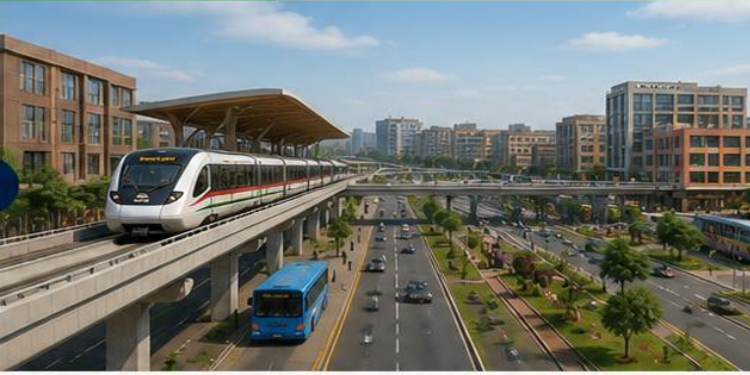
The government has also announced a ten-year plan to tarmac up to 28,000 kilometres of roads and dual about 2,500 kilometres of highway, with an indicative value near KSh5 trillion. Those are plans, not finished roads. Execution will decide their value. A farmer in Meru who can move produce more cheaply to Nairobi becomes more competitive. An SEZ manufacturer gains when trucks spend fewer hours in transit. Roads do not only connect places. They connect economic possibilities.
The city Kenya is trying to sell
The Bomas International Convention Complex is built around an 11,000-person convention facility, with cultural, hospitality and recreation space. Global conferences are an industry. Delegates buy airline seats, hotel rooms, taxis, meals, security, entertainment and tourism. Bomas faces legitimate procurement questions. The Auditor-General has raised issues, and they deserve scrutiny. Strategic importance is not an excuse for weak governance.
The roughly 60,000-seat Talanta Sports City stadium, tied to AFCON 2027, is meant to be a principal venue as Kenya co-hosts with Uganda and Tanzania. On 15 September 2026, World Athletics picked Nairobi for the 2029 World Athletics Championships, the first on African soil. The main venue will be the renovated Kasarani, not Talanta. Put the calendar together: AFCON 2027, World Athletics 2029, better stadia, roads, hotels, airport capacity and convention space.
In June 2026, the government signed a KSh154.2 billion contract to modernise Jomo Kenyatta International Airport. The master plan includes a new terminal for an extra 10 million passengers a year in phase one, with room for another five million later. If Kenya wants to be a conference hub, a tourism hub, a financial centre, a regional headquarters city and an air-cargo gateway, aviation capacity is economic infrastructure.
By August 2026, government figures put more than 280,000 affordable-housing units under construction, on contracts worth about KSh731.5 billion. The programme is politically contested, especially on levies and financing. Construction still creates demand for cement, steel, timber, glass, artisans and, later, furniture and retail. I would not claim housing was designed for the Lamu workforce unless planning documents say so. As part of urbanisation, it still belongs in the picture.
The pattern, and the test
In February 2026, Pesalink connected to the Pan-African Payment and Settlement System. More than 80 Pesalink institutions can reach a PAPSS network of more than 160 African banks, settling in African currencies. AfCFTA needs people, goods and money to move more easily. Kenya has also eased entry for many African travellers.
Stand far enough back and the sequence is visible: geothermal energy, mineral processing, special economic zones, ports and a refinery, roads and rail, airport expansion, housing, sports and convention infrastructure, PAPSS and easier African mobility. Each project can be debated. Together they raise a sharper question: is Kenya building the platform for its next economy?
Kenyan politicians have invoked Singapore for decades. Singapore is a city-state of fewer than six million people. Kenya has more than 50 million people, 47 county governments and a large farm economy. Kenya cannot copy Singapore. The useful lesson is the sequence: build the port before the ships, the power before the factories, the airport before the crowds.
Infrastructure alone will not transform Kenya. The World Bank says debt remains elevated and about a third of government revenue goes to interest. KNBS put growth at 4.6% in 2025. Expensive infrastructure only pays if it produces exports, productivity, investment, tax and jobs. That is why execution, fiscal discipline, transparency, institutional strength and the rule of law still decide the outcome.
A refinery that never produces is concrete. A road that does not move commerce is tarmac. An SEZ without investors is fenced land.
Some of what is being built will outlive William Ruto, just as Kenya already lives on plants, highways and ports conceived by earlier governments. The interesting question is not whether one likes the president. It is whether, from 2040 or 2050, this period looks like the one in which some foundations of the next economy were laid.
We cannot know yet. Projects must be finished. Debt must stay manageable. Rights must be protected. Corruption must be confronted. Growth must reach ordinary lives.
If Kenya can connect these investments, execute them, and turn infrastructure into production, the story may end up bigger than the politics of William Ruto. It may be Kenya’s next economic chapter.
Follow our and X Account for real-time news updates.


Comments
No comments yet. Be the first to share your thoughts.