
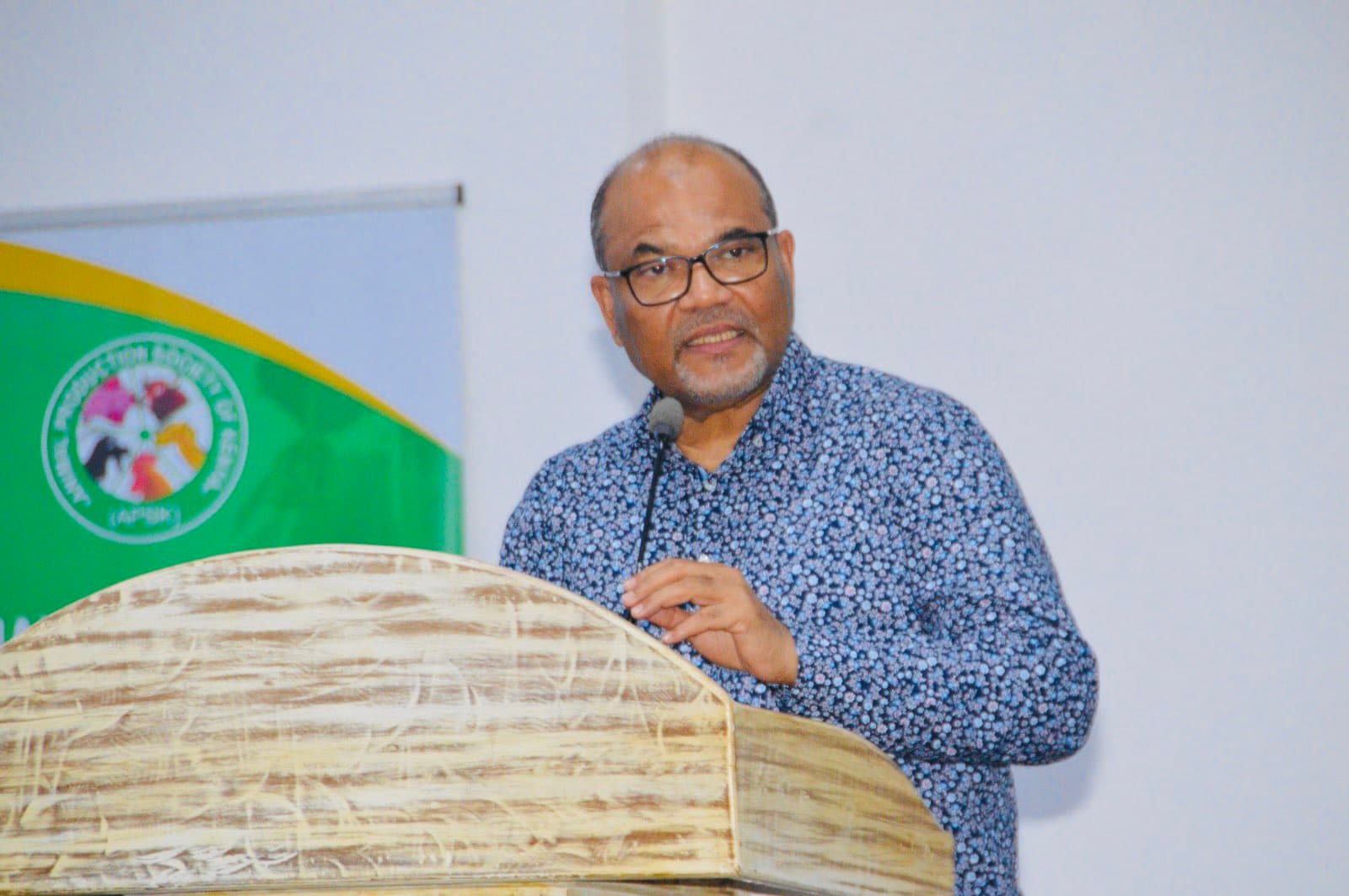
At the 2026 Annual Scientific Symposium of the Animal Production Society of Kenya (APSK), held in Malindi, I had the opportunity to share my perspectives on the strategic importance of livestock in Kenya’s socioeconomic transformation. I emphasised that livestock is much more than an agricultural activity: it is a pillar of food security, economic empowerment, industrial development and social wellbeing.
I highlighted the need for Kenya to reposition livestock as a modern, technology-driven and commercially competitive sector that contributes meaningfully to national prosperity. In my address, I underscored that livestock provides nutritious food, income, employment, savings and resilience for millions of Kenyan households. According to the Kenya National Livestock Agenda 2025, the subsector contributes approximately 12 per cent of Kenya’s GDP and 42 per cent of agricultural GDP. Its importance is particularly pronounced in arid and semi-arid lands, where pastoralism sustains livelihoods and local economies.
I further highlighted President William Ruto’s vision of transforming livestock into an engine of enterprise, exports, jobs and wealth, noting that this aspiration must be supported by deliberate investments in science, research, innovation, professional expertise and commercialisation.
During the symposium, I recognised the significant strides the Government has made in advancing livestock production and commercialisation. In the 2025 State of the Nation Address, the President reported that national milk production had increased to 5.3 billion litres, dairy exports had nearly doubled to KSh 9.4 billion, leather exports had reached KSh 2.5 billion, and meat exports stood at KSh 12.9 billion. The current reduction in milk yield can easily be addressed by ensuring adequate feed conservation and preservation in future. We must enhance the early warning system.
These achievements demonstrate the potential of livestock to generate foreign exchange, create jobs and support value addition. Government initiatives, including livestock vaccination, commercialisation programmes, support for dairy and red-meat value chains, and the Kenya Livestock Commercialization Project, provide a foundation for further growth. Under the Bottom-Up Economic Transformation Agenda (BETA), livestock development is integral to improving household incomes, strengthening cooperatives, empowering youth and women, and expanding agro-processing. However, increased production must translate into better nutrition, higher farmer incomes, affordable animal-source foods and competitive enterprises. Our next frontier must therefore be productivity, science, technology and innovation.
Technological Innovation and Professional Leadership
I highlighted the transformative potential of emerging technologies in revolutionising livestock production. Artificial intelligence (AI), biotechnology, precision livestock farming, digital platforms and advanced breeding technologies are opening new opportunities to increase productivity, reduce costs and improve animal welfare. AI-powered systems can monitor animal health, detect early signs of disease, predict outbreaks and support timely veterinary interventions. Smart collars, sensors and digital identification systems can track animal movement, reproductive cycles, feeding behaviour and productivity. In dairy farming, automated milking systems and data analytics can improve milk yields and quality.
In pastoral systems, satellite imagery, geospatial technologies and predictive analytics can forecast pasture availability, water scarcity and drought risks, enabling communities and governments to prepare before livestock losses occur.
Other promising innovations include genomic selection for improved breeding, locally formulated feeds, climate-resilient fodder varieties, embryo transfer, vaccine development, and converting animal waste into biogas and organic fertilisers.
I called for Kenya to deliberately embrace these technologies while ensuring they are affordable, accessible and appropriate for smallholder farmers and pastoral communities.
In my opinion, livestock transformation requires strong professional leadership. Animal scientists, livestock production professionals, veterinary specialists, technicians, economists and other experts must be actively involved in policy formulation, implementation and evaluation.
Scientific evidence must inform decisions on breeding, animal nutrition, disease management, climate adaptation, animal welfare, food safety and livestock marketing. Professionals should also help establish standards, strengthen extension services and ensure that technologies introduced into the sector are scientifically validated.
Therefore, the Animal Production Professional and Technician Bill must be concluded and enacted. This legislation will provide an appropriate framework for professional recognition, regulation, standards of practice, accountability and career development. It will strengthen the contribution of qualified professionals to national livestock development and safeguard the interests of farmers and consumers.
I underscored the need to strengthen the nexus between academia, research institutions, government, industry and society. Universities must produce skilled graduates and conduct demand-driven research, while institutions such as the Kenya Agricultural and Livestock Research Organization (KALRO) must accelerate the development and dissemination of practical technologies.
The research agenda must be aligned with the challenges confronting livestock producers. Research cannot end with publications and conferences; it must deliver solutions farmers adopt, enterprises commercialise, and that translate into measurable economic and social impact.
This calls for stronger collaboration among universities, KALRO, county governments, livestock professionals, farmers, the private sector and development partners. Such partnerships will ensure that research priorities respond to real-world challenges and that innovations move efficiently from laboratories to farms and markets.
I proposed the development of livestock clusters and centres of excellence as strategic mechanisms for accelerating innovation, building capacity and enhancing competitiveness.
These would bring together universities, KALRO, county governments, industry, investors, professional associations and farmers to focus on priority value chains and shared infrastructure.
Centres of excellence could specialise in animal genetics, feed and nutrition, climate-smart livestock systems, animal health, dairy and meat processing, digital livestock technologies and commercialisation.
They would also nurture start-ups, support technology transfer, attract investment and provide opportunities for young researchers and entrepreneurs. By bringing together expertise, infrastructure and markets, clusters would facilitate interdisciplinary collaboration and shorten the journey from scientific discovery to commercial application.
Industrialisation, Research Synergy, and Commercialisation
I called for the establishment of a Kenya Grand Challenge Programme for Livestock Transformation, bringing together multidisciplinary teams to tackle national priorities through mission-oriented research and innovation.
Priority areas should include improving productivity per animal, developing affordable feeds, strengthening climate resilience, controlling animal diseases, enhancing food safety, improving breeds, advancing livestock traceability and developing competitive processing industries.
The programme should connect research financing to measurable outcomes, including technologies commercialised, jobs created, reduced mortality, increased productivity, improved farmer incomes and export growth.
Our Science, Research and Innovation Synergy Blueprint and Research Financing and Capacity Strengthening Masterplan provide an opportunity to institutionalise this integrated approach and ensure that public investment in research delivers tangible benefits to society.
I emphasised that Kenya must move beyond generating knowledge to translating it into economic value. Innovations in animal feeds, vaccines, breeding, diagnostics, livestock processing, leather technologies and digital platforms must be supported through incubation, technology transfer, intellectual property management, public-private partnerships and access to finance.
The private sector must be an integral partner in the research and innovation ecosystem. Universities and research institutions should work closely with industry to identify market needs, co-develop solutions, test technologies and scale successful innovations. This approach will create opportunities for youth-led enterprises, strengthen local manufacturing, reduce dependence on imported products and expand Kenya’s participation in regional and international livestock markets.
Ultimately, our ambition must be to move from livestock production to livestock industrialisation; from research to innovation; and from innovation to commercialisation. Kenya has the livestock resources, professional expertise and institutional capacity to achieve this. What we need now is greater coordination, decisive policy action and a shared national commitment to unlocking the full potential of livestock for present and future generations.
The livestock sector is not merely part of our agricultural future. It is central to Kenya’s economic transformation, food sovereignty and sustainable prosperity.
Prof. Shaukat Abdulrazak, Principal Secretary, Science, Research and Innovation, wrote this article. He can be reached at saabdulrazak@gmail.com.
Follow our and X Account for real-time news updates and subscribe to our YouTube Channel for in-depth interviews.

Comments
No comments yet. Be the first to share your thoughts.