

Every election cycle in Kenya seems to produce the same argument, dressed in different clothes. We are told that voters should ignore everything else and ask one simple question: Who can defeat the incumbent? The assumption is that once the person in power is removed, every other problem can be addressed later.
That argument has recently resurfaced in discussions about the 2027 elections. Some have suggested that supporting particular opposition figures simply because they are best positioned to defeat President William Ruto would repeat the mistakes Kenyans have made before. They point to 2002, 2013 and 2022 as examples of elections driven by emotion, anger, sympathy or protest rather than careful scrutiny of leadership and policy.
It is an important concern. Democracies should never become competitions of personalities alone. Citizens should always ask difficult questions about competence, integrity, constitutionalism and vision. No leader should receive a blank cheque simply because they oppose another.
Constitutional Order Is the Foundation, Not Just Another Issue
Yet there is another reality that deserves equal attention. Sometimes the question before a nation is not merely about choosing between competing policy platforms. Sometimes it is about restoring the constitutional foundation upon which every other policy depends.
That is where Kenya finds itself today. A constitution is not simply another law. It is the rulebook that determines how power is exercised, how citizens are protected, how institutions function and how governments are held accountable. Once respect for that constitutional order begins to weaken, every sector of national life begins to suffer.
Healthcare cannot function properly when public resources are diverted without accountability. Education cannot flourish when institutions become politicised. Investors hesitate when the rule of law becomes uncertain. Businesses struggle when state decisions appear arbitrary. Citizens lose confidence when rights are inconsistently protected.
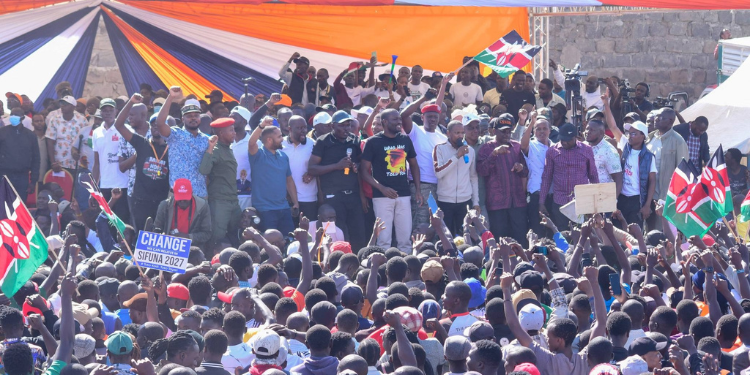
In other words, constitutional governance is not one issue among many. It is the foundation upon which solutions to every other national challenge are built. This explains why many Kenyans see the removal of President William Ruto not as an emotional act of revenge but as an opportunity to restore constitutional government.
That distinction matters. Removing a government because one dislikes its leader is very different from seeking political change because citizens believe constitutional norms, institutional independence and public accountability have been seriously weakened.
Rebuilding Institutions After Democratic Transition
History offers many examples where the first task after democratic transition was not implementing hundreds of new policies but rebuilding institutions that had become compromised. Independent courts. Professional public service. Credible electoral management. Parliament capable of genuine oversight. Security agencies operating within the law. Without these, even the best economic manifesto remains largely theoretical.
However, stopping at presidential politics would also be a serious mistake. Kenya’s Constitution deliberately disperses power across multiple institutions. Governors manage billions in county resources. Members of Parliament make laws, approve budgets and oversee the Executive. Senators protect county governments and participate in major constitutional processes. Members of County Assemblies oversee governors and influence local development priorities.
Every election, many voters spend months debating presidential candidates while giving barely five minutes to choosing the MCA who will directly influence roads, hospitals, markets and county spending.
That imbalance has cost the country dearly. A president committed to reform can still be frustrated by a Parliament filled with individuals who prioritise personal interests over national duty. Likewise, a governor with sound ideas cannot succeed if oversight collapses into political bargaining. Constitutional democracy depends upon an entire ecosystem of capable leadership.
A Dual Agenda for Kenya’s 2027 Elections
This means the conversation for 2027 should operate on two levels simultaneously. First, Kenyans must ask whether the next administration will restore respect for constitutional governance, institutional independence and the rule of law.
Second, voters must become far more demanding when selecting leaders across every elective office. Who has demonstrated integrity? Who understands public policy? Who has defended constitutional values when politically inconvenient? Who has used public office to improve people’s lives rather than personal fortunes? Who understands budgeting, legislation and oversight? Who listens to citizens instead of merely appearing during campaigns?
These questions matter just as much as presidential preferences. One of the greatest weaknesses in Kenya’s political culture has been our tendency to personalise governance. We celebrate presidents and blame presidents while overlooking the hundreds of elected officials whose daily decisions shape national outcomes. Parliament passes laws. County assemblies approve budgets. Governors implement development. Senators protect devolution. Independent commissions supervise elections, policing, ethics and public appointments. The judiciary interprets the Constitution.
Good governance therefore requires competence throughout the entire constitutional architecture. This is why citizens should resist simplistic narratives that reduce elections to personality contests.
Higher Expectations, Not Lower Ones
Equally, they should avoid the opposite mistake of pretending that all choices are morally identical. Not every election presents ordinary political alternatives. Sometimes citizens are called upon to defend the constitutional order itself.
If constitutional recovery becomes the immediate national priority, that should not exempt any incoming leaders from scrutiny. On the contrary, expectations should become even higher. Kenyans should demand clear commitments to protecting civil liberties, respecting court orders, strengthening oversight institutions, ensuring transparent public finance, ending impunity, rebuilding confidence in elections and allowing independent institutions to operate without political interference.
Removing one administration should never become the final destination. It should become the first step towards building a republic where no future president, regardless of party, ethnicity or popularity, can easily undermine constitutional safeguards again.
Ultimately, lasting change will not come from replacing one individual with another. It will come from citizens embracing a different standard of leadership across the entire political system.
Kenya does not simply need a different occupant in State House. It needs a renewed constitutional culture. That culture begins when voters elect leaders, from the village to Parliament, not because they are loudest, richest or most popular, but because they have demonstrated integrity, competence and commitment to public service. Only then will elections cease being cycles of disappointment and become genuine instruments of national renewal.
Follow our and X Account for real-time news updates.


Comments
No comments yet. Be the first to share your thoughts.