
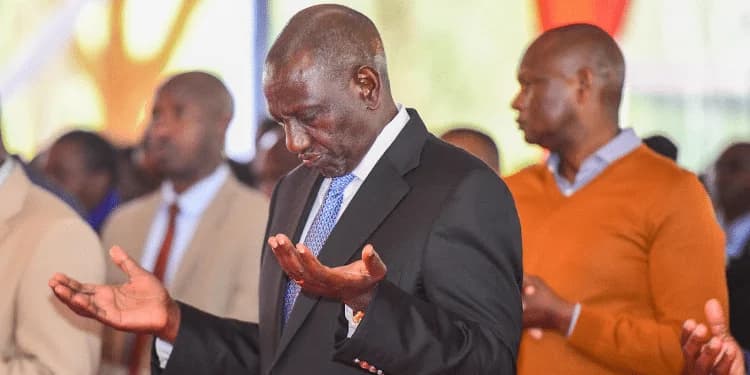
Political analysis usually begins by asking whether an incumbent government is becoming stronger or weaker. That question matters, but it can also distract attention from the other side of an electoral contest. Elections are not performance reviews in which citizens award marks to an administration and automatically remove it after a poor score. They are choices between available political organizations, candidates and governing possibilities.
An unpopular administration can therefore survive when its opponents cannot agree on a credible replacement. President William Ruto does not need every dissatisfied Kenyan to return to him. He only needs enough of them to disagree about who should replace him.
That uncomfortable possibility is becoming central to the 2027 presidential race.
The latest Infotrak national survey, released on July 13, 2026, placed Ruto at 32 percent, followed by Kalonzo Musyoka at 13 percent, Edwin Sifuna and Fred Matiang’i at 12 percent each, and Rigathi Gachagua at four percent. The survey also found a substantial undecided bloc and tested possible presidential tickets, none of which came close to commanding majority support.
Similarly, TIFA’s July 24 survey placed Ruto at 24 percent, Sifuna at 15 percent, Kalonzo at 13 percent, Matiang’i at 14 %, Gachagua at 7 percent, and Babu Owino at 2 percent.
The percentages changed between the two surveys, but the underlying structure remained largely intact. Ruto led individually while most expressed support remained divided among several opposition figures.
Surveys Show Leadership Without Majority Support
That contradiction now sits at the center of the election.
These numbers do not mean that opposition support can simply be added together and transferred to one candidate. Voters are not parcels that political leaders exchange after signing coalition agreements. A Gachagua supporter may reject Kalonzo, while a Sifuna supporter may refuse to vote for Matiang’i. Regional loyalties, candidate acceptability, party machinery and running-mate choices will determine whether fragmented support ever becomes one national vote.
Even so, the surveys reveal something that both sides should understand clearly. The government leads the candidate rankings without commanding anything close to majority support, while its opponents collectively attract more support but remain scattered across competing ambitions. The opposition currently possesses more anger than organization and more candidates than agreement.
That distinction separates public dissatisfaction from actual electoral power.
Many Kenyans may dislike the cost of living, taxation, unemployment, corruption or the government’s handling of protests. None of those grievances automatically produces an opposition victory. Public anger becomes politically decisive only after somebody organizes it, gives it a believable direction and persuades different groups to accept a common candidate.
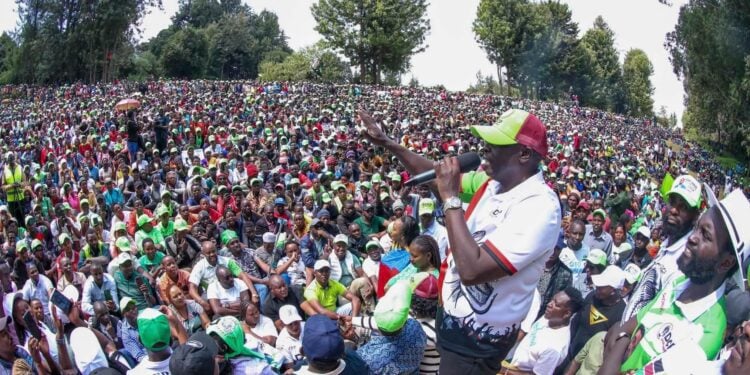
Ruto’s Organisational Edge Versus Scattered Ambitions
Ruto understands that distinction better than many of his opponents appear to.
He entered the 2022 election with a disciplined national organization, a memorable economic message and a coalition assembled around his candidacy. His campaign translated grievance against the political establishment into one national story, even though he had served as deputy president throughout the previous administration. His opponents entered with considerable institutional support but struggled to match his message, field organisation and emotional connection with voters.
The same organisational advantage has appeared in more recent by-elections. Such contests cannot be treated as miniature presidential elections because turnout is lower and local personalities frequently dominate. Nevertheless, they reveal whether parties can choose candidates, deploy agents, mobilise supporters, protect votes and convert political claims into actual ballots.
Since late 2025, the governing side has repeatedly demonstrated that capacity. UDA and ODM performed strongly in the November by-elections, while UDA later swept additional contests in February and May 2026. Opposition parties often divided the vote among themselves. These results do not prove that Ruto will win nationally, but they show that the governing side presently possesses a functioning electoral machine.
The opposition has not yet produced an organisation of comparable national discipline.
Why Opposition Unity Remains Elusive
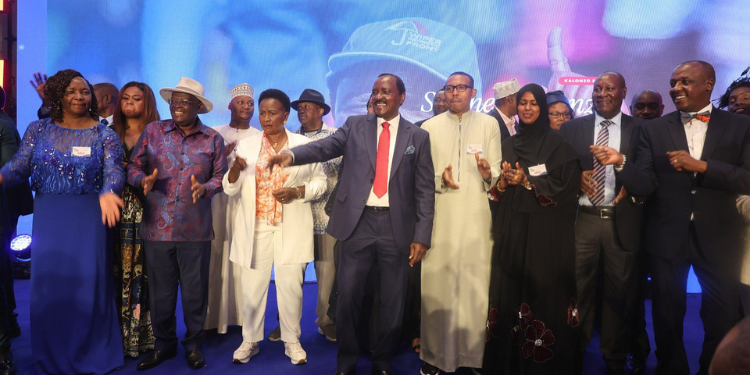
Kalonzo Musyoka, Fred Matiang’i, Rigathi Gachagua, Edwin Sifuna, Martha Karua and other emerging figures each bring different political assets. Some command regional loyalties, others appeal to reform-minded voters, while several possess government experience or generational appeal. Their weakness lies less in individual stature than in the unresolved question of how those ambitions can coexist within one electoral vehicle.
Every opposition leader appears to understand the need for unity, provided that unity forms around him or her. That condition has weakened many opposition projects before they reached the ballot.
Raila Odinga’s death further complicated the landscape by removing the one opposition figure who had repeatedly held together constituencies that did not naturally belong in the same political home. ODM’s cooperation with the broad-based government has also blurred the old boundary between government and opposition. Meanwhile, Gachagua’s Democracy for Citizens Party has established itself as a separate centre of mobilisation, particularly in Mount Kenya, rather than automatically joining the Kalonzo and Matiang’i formations.
The result is several opposition blocs competing for many of the same dissatisfied voters.
Fragmentation as the President’s Strategic Asset
From Ruto’s perspective, that fragmentation is not merely fortunate but strategically valuable. He does not need to eliminate dissatisfaction across the country because doing so may be impossible before August 2027. He needs to prevent dissatisfaction from acquiring one candidate, one campaign organisation and one persuasive national story.
The government can therefore campaign on development, economic recovery and continuity while quietly benefiting from every quarrel among its opponents. Each delayed coalition agreement, disputed nomination, competing presidential launch and public insult between opposition leaders reduces the likelihood that dissatisfied voters will move together.

The opposition’s problem is not simply choosing the most popular candidate. It must construct an agreement that supporters of unsuccessful aspirants can accept without feeling humiliated, excluded or politically orphaned. That requires more than hotel meetings and photographs of leaders holding hands. It requires a shared governing programme, transparent coalition rules, credible regional balance and clarity about what each political constituency gains from collective action.
Even a united opposition would not automatically guarantee electoral victory.
The Real Contest Before 2027
A coalition assembled only to remove Ruto may struggle to survive public scrutiny unless it explains what would change after taking power. Kenyans have seen opposition alliances united by electoral arithmetic but divided over ideology, offices and policy. A credible alternative must therefore convert dissatisfaction into a governing proposition rather than merely constructing an anti-Ruto arrangement.
This is where the government’s weaknesses could become either politically decisive or strangely irrelevant. If the opposition presents one acceptable candidate, a coherent economic alternative and a reliable national organisation, the election may increasingly resemble a referendum on Ruto’s record. If the opposition remains divided, voters will instead face several competing claims to replace him, allowing the incumbent to lead without first winning back everyone who has become dissatisfied.
Fragmentation, however, remains an advantage only while it lasts. Opposition coalitions often appear impossible until political necessity makes them unavoidable. Every month the opposition remains divided works in the President’s favor, while every serious step toward one candidate, one ticket and one campaign changes the structure of the election itself.
The government’s greatest advantage may therefore be neither popularity nor performance. It may be the opposition’s inability to transform widespread dissatisfaction into common political purpose.
That is why the decisive contest before 2027 may occur within the opposition before it occurs between the opposition and the government. Ruto does not require every unhappy Kenyan to forgive him. He requires enough of them to remain loyal to different challengers who cannot agree on how power should be pursued or shared.
Unless that changes, the opposition may discover that proving many Kenyans are dissatisfied with an incumbent is much easier than persuading them to unite behind one alternative.
This article was written by George Nyongesa, a lecturer of philosophy and logic at the University of Nairobi and Chuka University.
Follow our WhatsApp Channel and X Account for real-time news updates.


Comments
No comments yet. Be the first to share your thoughts.