
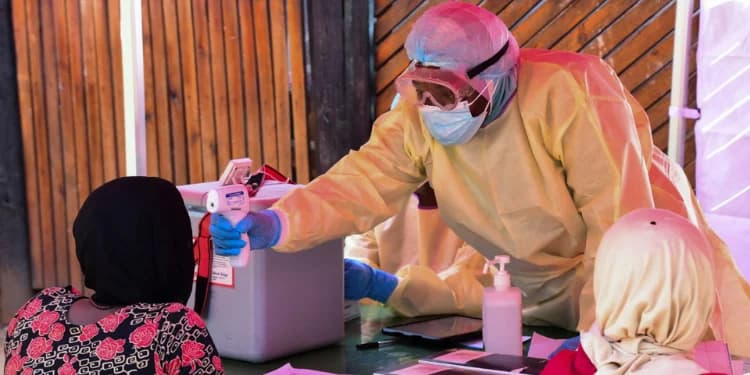
In 2026, the World Health Organization and the Africa Centres for Disease Control and Prevention (Africa CDC) jointly launched a continental preparedness and response plan to address the ongoing Ebola outbreak caused by the Bundibugyo virus.
The initiative seeks to mobilize US$518 million to help African countries and their partners strengthen preparedness, enhance early detection, and ensure a rapid and effective response to the outbreak.
Similarly, the the European Union (EU) and WHO have strengthened their collaboration to assist national authorities in addressing the ongoing Ebola outbreaks in the Democratic Republic of the Congo and Uganda.
This joint effort seeks to quickly curb transmission, protect affected communities, enhance regional preparedness, and ultimately save lives. Africa CDC and IOM – UN Migration have signed a landmark Cooperative Agreement for 2026–2028 to strengthen disease surveillance, emergency preparedness, cross-border cooperation, and equitable access to healthcare.
The agreement places particular emphasis on addressing the health needs of migrants, internally displaced persons, and other mobile populations, ensuring that everyone can access essential health services without discrimination.
Disease Outbreaks Continue to Test Africa’s Health Systems
As of February 2026, Ghana has been addressing seasonal cerebrospinal meningitis, particularly in the northern regions, including the Northern, Upper West, Savannah, and North East Regions, where suspected and confirmed cases have been reported.
Malaria remains a widespread mosquito-borne disease; however, child mortality has declined significantly due to expanded vaccination campaigns and the distribution of insecticide-treated bed nets.
In response to the risk of cholera outbreaks, health authorities, with support from the World Health Organization, identified 93 high-risk districts in early 2026 for enhanced prevention and preparedness.
The Ghana Health Service also warned of a potential meningitis outbreak during the dry season, when airborne dust and crowded living conditions can increase transmission.
In addition, authorities strengthened surveillance at ports and border crossings in mid-2026 to reduce the risk of the introduction and spread of hantavirus, a rodent-borne viral disease.
Similarly, Somalia’s humanitarian situation continues to be severely affected by the concurrent outbreaks of acute watery diarrhoea (AWD)/cholera, diphtheria, and measles.
The simultaneous occurrence of these three outbreaks poses significant public health risks and highlights the urgent need to strengthen disease surveillance, enhance preparedness, and ensure a coordinated and adequately resourced response.
Kenya is also facing multiple concurrent outbreaks of cholera, measles, dengue, and Mpox (Clade 1b), creating additional pressure on the country’s public health system.
In 2026, Kenya recorded 13,936 new HIV infections, with children and young people aged 0–24 accounting for more than half of these cases. At the same time, seasonal influenza and bronchiolitis cases have increased, placing young children under two years of age and individuals with chronic health conditions at heightened risk of severe illness.
In Nigeria, the Nigeria Centre for Disease Control and Prevention (NCDC) reported that, from the beginning of 2026 through the end of June, 922 confirmed cases of Lassa fever had been recorded nationwide.
This represents an increase from the 790 confirmed cases reported during the same period in 2025, underscoring the continuing burden of Lassa fever and the need for stronger prevention, surveillance, and outbreak-response measures.
UN Reports Challenges for Africa
UN reports that Africa is a highly diverse continent, with challenges differing considerably across countries and regions. African governments, regional bodies, and international partners continue to collaborate to address these challenges and advance sustainable development across the continent.
Climate change, hunger and malnutrition, and peacekeeping are the emerging challenges in Africa that need to be addressed as a priority to overcome the existing severe diseases.
The Way Forward.
Africa continues to face serious and recurring health threats, including Ebola, cholera, measles, mpox, meningitis, malaria, tuberculosis and other infectious diseases.
WHO reports that the African Region experiences more than 100 major public-health emergencies each year, placing extensive pressure on already fragile health systems.
It’s important to expand vaccination and preventive healthcare. Similarly, investment in primary healthcare and resilient health systems needs further strengthening. It will be significant to further share surveillance data, coordinate border health measures, conduct joint preparedness exercises, and establish rapid-response mechanisms through institutions.
African universities and public health institutions should be further supported to conduct locally relevant research, genomic surveillance, develop diagnostics, and evaluate vaccines and treatments to overcome the severe diseases.
Follow our WhatsApp Channel and X Account for real-time news updates.


Comments
No comments yet. Be the first to share your thoughts.