
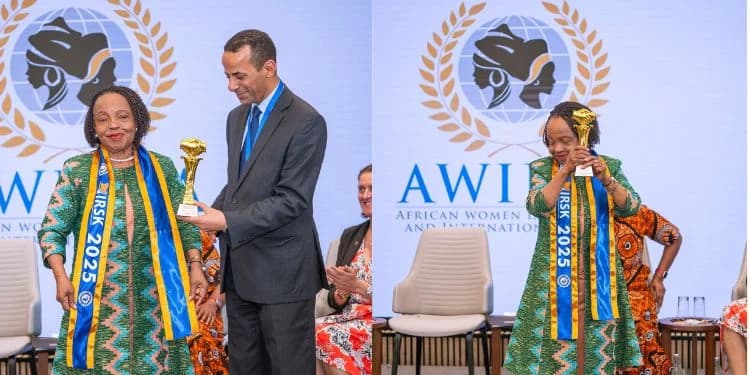
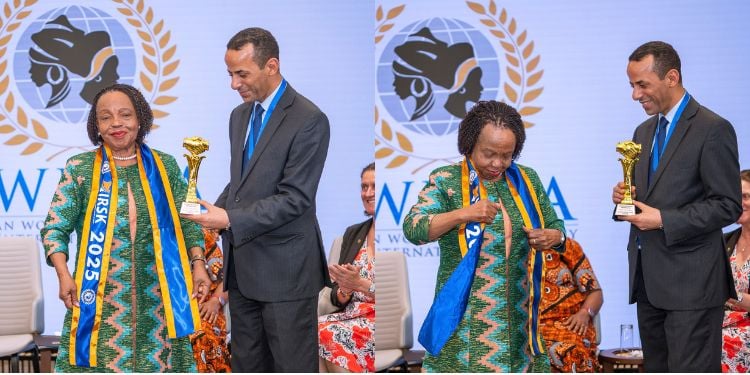
Lady Justice Effie Owuor is one of the pioneers of Kenya’s judiciary and a retired judge and lawyer whose career is marked by historic milestones in the country’s legal and judicial system.
She became Kenya’s first female State Counsel, first female magistrate, first woman High Court judge, and first woman Court of Appeal judge.
Effie Owuor was born in 1943 in Kakamega.
She attended Butere Girls High School from 1958 to 1961 before joining Alliance Girls High School, where she completed her Advanced-level education in 1963.
In 1964, she joined the University of East Africa’s Dar es Salaam campus in Tanzania to study law.
She graduated with a Bachelor of Laws degree in 1967.
Career and Judicial Milestones of Lady Justice Effie Owuor
Effie Owuor began her legal career in 1967 after joining the Attorney General’s Chambers as a State Counsel. Her appointment made her Kenya’s first female State Counsel.
In 1970, she became Kenya’s first female magistrate. She later rose to senior resident magistrate, handled criminal matters, and then moved to the High Court.
Owuor was appointed to the High Court in 1981/1982, becoming Kenya’s first woman High Court judge. She handled civil, criminal, constitutional and electoral matters during her time on the bench.
In 1983, she served on a Judicial Commission of Inquiry investigating allegations against former Attorney General Charles Njonjo. She served alongside Cecil Miller and Chunilal Madan.
From 1984 to 2000, Owuor served as a commissioner of the Kenya Law Reform Commission, combining judicial experience with legal reform work.
Between 1992 and 1996, she chaired the National Task Force on laws concerning children. Its work contributed to the development of the Children Act 2001.
In 1993, Owuor co-founded the Kenya Women Judges Association with Justice Joyce Aluoch. At the time, the two were the only women serving as High Court judges in Kenya.
Owuor reached another historic milestone in 1998 when she became Kenya’s first woman Court of Appeal judge. At the time, the Court of Appeal was the country’s highest court.
She retired voluntarily from the judiciary in October 2003 after a career spanning more than three decades.
After retirement, Owuor continued her public service through international peacebuilding. She served on the African Union Panel of the Wise, representing Eastern Africa, and later co-chaired FemWise-Africa, an African Union network promoting women’s participation in mediation and peace processes.
Family and Personal Life
Effie Owuor is a mother of six children. She was married to a Luo man who died while she was serving as a High Court judge.
Following her husband’s death, Owuor publicly spoke about widowhood and her decision not to participate in Luo widow-inheritance practices, which she considered degrading to women.
Her experience as a widow became part of her wider advocacy for women’s rights. She also spoke about harassment she experienced while mourning her husband and challenged practices that discriminated against women.
Follow our WhatsApp Channel and X Account for real-time news updates.

Comments
No comments yet. Be the first to share your thoughts.