
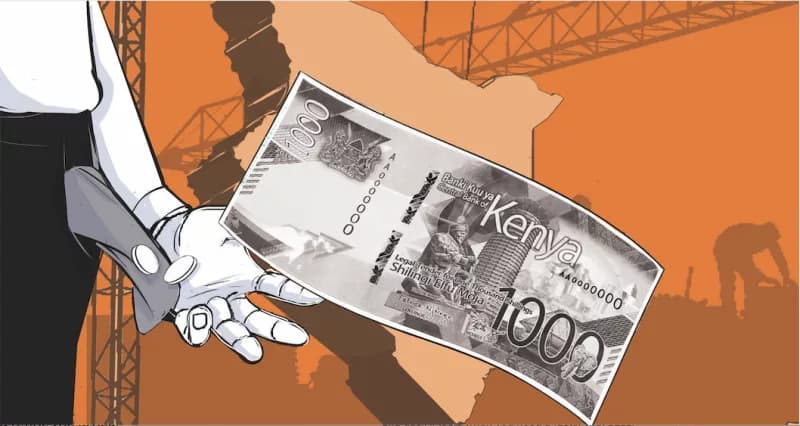
Fellow Kenyans. Our nation continues to bleed from economic crimes that have drained public resources for decades. Billions that should have built schools, hospitals, roads and opportunities have instead disappeared into private pockets, unexplained wealth and irregularly acquired assets.
We have strong laws on paper; the Anti-Corruption and Economic Crimes Act (ACECA) and the Proceeds of Crime and Anti-Money Laundering Act, yet recovery remains incomplete, public trust is low and too many cases drag on without full restitution to the people.
It is time for a practical, principled solution that puts recovery first. I propose a time-bound, conditional amnesty and restitution scheme firmly anchored in existing ACECA processes and administered solely by independent statutory bodies such as the Ethics and Anti-Corruption Commission (EACC), working with the Assets Recovery Agency (ARA) and the Director of Public Prosecutions.
This proposal is a structured invitation to those who have benefited from economic crimes involving quantifiable public loss to come forward, make full restitution plus statutory interest, and close that chapter under clear, verifiable rules.
The design is deliberate and limited. It would cover only conduct that occurred on or before a fixed cut-off date, preferably 31 December 2025, so that no one is rewarded for new offences. It would apply strictly to quantifiable public-loss cases, including but not limited to misappropriated funds, proceeds of corruption, unexplained wealth linked to public resources, and related assets, including land and property.
Full, independently verified restitution of the principal amount plus interest would be a non-negotiable condition. Self-declarations would be starting points only; EACC and the ARA would conduct forensic verification. Partial payments or vague promises would not qualify.
Crucially, the scheme would complement ongoing investigations and active cases would continue. An application should not halt probes or freeze orders. Only after independent verification and formal acceptance under the law would the specific disclosed offence be settled. Non-applicants and those who fall short would remain fully exposed to ordinary enforcement.
Applications would go directly to EACC under the existing regulatory framework, strengthened if necessary by targeted amendments that Parliament can pass without waiting for any election result.
Public participation would be built in through written memoranda on published summaries of applications, ensuring transparency while protecting legitimate privacy interests. Disputes would follow ordinary court processes. Everything would be gazetted or publicly recorded where appropriate.
This approach strengthens, rather than weakens, our institutions. It prioritises returning stolen public wealth to the Consolidated Fund and rightful owners. It offers Kenya the chance to reset the income and wealth inequality gaps. It offers a clear deadline and a realistic incentive for disclosure while preserving deterrence and the rule of law. It avoids the credibility traps of politicised amnesties and the endless cycle of incomplete prosecutions that leave the public empty-handed.
To every Kenyan who aspires to high office, presidential candidates, those seeking parliamentary seats, governors and all who ask for our trust in 2027, I make this direct appeal: adopt this ACECA-aligned restitution scheme as a firm campaign pledge.
Commit publicly to support the necessary legislative refinements, to resource the independent agencies properly, and to implement the window without fear or favour. Let voters judge you not only by your promises of future integrity but by your concrete plan to recover what has already been lost.
The citizens of the sovereign republic of Kenya are not asking for magic. We are asking for seriousness. We are asking leaders to treat public resources as belonging to the people, not as spoils. A well-designed, restitution-hard, institutionally grounded process can help us recover assets, restore some measure of confidence, and draw a clearer line for the future.
The choice is ours. We can continue with the status quo of slow recovery and lingering distrust, or we can demand that those who seek to lead us put a practical recovery mechanism at the centre of their platforms. Let this be more than another debate. Let it become a measurable commitment that every serious contender is prepared to own.
The public purse is not a private slush fund. It is time we asserted the same.
Social impact adviser, social consciousness theorist, trainer and speaker, agronomist consultant for golf courses and sportsfields and author of 'The Gigantomachy of Samaismela' and 'The Trouble with Kenya: McKenzian Blueprint'

Comments
No comments yet. Be the first to share your thoughts.