
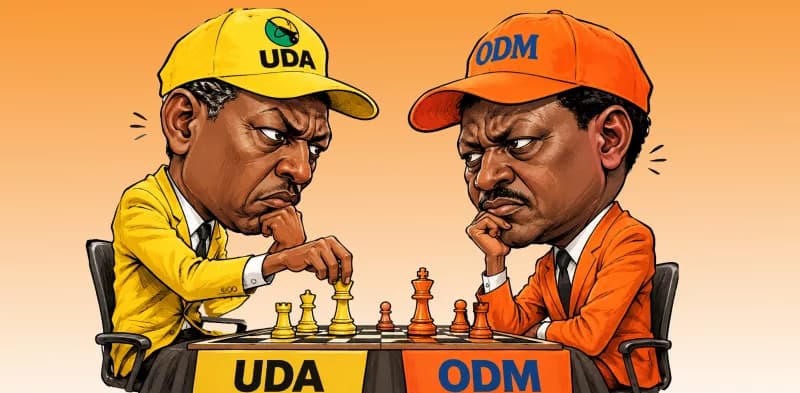
Allow me to strategically frame the UDA–ODM engagement. ODM articulates ‘non-negotiable conditions’: 50-50 power-sharing, the Deputy President's slot, zoning, a written pact, and the 10-point agenda. UDA emphasises "unconditional support," no zoning, and the Deputy President's seat being occupied. Two clear positions, moving toward each other.
We are witnessing the start of strategic negotiation between two rational political parties, each using the language of ‘conditions’ and ‘unconditional’ to advance legitimate interests. Public engagements signal priorities; boardrooms settle details. What appears to be a condition is an offer, and what sounds like an unconditional offer is a proposal.
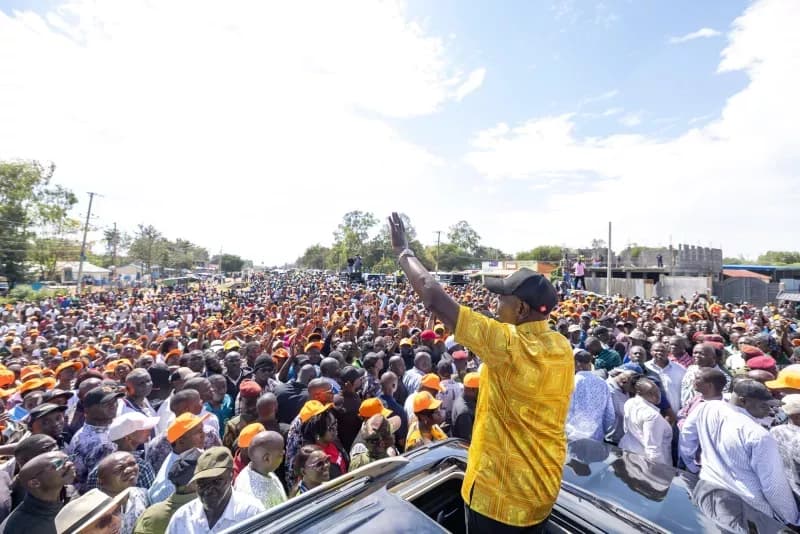
When Simba Arati declares ODM "will not cede the deputy president position", when Gladys Wanga insists "UDA takes the President, and ODM takes the Deputy President", and when Junet Mohamed elevates the running mate slot to the official party position, these are strategic priorities. They signal to UDA how much ODM values constructive political engagements.
When Interior Principal Secretary Raymond Omollo confirms that Nyanza will back President Ruto "without conditions", he offers a strategic counter-perspective. It is a factual argument that Ruto has delivered development equitably and that in 2007 the Rift Valley region supported Raila Odinga without conditions. He is appealing to political reciprocity. This reflects a genuine belief that delivery, not transactional bargaining, should define political support.
I believe that ODM's and UDA’S internal voices are strategic differentiations. The conditional and unconditional voices articulate the parties’ core interests, preparing the ground for compromises.
President Ruto has publicly committed to a joint manifesto and a 2027 coalition with ODM, while Oburu Oginga has openly defended the broad-based arrangement as conscious engagement, insisting the 10-point agenda is a fundamental pillar. He has declined to prioritise a written agreement and has distinguished between a "broad-based government" and a "coalition government", to allow ODM and UDA to informally engage.
The Nadco agenda, adopted by Parliament in February 2024, has been framed as non-negotiable, strategically anchoring the talks in principles for both sides, while leaving positions, zoning and the deputy presidency as the real terrain of bargaining. ODM and UDA want policy influence and tangible political returns. These are legitimate interests for both parties.
These negotiations will involve trading political interests. ODM and UDA may not get everything they want, but they may get something of equivalent value. This is persuasion: each side convincing the other, and their bases, that a particular exchange serves their interests.
A broad-based management committee was proposed in April 2026. A 10-member joint manifesto committee, co-chaired by Carey Orege for ODM and Emmanuel Nzai for UDA, is drafting a common policy platform. ODM's central management committee resolved in January 2026 to initiate structured pre-election talks.
In August 2026, Ruto announced that Kenya Kwanza and ODM had formally resolved to develop a joint manifesto and constitute a coalition for 2027. These boardroom mechanisms reconcile interests and quietly draw the contours of a coalition.
The Political Parties Act, 2011 requires coalition agreements to be written, executed by authorised officials, certified by a Commissioner for Oaths and deposited with the Registrar, three months before an election for a pre-election pact. The Third Schedule mandates content: policies, decision-making structures, code of conduct, dispute resolution and enforcement. This is a boardroom document, not a public speech.
There are no binding "conditions" in the sense of take-it-or-leave-it demands. Nor is there "unconditional" support in any absolute sense. What exists is a strategic negotiation between two rational actors, each using the rhetoric of ‘conditions' and ‘unconditional’ to advance legitimate interests.
UDA's "unconditional" language shapes ODM's value; ODM's "conditional" language shapes UDA's offer. Both understand the final deal will be struck in the broad-based management committee, the joint manifesto committee, the technical teams and the party organs. The outcome will be a negotiated exchange.
That is what political negotiation is: the patient, constructive work of persuasion and exchange between actors who know that today's "non-negotiable" is tomorrow's bargaining chip.
Comments
No comments yet. Be the first to share your thoughts.