
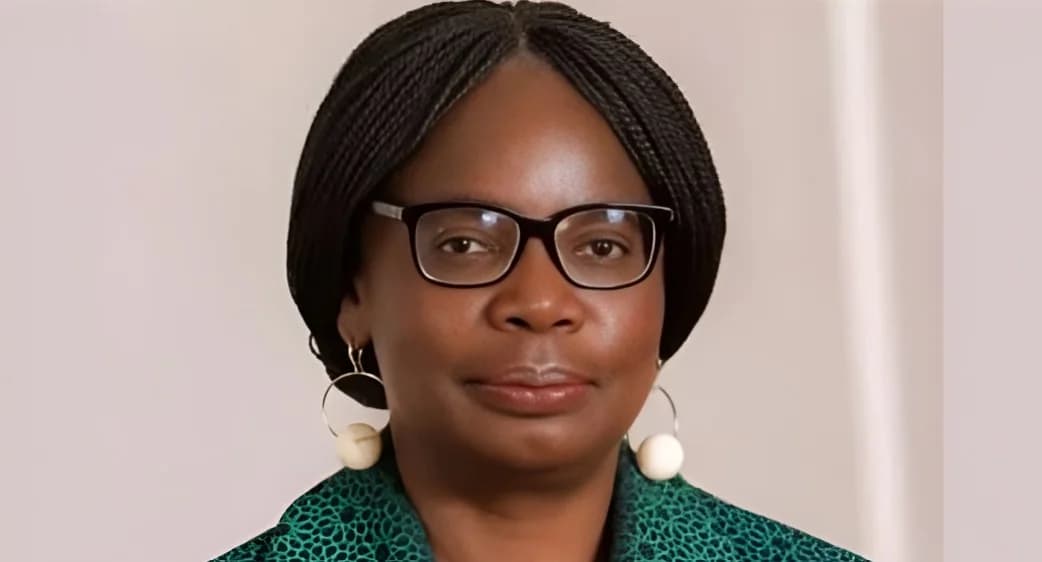
Kenya’s Phoebe Okowa triumphs after tense UN voting deadlock to secure full nine-year ICJ term

Okowa secures 183 votes in the UN General Assembly and 13 in the Security Council, winning a full nine-year mandate after a prolonged voting deadlock.
Kenya’s Prof. Phoebe Okowa has been re-elected as a judge of the International Court of Justice (ICJ), securing a full nine-year term running from 2027 to 2036.
Okowa secured an absolute majority in both the United Nations General Assembly, where she received 183 votes, and the Security Council, where she garnered 13 votes.
Her re-election follows a prolonged voting deadlock between the two UN bodies, which went through several rounds of voting before rival candidates withdrew to break the stalemate.
Okowa made history in 2025 as the first Kenyan and only the eighth woman to serve on the ICJ bench. Her new mandate will see her continue serving at the court, based in The Hague, for another nine years.
The victory marks a major diplomatic success for Kenya following an intensive lobbying campaign led by President William Ruto and the Ministry of Foreign Affairs to secure her re-election for a full term.
The final vote tallies delivered a decisive victory for Okowa. She secured 183 votes in the UN General Assembly, against just two for Peru’s candidate. In the Security Council, she received 13 votes, while the Peruvian jurist failed to secure a single vote.
Latest Stories
- Sabastian Sawe’s sub-two-hour marathon shortlisted for 2026 World Athletics’ Moment of the Year
- Indian navy rescues 20 Iranian sailors from hijacked vessel off Somalia
- 𝐄𝐚𝐬𝐭𝐥𝐞𝐢𝐠𝐡 𝐕𝐨𝐢𝐜𝐞 𝐚𝐭 𝐍𝐢𝐧𝐞 - Another body recovered on day 12 of Eastleigh collapse search
- Kenya’s Rising Lionesses beat Australia, making history with rugby gold at Dakar Youth Olympics
The overwhelming support secured her a full nine-year mandate and marked a major diplomatic victory for Kenya after an intensive lobbying campaign led by President William Ruto and the Ministry of Foreign Affairs.
Okowa made history in 2025 as the first Kenyan and only the eighth woman to serve on the ICJ bench. Her re-election gives her another nine years at the World Court in The Hague, further cementing her place in international jurisprudence.
How the deadlock was broken
Her victory followed a tense election standoff that threatened to prolong the process, with the UN General Assembly and Security Council struggling to agree on a candidate through several rounds of voting.
The stalemate was eventually broken after several candidates withdrew, most notably Sierra Leone's Prof. Charles Jalloh, who had been locked in a closely contested race with Okowa.
Sierra Leone's Ambassador to the UN announced the withdrawal in an emotional address, declaring that his country would support the Kenyan judge.
“I take the floor on behalf of the Republic of Sierra Leone to announce that my government has decided to withdraw the candidature of Prof. Charles Jalloh for the elections of the ICJ. And to give its full support to Judge Phoebe Okowa of the Republic of Kenya,” the envoy said.
He explained that the decision was driven by the need to protect Africa's representation on the court.
“If Africa’s vote stays divided, the continent risks losing even the one seat now open to it and falling further below its already inadequate share. Sierra Leone will not let that happen.”
The ambassador said Sierra Leone had put the continent's interests ahead of its national candidate, describing Okowa as a distinguished legal scholar with extensive international experience.
“Saving Africa’s seat matters more than any one national candidate. Our decision puts the continent first. Judge Okowa needs no introduction to this assembly. She was the first African woman elected to the International Law Commission.”
“Since this assembly and the Security Council elected her last year, she has served the court with distinction. She brings deep scholarship, practical experience before the court and a commitment to integrity of international law,” he said.
He further defended the decision to back the Kenyan judge, saying it was in the best interests of the court and international justice.
“Supporting her is not a favour to Africa. It is the right thing to do for the court, for fairness and for the authority of international law.”
Ecuador and South Korea also withdrew their candidates, joining Sierra Leone in stepping aside to break the deadlock and allow the court to fill its vacant fifth seat.
Although the election had been marked by prolonged divisions and the African Union's failure to rally behind a single candidate, the final results delivered overwhelming international support for Okowa.
Comments
No comments yet. Be the first to share your thoughts.