
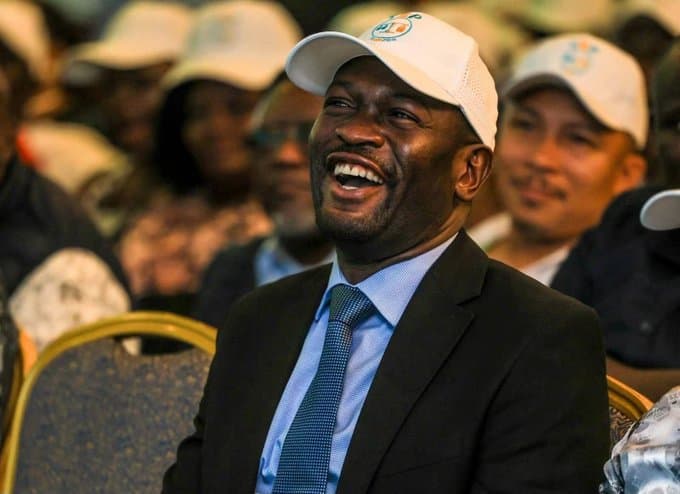
Nairobi senator Edwin Sifuna/FILE

Nairobi Senator Edwin Sifuna has cited political developments in Serbia and Brazil as a source of hope for the 2027 General Election, saying the outcomes show that unexpected electoral results remain possible.
Sifuna said he was encouraged by the recent elections in the two countries as he prepares for a presidential contest against President William Ruto.
“I don’t know if those who are categorical that there can be no miracles in elections are following the happenings in Serbia and Brazil. I'm super encouraged for 2027 because we in Kenya pray to the same God. Inshallah we get ours too,” Sifuna wrote on X.
His message comes as he builds his political campaign ahead of the August 2027 election, in which he intends to challenge Ruto and lead an alternative to the Kenya Kwanza administration.
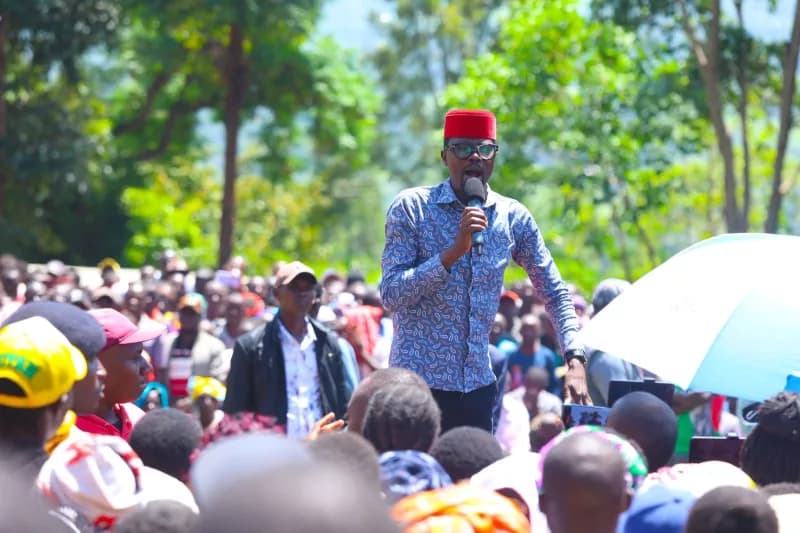
The senator has been mobilising supporters through the Linda Mwananchi movement and has positioned himself among opposition leaders seeking a change of government.
On October 4, Sifuna unveiled The Equitable Party (TEP) as his political vehicle for the 2027 presidential contest, with plans to take over its leadership as he prepares for the election.
In his latest remarks, he said he sees the developments in other countries as evidence that an incumbent or an established political establishment can be defeated, even when the opposition faces a difficult contest.
In Serbia, a student-backed opposition movement defeated the long-dominant Serbian Progressive Party-led alliance in parliamentary elections held on Sunday.
President Aleksandar Vučić conceded defeat after preliminary results showed the Student List winning 52.7 per cent of the vote, against 39.2 per cent for the alliance led by his party.
The victory followed nearly two years of anti-government protests that began after a railway station canopy collapsed in the city of Novi Sad in November 2024.
The incident became a rallying point for demonstrators who blamed corruption and negligence for the disaster and demanded greater accountability from the government.
The student movement attracted voters opposed to Vučić’s leadership, campaigning on issues including fighting corruption, improving education and reducing political influence over public institutions.
Sifuna also referred to Brazil, where President Luiz Inácio Lula da Silva secured re-election after a closely fought campaign against right-wing challenger Flávio Bolsonaro.
Lula won 51.79 per cent of the vote against Bolsonaro’s 48.21 per cent, according to Brazil’s Superior Electoral Court, in a result reported by the BBC on Monday.
The outcome followed a dramatic turnaround. Bolsonaro had led Lula in the first round of voting on October 4, winning 47 per cent against Lula’s 45 per cent, raising doubts about whether the veteran left-wing leader could recover sufficiently to win the run-off.
Lula’s campaign subsequently regained momentum through street demonstrations and a major social media mobilisation effort, while his camp focused on increasing voter turnout.
The second round recorded the largest decline in abstention between the first and second rounds of a Brazilian presidential election since 1989, according to the BBC.
Lula’s victory secured him a fourth presidential election win across his political career, having previously served two consecutive terms from 2003 to 2010 and returned to office in January 2023.
Sifuna’s invocation of the two elections comes as he seeks to consolidate his own presidential bid and build a wider opposition coalition capable of challenging Ruto.
The senator has increasingly positioned himself as a national political figure following his fallout with the Orange Democratic Movement, where he served as secretary-general before being removed from the position.
In July, Sifuna said he would not reject a presidential bid if Kenyans collectively decided he was the right candidate. He maintained that the decision should be made through consultations with supporters rather than unilaterally.
He subsequently intensified his political mobilisation through Linda Mwananchi, holding rallies and engaging supporters across the country.
In September, he reiterated his intention to challenge Ruto, saying he would need to work with other opposition leaders, including Wiper leader Kalonzo Musyoka and former Deputy President Rigathi Gachagua, to build a united front.
The unveiling of TEP in October provided his campaign with a formal political vehicle as the opposition continues to position itself ahead of the 2027 election.
For Sifuna, however, the message is clear, as he believes the 2027 contest remains open and that an electoral upset is possible.

Comments
No comments yet. Be the first to share your thoughts.