
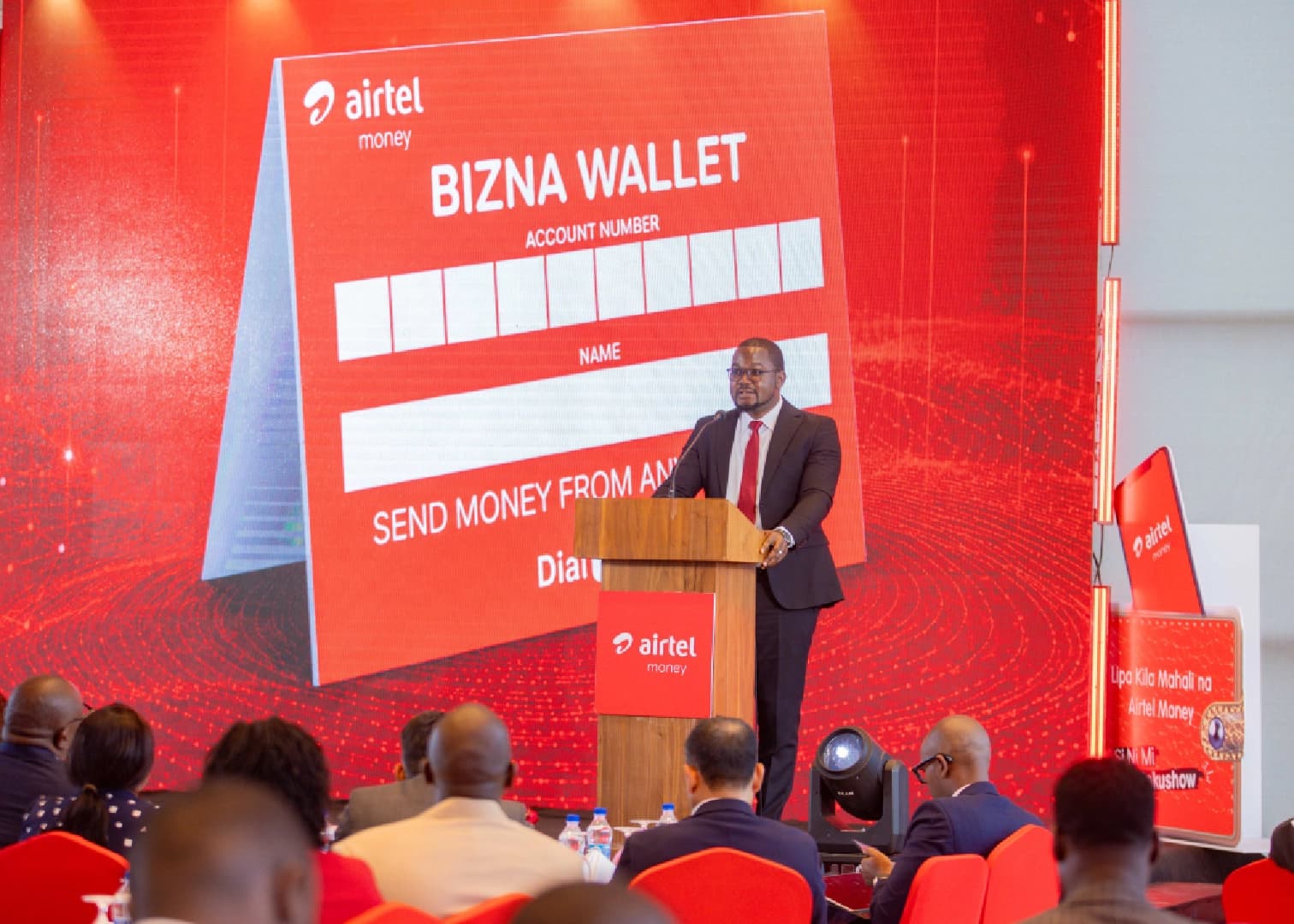
Airtel Money has entered the micro-merchant payments market with Bizna Wallet, a digital business wallet designed for kiosk owners, mobile money agents, and small traders who make up much of Kenya’s informal economy.
The move sets Airtel on a direct collision course with Safaricom’s Pochi La Biashara, a product that has quietly become one of the most successful tools in the M-Pesa ecosystem.
Within days, the two telcos were locked in a tariff-cutting contest that is already reshaping what small business owners pay to receive money.
Bizna Wallet helps entrepreneurs keep their business income separate from their personal money. While that may seem like a small change, it solves a common problem for many traders who mix the two and find it difficult to track profits.
Customers can pay into a Bizna Wallet without paying any transaction fees. The wallet also protects merchants from unauthorized payment reversals, a type of fraud that has caused losses for many small businesses.
In addition, it supports payments from different mobile networks, allowing merchants to receive money regardless of which telco their customers use.
Merchants can register through the My Airtel app or by dialing *334# and selecting the Bizna Wallet option. Airtel has also expanded its Rudishiwa cashback offer, giving customers 50% cashback on eligible transactions of KES 101 and above, including bill payments and bank transfers.
Safaricom got here first. Pochi La Biashara launched in 2020 with nearly the same pitch: to give small merchants a way to keep business money apart from personal funds without needing a full till number. It worked.
By March 2026, Safaricom counted 2.1 million merchants on the platform, a base built over six years that Airtel cannot replicate overnight no matter how aggressive its pricing gets.
That scale is precisely what Safaricom moved to defend by revising its tariffs for both Pochi La Biashara and Lipa na M-Pesa Buy-Goods.
Transactions under KES 200 became free, up from the previous KES 100 threshold, and transfers between KES 2,501 and KES 250,000 were capped at a promotional KES 50 through October 31, 2026.
Airtel, meanwhile, didn’t stop at free merchant payments. It halved costs across PayBill payments, cross-network transfers, and bank transfers, delivering the savings through its cashback structure rather than a straight price cut.
| Feature | Airtel Bizna Wallet | Safaricom Pochi La Biashara |
| Primary purpose | Separate business and personal funds | Separate business and personal funds |
| Customer payment fees | Free | Free under KES 200; tiered above, capped at KES 50 promotionally |
| Reversal protection | Yes | Yes |
| Access | *334# or My Airtel App | *334# or M-Pesa App |
| Merchant base | Newly launched | 2.1 million (March 2026) |
| Extra incentive | 50% cashback above KES 101 | Bundled into the wider M-Pesa ecosystem |
The immediate winner in this standoff is the small business owner. Whichever wallet a trader picks, the cost of getting paid digitally is falling, and the incentives on offer, whether cashback or fee waivers, put more money back in merchants’ pockets.
Airtel is betting that zero fees and cashback can chip away at a six-year head start; Safaricom is betting that a 2.1 million-strong merchant network and instant tariff cuts can hold the line before customers drift.
Neither telco can sustain deep discounts indefinitely, so the real test will come once the promotional windows close and both companies have to decide how much of this price war they’re willing to keep funding.

Comments
No comments yet. Be the first to share your thoughts.