
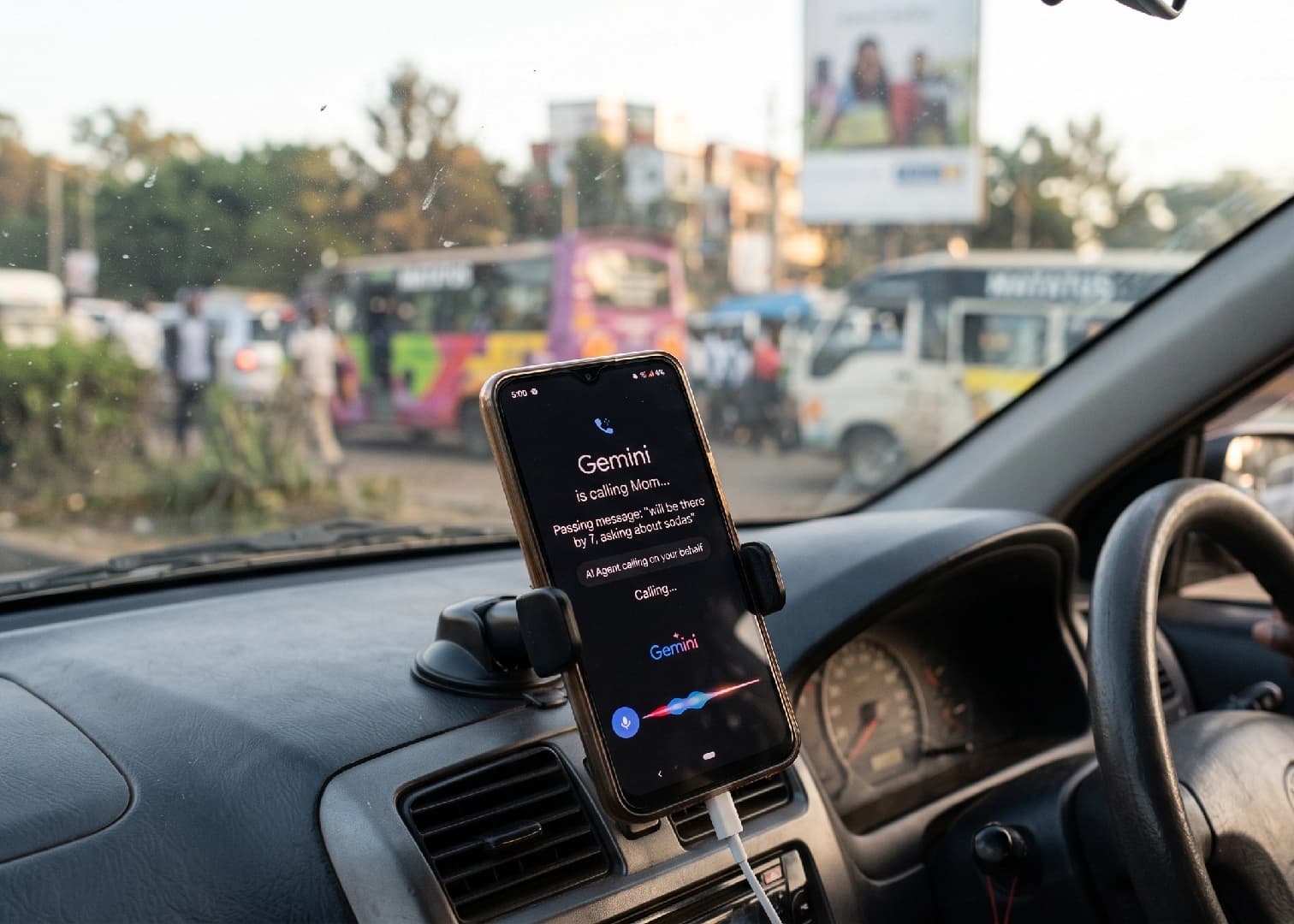
Picture yourself stuck on Langata Road, running late for a family function in Rongai, with your phone at 9% and your mother waiting to hear whether you are still coming.
A ten-minute call about arrival time is the last thing you want, so you tell Gemini to ring her, say you will be there by 7, and ask whether she still wants you to bring the sodas.
That is roughly the future Google seems to be exploring, according to an APK teardown from Android Authority that found screens describing Gemini calling personal contacts to pass on a message or ask a question and report back.
It is not a confirmed feature, and teardowns often show unfinished work rather than promises. What Google has actually released is Call for Me, a limited test for Pixel 11 owners in the US that phones businesses to check hours, prices, and stock or to make reservations.
Gemini would say the words instead of just helping you draft them; basically, an assistant that writes a message for your chama group could call the members and tell you who is coming on Saturday.
Daily life in Kenya runs on phone calls more than most tech roadmaps would care to admit.
Be it the plumber who never opens WhatsApp or the relative who says “nitakupigia” and is never heard from again, and those are far more relatable tasks than the flights booking and restaurant reservations that Silicon Valley loves to use as examples.
The real value of AI agents may lie in managing the tangle of small tasks rather than shaving minutes off individual chores.
Calling extends that idea further because an agent could reach people who are not inside any app, which counts for a lot in a place where so much of everyday life still happens outside tidy digital services.
A botched restaurant booking costs you an evening, whereas a botched conversation with your mother costs something harder to put a price on.
An AI could mishear a date, miss a joke, make a casual question sound like a demand, or leave her believing you agreed to something you never did, and Google’s own terms warn that it can misread responses.
Language is another hurdle. Many Kenyans switch between English, Swahili, and Sheng in the same conversation, but the test version currently handles English only.
Since the calls use your normal carrier plan, a conversation that runs longer than expected could also eat into your airtime or call bundles.
Privacy is the bigger worry, though. Google says the AI announces itself and that calls are recorded, which leaves open who keeps your mother’s recording and what happens if she mentions personal information.
The Data Protection Act gives people rights over how their personal information is collected and used, and the Office of the Data Protection Commissioner stresses transparency and data minimization, so a system that knows your contacts, call history, and relationships would have plenty to answer for.
Fraud adds to the risk, because Kenyans already get calls from people claiming to have sent money by mistake, and a convincing AI voice from a number you trust would be a gift to them.
Asking Gemini to tell your landlord you will pay tomorrow is simple admin, but asking it to apologize to your girlfriend for you means handing over something that should come from you.
For people who find phone conversations hard because of speech difficulties or anxiety, writing out what they want and letting the AI do the talking could be a real gain, so where the line sits will decide whether this feels useful or intrusive.
It will help if Google lets you preview what will be said, stop the call or take over halfway, and lets the person being called opt out with ease.
The bigger story is not that Gemini might call Mom. It is that AI agents are moving beyond our phones and into the real world. Once an agent can call your mother, the question becomes less about what it can do and more about what you are willing to let it handle.


Comments
No comments yet. Be the first to share your thoughts.