
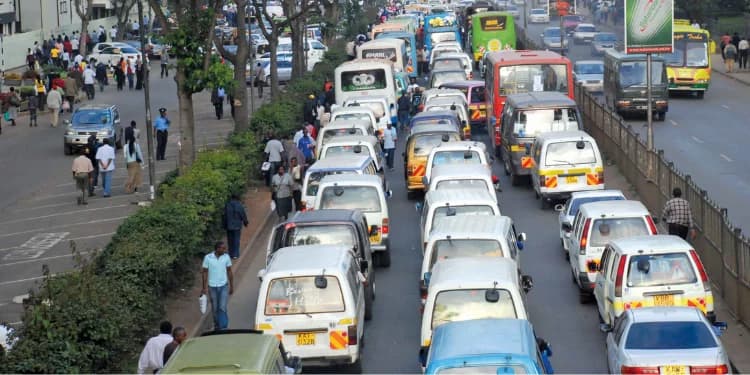
Nairobi motorists are facing heavier traffic as the back-to-school period brings more vehicles and pedestrians to Nairobi’s highways on August 25.
The busiest areas are concentrated in the Central Business District (CBD) and along major routes connecting residential areas to the city center.
Nairobi Traffic in the CBD Area
Haile Selassie Avenue is experiencing heavier traffic than in recent weeks, with congestion stretching from Uhuru Highway towards Landis Road and Machakos Bus Station.
Additionally, congestion has been observed around Marikiti, Luthuli Avenue, Latema Road, T-Room, and Nyamakima as parents, students, and other commuters travel to Nairobi.
Thika Road Among Worst Affected Routes
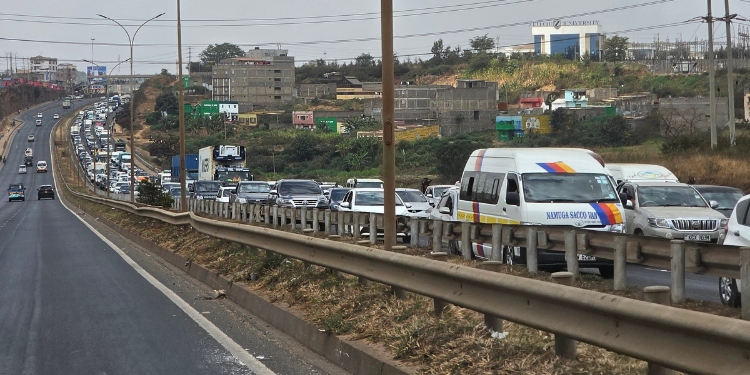
Thika Superhighway is recording significant delays, with motorists using the highway noting traffic congestion from the Ruiru and Githurai stretch towards Kasarani.
However, the most severe congestion is reported between KCA University and the Pangani Interchange.
Motorists using the route have been warned to expect delays, while traffic on Kiambu Road has also been affected around Muthaiga Dip as vehicles approach Pangani.
Jogoo Road and Mombasa Road traffic
Jogoo Road is also experiencing increased traffic, particularly around Makadara and Mbotela.
The congestion is extending towards Shauri Moyo and the city center, adding pressure to roads serving Nairobi’s eastern suburbs.
Utawala is also recording some traffic buildup, relative to the normal morning hour traffic.
On the other hand, traffic on Mombasa Road towards Nairobi is comparatively lighter than on Thika Road.
Traffic flow is relatively better on Waiyaki Way, Ngong Road, and Lang’ata Road, which are less congested than the Thika Road corridor.
Back-to-School Travel Raises Road Safety Concerns.
With learners resuming for the Third Term, the National Transport and Safety Authority (NTSA) has issued a fresh safety checklist for vehicles transporting school-going children.
In an advisory issued on August 19, NTSA urged schools to ensure vehicles transporting learners meet all safety requirements before children begin their journeys.
The authority urged schools to ensure that vehicles used to transport learners are roadworthy and meet the required safety standards.
“As schools prepare to reopen, all school administrators are urged to ensure that their transport vehicles are roadworthy and compliant with safety regulations,” NTSA stated.
NTSA Lists Requirements for School Transport
Under its latest advisory, NTSA requires school transport vehicles to have valid inspection certificates, Road Service Licenses, and insurance cover.
The authority has also directed operators to ensure that speed limiters are functioning and transmitting data to its Intelligent Road Safety Management System.
Additionally, vehicles should be properly serviced, with particular attention to brakes, tires, lights, and side mirrors.
Further, drivers and conductors must have valid driving licenses and PSV badges, while learners should wear seat belts throughout their journeys.
Operators have also been warned against carrying passengers beyond the approved capacity.
NTSA further directed that learners should not be allowed to put their heads, arms, or other body parts outside moving vehicles.
Follow our WhatsApp Channel and X Account for real-time news updates.



Comments
No comments yet. Be the first to share your thoughts.