
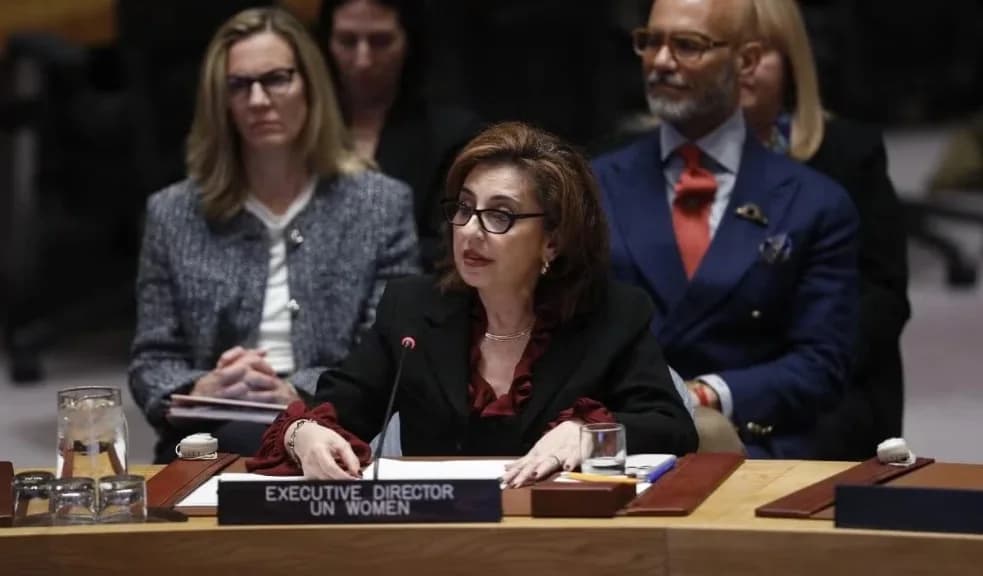
Women made up just 5 per cent of peace negotiators worldwide in 2025, UN says

According to Bahous, a record 756 million women and girls live within 50 kilometres of armed conflict, while women in conflict-affected settings are five times more likely to die from preventable maternal causes.
Women accounted for just 5 per cent of negotiators across 57 peace processes worldwide in 2025, down from 7 per cent a year earlier, despite decades of efforts to increase their participation in peace talks, a UN report presented to the Security Council on Tuesday has shown.
According to UN Women Executive Director Sima Bahous, who presented the Secretary-General’s annual report on women, peace and security, nearly 80 per cent of active peace negotiations last year took place without a single woman at the table, 26 years after the Security Council adopted Resolution 1325, which calls for greater participation of women in preventing and resolving conflicts.
“After 26 years of commitments to 1325, it is indefensible that nearly 80 per cent of active peace negotiations last year took place without a single woman at the table,” Bahous told the council.
The exclusion extends to ceasefire agreements, which often determine whether civilians are protected when fighting stops. According to Bahous, none of the 13 ceasefire agreements reached in 2025 included substantive references to women and girls, even as UN-verified cases of conflict-related sexual violence doubled in one year.
“These omissions come at a terrible human cost,” she said.
The consequences of excluding women from peace negotiations extend beyond the agreements themselves, with millions exposed to the effects of conflict and the breakdown of essential services.
Latest Stories
- Indian worker dies after drilling rig with 115 on board sinks off Gabon, four still missing
- Nigerian Muslim cleric shot dead amid concerns over violence against religious leaders
- Amnesty accuses Tanzania of using anti-terror laws to silence critics, curb freedoms
- Why Eastleigh building collapse is not an accident - Engineers Board boss Harrison Keter
According to Bahous, a record 756 million women and girls live within 50 kilometres of armed conflict, while women in conflict-affected settings are five times more likely to die from preventable maternal causes. Girls are two-and-a-half times more likely to be out of school than those in stable areas.
Further, almost 40 per cent of women and girls living in extreme poverty are in conflict-affected areas, where displacement and disrupted services leave women caring for children, injured relatives and older people while facing heightened risks of sexual violence, exploitation and trafficking.
At the same time, organisations supporting women and girls in crisis-hit communities are facing funding shortages. A UN Women survey found that 61 per cent of women’s organisations in conflict-affected areas were in a worse financial position than a year earlier, while 45 per cent had less than six months of funding remaining.
“That so many women-led organisations are struggling to survive is not simply a consequence of war. It is a consequence of how we choose to define security – and where we choose to invest in it,” Bahous said.
She urged governments to ensure women account for at least one-third of participants in peace processes they support, allocate more development assistance to gender equality in conflict-affected countries and hold perpetrators of violence against women and girls accountable. Bahous also called for the protection of women peace-builders, human rights defenders and humanitarian workers from attacks and reprisals.



Comments
No comments yet. Be the first to share your thoughts.