
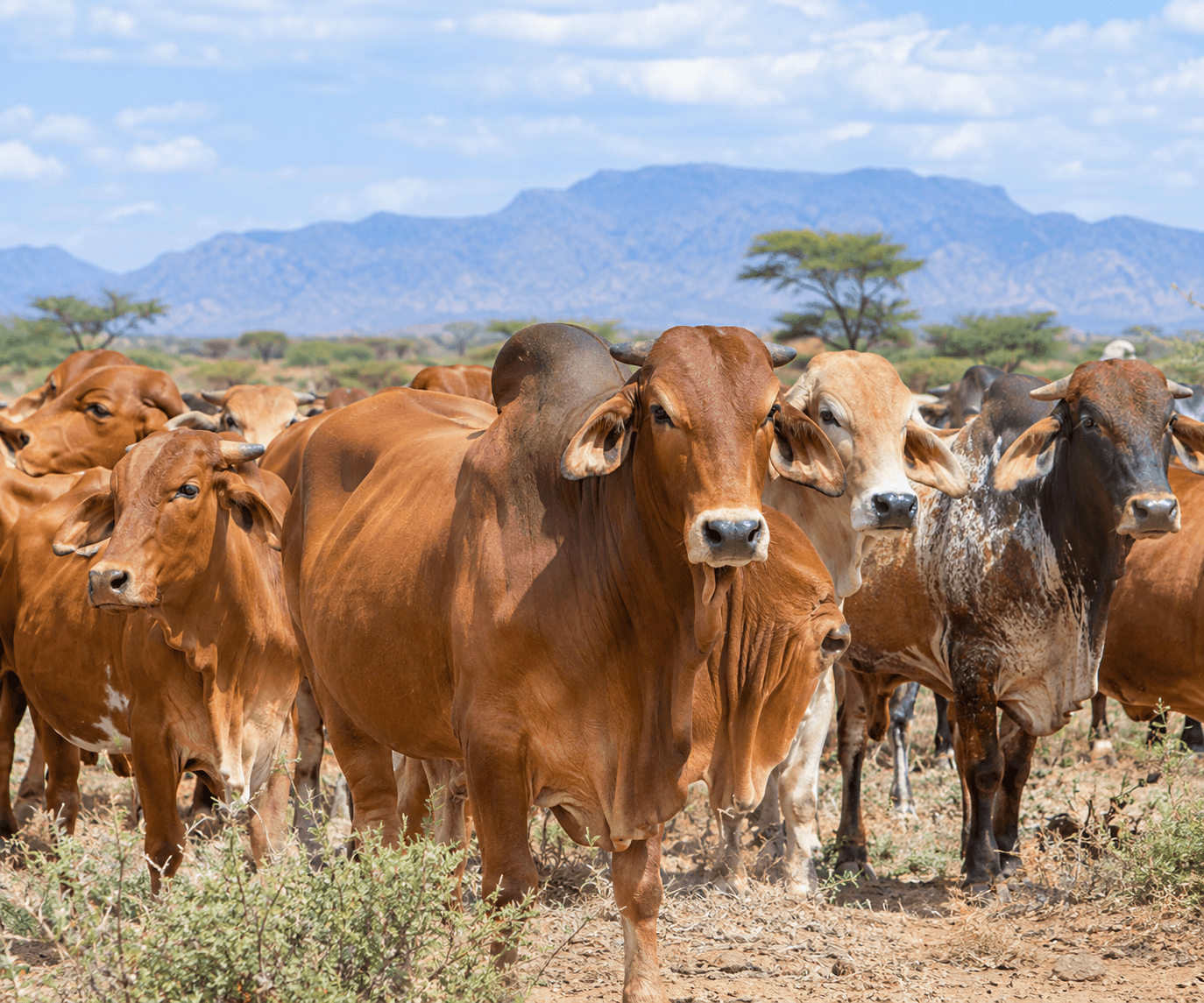
Livestock farming remains one of Kenya’s most dependable commercial agricultural ventures, especially for farmers in arid and semi-arid areas where crop farming is often constrained by unreliable rainfall.
Unlike crops that can be wiped out by a failed season, well-managed livestock provide farmers with several income streams, including the sale of mature animals, breeding stock, and related farm products.
In the unproductive dryland in Rumuruti, Laikipia County, one farmer has proved that livestock farming can be a thriving enterprise.
Warren Evans from Ol Maisor cattle Ranch keeps beef cattle, supplying buyers in the Nairobi Market. In an interview with The Standard Newspaper, Evans revealed that his success has been built over years of adapting livestock production to the harsh conditions of the region.
When Evans took over management of the family farm in 2000, he inherited land where water and pasture were often in short supply.
Rather than allow the dry conditions to dictate the farm’s fortunes, he invested in infrastructure and management practices designed to make livestock production viable.
Among the first priorities was water. Evans developed dams, drilled boreholes and put in place systems for collecting and distributing water around the farm.
He also invested in pasture development, haymaking and rotational grazing to ensure his herd could survive periods of limited rainfall.
The strategy gradually changed the productivity of the farm. Water availability made it possible to maintain pasture, while better grazing management helped protect the land from overuse.
Today, Ol Maisor keeps thousands of beef cattle, with the Boran forming the backbone of the herd. The breed is particularly suited to ranching in dry areas because of its adaptability and ability to perform under challenging climatic conditions.
The breed is known for its resilience and high meat-to-bone ratio, which makes it attractive for beef producers.
Evans sells his animals to butchers in Nairobi. In a good month, he sells about 80 to 100 cattle, with the animals marketed as whole carcasses. He says that larger animals could earn him more than Sh60,000 each, depending on their weight.
Some cattle are sold as steers to feedlots, including operations in Naivasha, where they are finished before entering the beef market.
Farm management practices
The farmer uses rotational grazing, moving animals between paddocks to prevent excessive pressure on pasture. During prolonged droughts, he reduces the size of the herd to match the available forage.
Animal health is another critical component of the enterprise. Foot-and-mouth disease is among the risks facing cattle farmers in the region, particularly during dry periods when animals and herds may come into closer contact.
Evans says his herd is vaccinated regularly and that having veterinary support on the farm helps in preventing and managing disease outbreaks.
Record-keeping has also become part of the farm’s management system. The cattle are fitted with microchips that enable the farm to track individual animals and maintain records covering breeding, vaccinations, treatment and production.

Comments
No comments yet. Be the first to share your thoughts.