
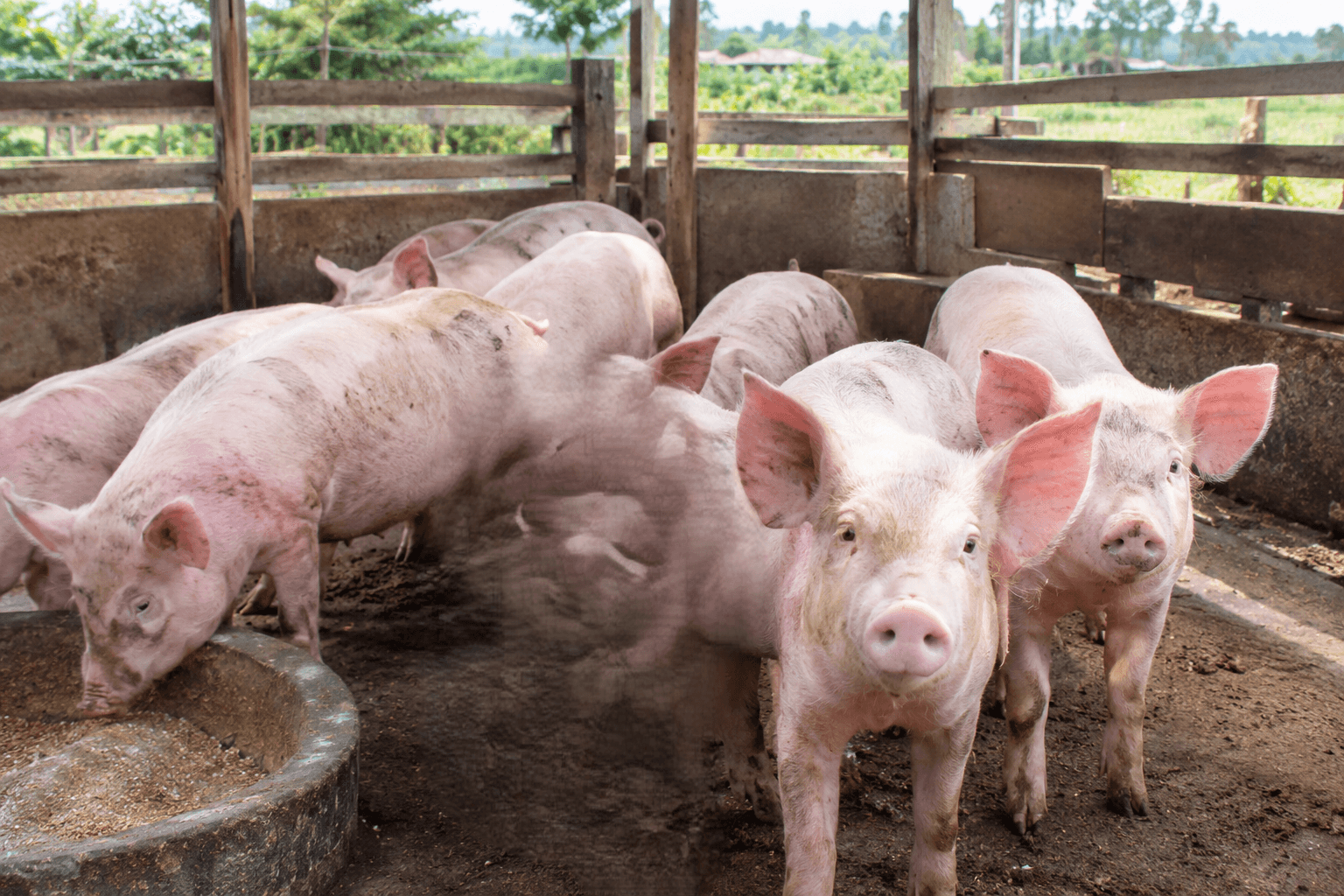
Pig farming is a promising agribusiness venture in Kenya, driven by rising demand for pork, opportunities for smallholder farmers and the potential for relatively quick production cycles.
However, turning that demand into sustainable profits requires more than increasing herd numbers. Breed selection, proper feeding, disease prevention and sound farm management are critical to improving productivity and reducing losses.
Data from the Kenya Agricultural and Livestock Research Organization (KALRO) estimates the country’s pig population at nearly 981,000. Annual pork production stands at between 23,000 and 40,000 tonnes, compared with an estimated demand of 38,500 tonnes in 2025.
The sector is expected to expand further, with pork demand projected to rise by 125 per cent by 2030. Smallholder farmers account for approximately 80 per cent of the country’s pig population, placing them at the centre of efforts to meet the growing market demand.
Researchers at KALRO’s Non-Ruminant Research Centre in Naivasha emphasise that higher production will depend on farmers adopting practices that improve animal performance, feed efficiency and herd health.
Choosing the right pig breed
Selecting suitable breeding stock is one of the first decisions that can influence the performance and profitability of a pig enterprise.
According to KALRO research scientist Benedict Olale, farmers should choose breeds based on their production objectives, whether they intend to produce breeding animals, piglets or pigs for the pork market.
The Naivasha research centre maintains Large White, Landrace, Duroc and Hampshire breeds, alongside crossbred animals. Each has characteristics that make it suitable for particular production purposes.
Large White and Landrace pigs are widely used in breeding programmes because of their value in developing productive breeding females.
Duroc and Hampshire, meanwhile, are valued for their growth and meat-production traits and can be incorporated into crossbreeding programmes to improve market-oriented performance.
Damaris Njoroge, a pig farmer at Buffalo View in Naivasha, keeps Duroc, Landrace and Large White pigs. She favours crossbreeding to take advantage of the characteristics found in different breeds.
“I prefer Duroc because of the weight gain,” she says.
Balanced feeding is key to profitability
Feed is one of the most important considerations in pig production because it directly affects growth, reproduction and the time animals take to reach market weight.
At KALRO’s Dairy Research Institute feed mill, Victor Opiyo oversees the production of feeds formulated for different classes of livestock, including pigs.
The mill produces creep, starter, weaner, grower, finisher and lactation feeds to meet animals’ changing nutritional needs.
Opiyo says feed quality starts with selecting and testing ingredients, not just the mixing process.
Before production, raw materials are analysed in a laboratory to determine their nutritional composition.
The findings are entered into a computerised formulation system, which helps establish the appropriate proportions of ingredients required to meet the nutritional specifications of the intended feed.
Once mixing is complete, samples of the finished product undergo further testing to verify that they meet the required standards.
The mill uses a mixer with a capacity of 1.5 tonnes, with ingredients mixed for approximately 20 minutes to promote uniform distribution throughout the batch.
Opiyo says a properly formulated ration must provide the right balance of energy, protein, amino acids and minerals. Focusing on only one nutrient can leave animals deficient in other essential components.
Protein sources may include sunflower meal and soya de-oiled cake, while maize, maize germ, wheat bran and wheat pollard can supply energy. Additional ingredients provide amino acids such as lysine and methionine, alongside minerals including calcium and phosphorus.
For sows, Opiyo cites a protein content of approximately 15 to 17 per cent and an energy level of 2,800 to 3,100 kilocalories, depending on the animal’s stage of production and the formulation used.
Match feed to the pig’s stage of growth
Pigs have different nutritional requirements as they develop, making it important for farmers to provide feeds suited to each production stage.
Creep feed introduces piglets to supplementary nutrition while they are still young. Starter feed supports their transition to solid diets, while weaner feed helps meet their needs after separation from the sow.
For continued development, the piglet should be fed Grower feed, after which finisher feed is introduced to prepare animals for the market by supporting appropriate weight gain and carcass development.
Lactation feed, meanwhile, is formulated to meet the nutritional demands of sows producing milk.
KALRO feeding guidelines indicate that weaners require about 18 per cent crude protein, while grower and finisher diets generally contain approximately 14 to 16 per cent, depending on the formulation and production requirements.
Proper feed storage prevents losses
Even a well-formulated ration can lose its value if it is contaminated or stored under unsuitable conditions.
Opiyo cautions that feed quality depends on the entire process, from sourcing raw materials to transporting and storing the finished product.
Ingredients contaminated by toxins such as aflatoxins can compromise feed safety, while poor storage conditions may introduce moisture, pests and other contaminants.
He advises farmers to keep feed in dry, well-ventilated stores, place bags on pallets to avoid direct contact with the floor, and protect stocks from rodents and dampness.
Proper packaging and careful handling during transport are equally important to prevent deterioration before the feed reaches the animals.
Clean water supports healthy growth
Water is another essential component of efficient pig production, yet its importance can be overlooked when farmers concentrate primarily on feed.
Olale says pigs should have continuous access to sufficient clean water throughout the day.
Water supports digestion, nutrient utilisation and temperature regulation, while inadequate supply can interfere with feeding and overall performance.
Farmers should ensure that drinking points are accessible, clean and functioning properly. Water containers and drinkers also need regular cleaning to prevent contamination.
Biosecurity is the first line of defence against disease
Good nutrition alone cannot guarantee a profitable pig enterprise. Disease outbreaks can undermine production, increase costs and wipe out an entire herd, making preventive health management essential.
KALRO veterinary officer Dr Irene Ogali says biosecurity involves measures designed to prevent disease-causing organisms from entering a farm and spreading among animals.
She advises farmers to clean and disinfect pig housing regularly and maintain hygiene around equipment, including wheelbarrows, forks and feeding utensils.
Farmers should also control access to their premises, limit unnecessary visitors and provide protective clothing for people entering pig housing. Footbaths can form part of the hygiene system when properly maintained and used.
Additionally, breeding stock should be sourced from reputable farms with reliable health management practices.
Newly acquired pigs should be kept separate from the established herd for approximately two to three weeks while their health is monitored and they are assessed for possible signs of disease.
Early disease detection can save a herd
Daily observation is another important part of effective pig management. Farmers who understand their animals’ normal behaviour are better positioned to identify unusual changes before a problem becomes severe.
Reduced appetite, changes in body condition, abnormal breathing, altered behaviour and other signs of illness should prompt closer examination and, where necessary, consultation with a veterinary professional.
Ogali warns that delays in recognising and responding to disease can have devastating consequences.
She says some infections can cause mortality rates of up to 100 per cent when early clinical signs are missed.
African swine fever is among the major threats facing pig farmers. The disease is highly contagious, and there is no curative treatment or widely available commercial vaccine for routine prevention in affected herds.
Ogali says biosecurity remains central to controlling its spread.

Comments
No comments yet. Be the first to share your thoughts.