
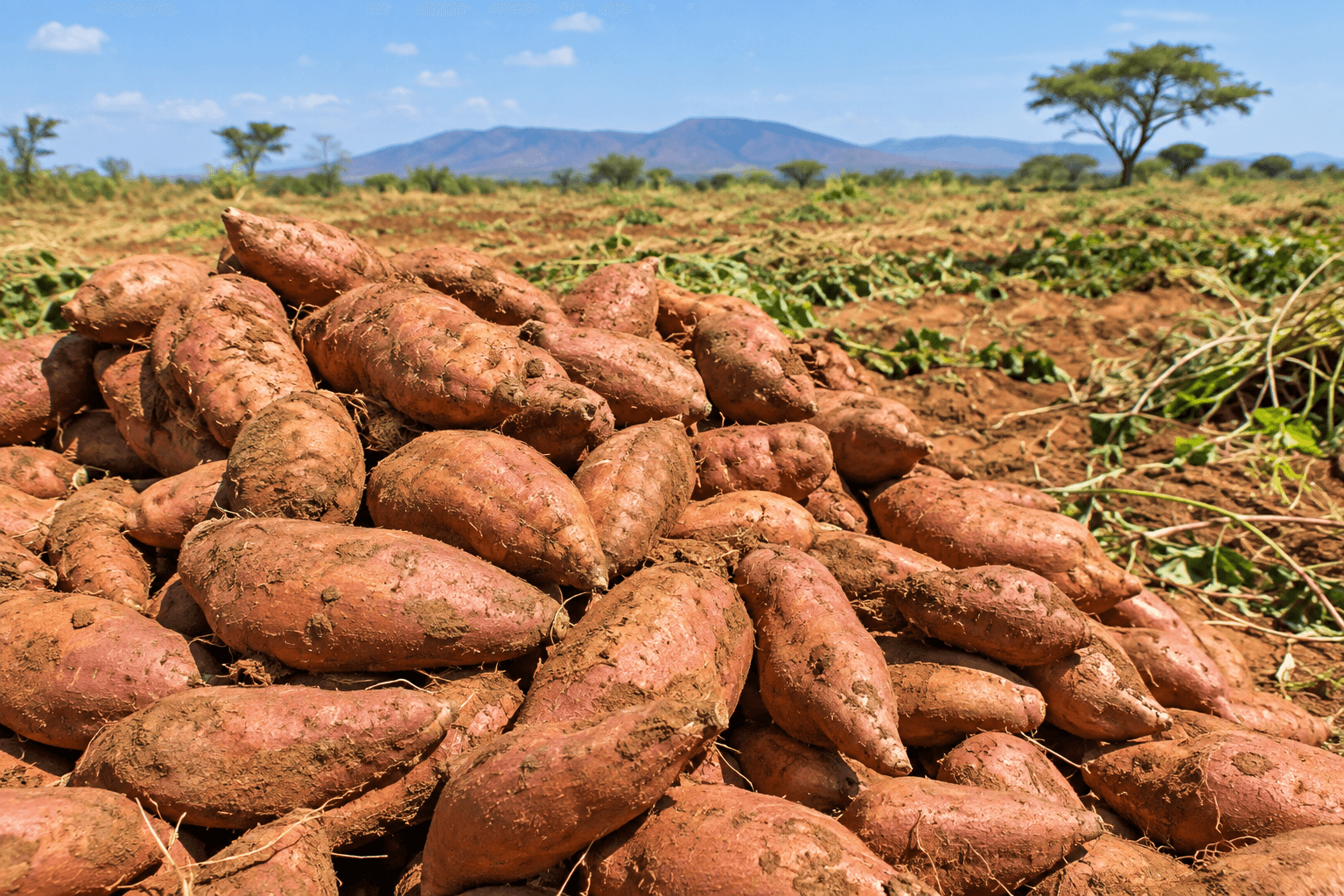
Sweet potato farming is undoubtedly a profitable venture for farmers who approach it as a commercial enterprise rather than simply a subsistence crop.
With growing demand for food, livestock feed, and value-added products, farmers can earn good returns from the crop when they pay attention to production, quality and marketing.
However, some farmers continue to overlook sweet potatoes because of the perception that the tubers fetch low, almost throwaway prices in the market.
This often happens when large volumes of produce reach the market at the same time, leaving farmers with little bargaining power and forcing them to sell quickly before the crop deteriorates.
Farmers who have built profitable sweet potato enterprises, however, say the difference lies not only in how much they produce but also in how they manage their crop after planting.
Below are potato farming strategies that can help growers secure better markets and protect the value of their harvest.
Secure the market early
Successful farmers begin looking for buyers before the crop is ready for harvest. Establishing relationships with commercial buyers and, where possible, securing supply contracts gives growers greater certainty over where their produce will be sold.
Early market planning also enables farmers to understand when demand is strongest. This helps them avoid being forced to sell during periods of oversupply, when prices can fall sharply as many growers release their produce into the market at once.
Handle tubers carefully during harvesting
How sweet potatoes are harvested can have a direct impact on their selling price and shelf life. Cuts, bruises and other physical damage expose the tubers to decay, potentially reducing their value within a short period.
Farmers therefore need to handle the crop carefully during harvesting and avoid unnecessary skin damage. Keeping the tubers in good physical condition gives them a longer shelf life and makes them more attractive to buyers.
Grade the harvest
Uniformity is another factor that can determine the price a farmer receives. Commercial buyers generally prefer clean, well-sorted tubers of relatively uniform sizes, while mixed consignments can attract lower prices or fail to meet buyers’ specifications.
Sorting and grading should be done soon after harvesting. Separating the tubers according to size and quality allows farmers to target different markets and can help them access bulk buyers who are willing to pay more for consistent produce.
Cure and store properly
Proper curing can further protect the farmer’s investment. The process helps harden the skin of the tubers and allows minor injuries sustained during harvesting to heal, reducing the risk of deterioration.
After curing, sweet potatoes should be kept in a cool, dark and well-ventilated storage facility. Good storage conditions can reduce losses from rot and give farmers greater flexibility to hold their produce instead of selling immediately after harvest.

Comments
No comments yet. Be the first to share your thoughts.