
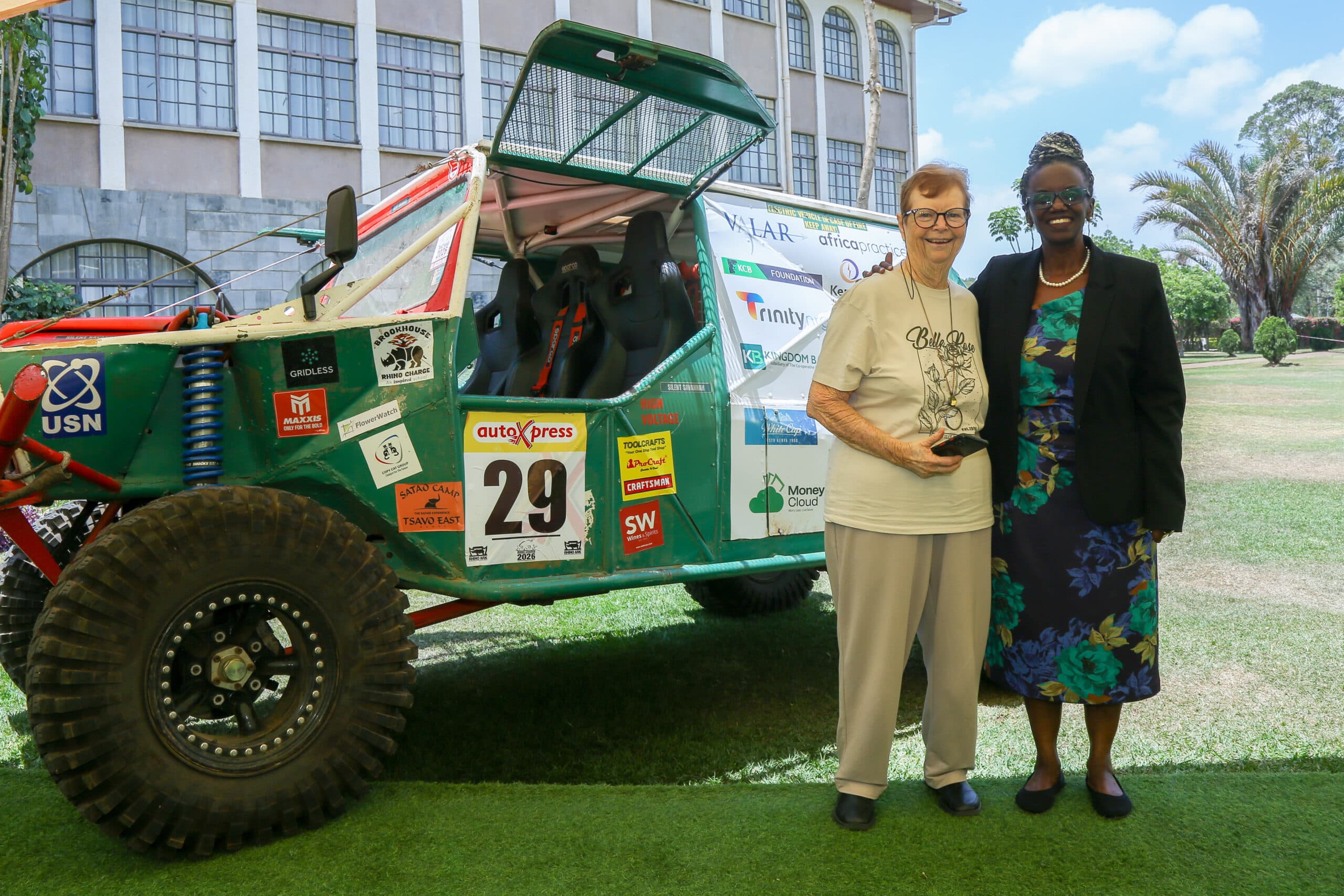
Two female engineering students from Kenya’s Technical and Vocational Education and Training (TVET) institutions have emerged victorious in the inaugural EV Explorers Rhino Charge 2026 Innovation Challenge. Caroline Mutheu and Esther Leja impressed judges with creative, technically sound solutions tailored to the practical demands of off-grid electric mobility.
Each winner will receive a partial scholarship covering up to 75 percent of their remaining tuition fees, a three-month paid internship at Silent Savannah, and an invitation to join the EV Explorers crew as technical observers at the 2027 Rhino Charge.
The challenge introduced an e-mobility dimension to the iconic Rhino Charge off-road motorsport event, demonstrating the viability of electric vehicles beyond city roads. The initiative addresses growing national demand for technical expertise in electrical engineering, battery systems, vehicle design, and charging infrastructure, key pillars of Kenya’s National Energy Efficiency and Conservation Strategy.
“Scholarships like these are an important tool for connecting education to applied learning, industry exposure, and pathways into employment,” said Mendi Njonjo, Managing Director of the KCB Foundation. “This is a practical example of our education-to-employment approach and demonstrates how we can work with industry to develop future-facing talent.”
The announcement follows a historic milestone in May 2026, when the EV Explorers team completed the 37th Rhino Charge in Ngilai, Samburu County. Their locally designed, fabricated, and assembled vehicle became the first EV to finish the demanding course, relying on a 62-kWh battery system and an off-grid solar charging solution.
Key focus areas for interns at Silent Savannah:
- Data Utilization: Analyzing real-world telemetry datasets from the 2026 race.
- Vehicle Optimization: Assisting with chassis adjustments, wiring, and energy management for the 2027 entry.
- Specialized Engineering: Mastering battery thermal management, structural durability, and off-grid solar integration.
Beyond advancing technology, the Rhino Charge remains a major force for environmental protection. The 2026 event raised Ksh. 365 million for Kenya’s mountain ecosystems, pushing total historic funds raised past Ksh. 2.6 billion. To date, these efforts have funded approximately 650 kilometers of electric fencing via the Rhino Ark, safeguarding critical forest ecosystems and protecting over 80,000 households from human-wildlife conflict.
Mutheu and Leja will see their work put to the test firsthand when the next Rhino Charge flags off on May 29, 2027.


Comments
No comments yet. Be the first to share your thoughts.