
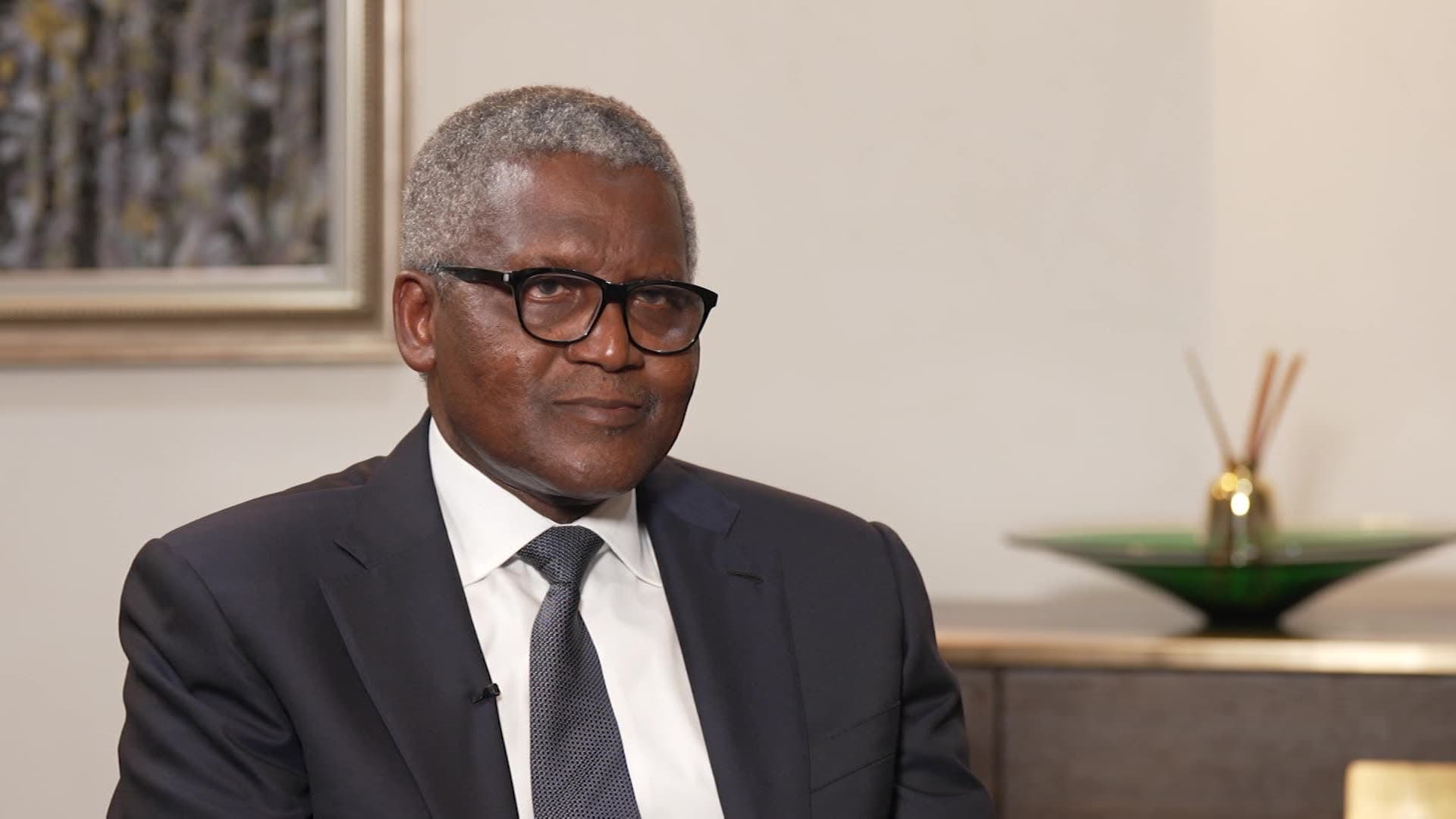
Kenya is preparing to host one of its largest industrial investment ceremonies in decades as Nigerian billionaire Aliko Dangote moves to break ground on a planned $16 billion (about Ksh2.1 trillion) oil refinery in Lamu, a project that could reshape the way East Africa sources and processes petroleum.
President William Ruto is expected to lead the groundbreaking ceremony on Wednesday, September 30, alongside a group of African leaders and senior officials.
Among those expected are Rwanda’s President Paul Kagame, Uganda’s President Yoweri Museveni, Ethiopia’s Prime Minister Abiy Ahmed, Burundi’s President Évariste Ndayishimiye, Togo’s President Jean-Lucien Savi de Tové and Benin’s President Romuald Wadagni. Additional regional and international dignitaries are also expected to attend.
The concentration of political leaders reflects the regional ambitions of the project. Dangote is not building the refinery simply to serve Kenya’s domestic fuel market. The planned facility is intended to supply petroleum products across East Africa, including Ethiopia, Uganda, Tanzania, Rwanda, Burundi, South Sudan and the Democratic Republic of Congo.
The refinery is designed to process 700,000 barrels of crude oil a day, a capacity that would make it the largest refinery in East Africa once completed. Construction is expected to take about three years.
The investment would also become Dangote Group’s largest refining project outside Nigeria.
Dangote has said the facility will form part of a broader industrial complex, with the potential to attract petrochemical, manufacturing, logistics and other businesses around the refinery.
“What this investment will do for the Kenyans, it’s not only the refinery; the refinery is like the gate,” Dangote said in an interview. “Once you open and have the refinery, you’ll be shocked at how many people will know to come and invest in Kenya.”
For Kenya, the attraction is straightforward: reducing dependence on imported refined petroleum while establishing Lamu as an energy and logistics centre.
The project is expected to create tens of thousands of jobs. Kenyan officials have put the potential employment impact at more than 60,000 jobs, including a substantial number of skilled positions.
First equipment reaches Lamu
The project has already begun to leave a physical footprint at Lamu Port.
A vessel carrying about 2,930 metric tonnes of project cargo arrived at the port on September 26. The cargo included construction equipment intended for the refinery project, providing an early indication of the scale of machinery that will pass through Lamu during construction.
The port is expected to become a major logistics entry point for the refinery, reinforcing its role in the wider Lamu Port-South Sudan-Ethiopia Transport corridor, commonly known as LAPSSET.
Ruto visited Dangote’s existing refinery in Lekki, Lagos, on September 25, giving the Kenyan president a close look at the industrial model that Dangote intends to replicate and expand in East Africa.
Dangote’s Nigerian refinery has a processing capacity of about 700,000 barrels per day. The company says the Lamu facility is being designed on a similar scale.
Dangote has also said the proposed Kenyan project will include substantial power-generation and supporting industrial infrastructure. Reports have put the planned generation capacity at about 1,000 megawatts.
The crude-oil question
The size of the refinery, however, also presents one of the project’s biggest challenges.
Kenya’s own crude production is not currently large enough to supply a 700,000-barrel-a-day refinery. Production from the South Lokichar oilfields in Turkana is expected to increase in coming years, but the Lamu facility would still need crude from other producers in Africa and international markets.
That makes the refinery as much a regional project as a Kenyan one.
Dangote has said the plant will source crude from regional and international suppliers, while the company is also pursuing other energy investments and infrastructure projects across Africa.
The refinery is therefore being positioned as part of a larger effort to move African economies further up the energy value chain: importing crude where necessary, but processing it closer to the consumers who need the finished products.
Why Dangote matters
The man behind the project is not an ordinary investor.
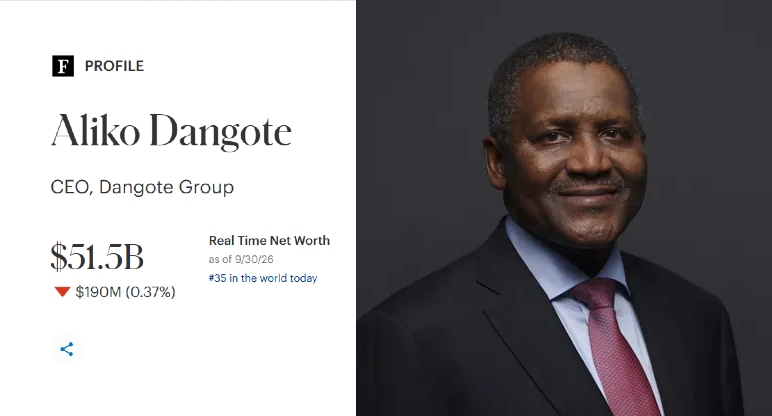
Aliko Dangote, 69, is Africa’s best-known industrial billionaire and the founder and chairman of the Dangote Group. Forbes has described him as Africa’s richest person, although his estimated fortune has moved sharply in recent weeks as the valuation of his Nigerian refinery changed.
Forbes’ real-time tracker had Dangote at $31.4 billion in early September 2026, while reports later in the month put his fortune above $50 billion following the valuation of the Dangote refinery ahead of its planned public offering. Billionaire wealth estimates can change significantly with company valuations, share prices and exchange rates, so the figure should be treated as a moving estimate rather than cash sitting in a bank account.
His wealth is built principally around industrial businesses rather than technology companies or financial investments.
Dangote owns about 85% of publicly traded Dangote Cement through a holding company. The cement business has annual production capacity of about 48.6 million metric tonnes and operates across 10 African countries, according to Forbes.
His empire also includes businesses involved in cement, sugar, salt, flour, fertiliser, petroleum refining, petrochemicals, logistics and infrastructure.
The Dangote Fertiliser business in Nigeria has become another major part of the group. Dangote has said he plans to list the fertiliser company in 2027, with plans for six production lines that could eventually produce about 12 million tonnes a year.
The businessman started much smaller.
After graduating from Al-Azhar University in Egypt, Dangote began trading commodities in Nigeria. Bloomberg says he started his cement-trading business with a loan from his uncle and gradually expanded into sugar, flour, rice and other commodities before moving aggressively into manufacturing.
The strategy eventually turned him into one of Africa’s largest industrialists.
What does Dangote own personally?
Dangote’s wealth is primarily tied to his ownership stakes in businesses, rather than simply a collection of luxury possessions.
Bloomberg’s billionaire profile says he owns six residential and commercial properties in Lagos, whose values are incorporated into its wealth calculations.
Reports over the years have also linked him to a private jet, luxury cars and a yacht. Those items, however, are less important to understanding his wealth than the companies in which he holds substantial ownership stakes.
His most consequential assets are industrial: cement plants, the Nigerian refinery, fertiliser facilities and other manufacturing and infrastructure investments.
The Dangote Petroleum Refinery in Lagos, which began operations in 2024 after years of construction and more than $20 billion in reported investment, has become the centrepiece of his expansion into energy. It is now operating at a scale of roughly 700,000 barrels a day, according to recent reporting.
That refinery is also being prepared for a major public offering, potentially giving outside investors a stake in one of Africa’s most prominent industrial assets.
Follow Business Today Whatsapp channel for more news.


Comments
No comments yet. Be the first to share your thoughts.