
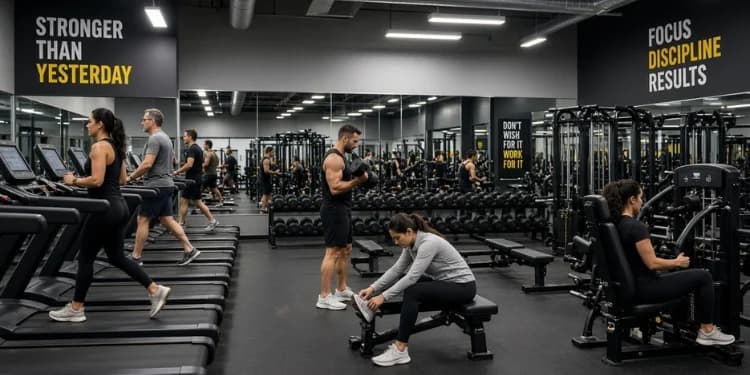
Physical activity rates differ among neighborhoods depending on the available infrastructure. People are much more likely to exercise regularly when parks, gyms, and sports courts are close by.
The factors of distance, cost, and safety affect whether a person will leave the house or spend the day there. In cities where the sports facilities are evenly distributed, there are usually higher rates of walking, running, and playing games on a regular basis. To change your habits, map the sports facilities in your neighborhood.
Relation Between Available Sports Facilities and Movement Practices
People usually choose the activities they do depending on what sports facilities are close to them and easy to access after work. Those sports facilities that are located nearby receive significantly more visitors than the distant ones. After training, people may spend their break browsing sports news or downloading the MelBet APK for placing bets on their devices.These practices are not equivalent to physical activity, but they are still related to leisure.
It has been proven by the research on urban planning that people living near sports facilities exercise more often than others. If the park is located ten minutes away from home, then people will visit it much more frequently than distant sports facilities.
The long commute to the gym becomes annoying for even the most motivated individuals over time, no matter their initial intentions. There are simple changes like improving illumination, making the routes safer, and installing signboards that could increase the number of visitors without any additional construction. Neighborhoods that upgrade their facilities become more successful than those the only expect new sports facilities.
Motivation, Rewards, and Consistency
Motivation usually comes from small rewards that help people stay consistent with the new routine. Fitness apps use the reward system, like giving the user badges or forming streaks, and the betting platforms use the same mechanics to attract users’ attention.
Sometimes, sports fans compare the rewards of different betting platforms with the bonus Melbet offers before making bets and predictions. This type of reward system is different from that of training because fitness requires continuous efforts rather than one-time rewards. This makes it easier for people to differentiate between fun and fitness.
Competition can encourage people to participate in sports programs for several months. The group classes, step challenge, and sports leagues can make people come to sports facilities on a weekly basis.
Social responsibility is usually much more important than any badge, leaderboard position, or reward. The combination of convenience and social aspects helps people stay active the longest.
Different kinds of sports infrastructure meet different needs in the community. The following table represents some popular types of facilities and their influence on the level of physical activities within the community.
| Facility Type | Typical Users | Impact on Activity Levels |
| Public parks | All age groups | Encourages casual, daily movement |
| Community gyms | Adults and teens | Supports structured, regular workouts |
| School sports courts | Students and youth | Builds early exercise habits |
| Indoor sports centers | Teams and clubs | Enables year-round training regardless of weather |
As the table above shows, none of the facility types satisfies all needs. So, a combination of facilities usually provides greater activity levels within the whole community.
Technology Involvement in Tracking Physical Activity
Modern technologies are widely used to support sports infrastructure. Devices such as step counters and heart rate monitors help identify where people are physically active.
People choose a park path or a gym routine based on the results of their previous workout. As a result, people return to places where they achieve their goals. As a result, technologies make casual physical activity more consistent and measurable.
Local authorities also benefit from tracking physical activity through devices. Anonymous foot-traffic data from applications can reveal popular trails and courts, allowing authorities to repair them accordingly. Thus, budget constraints do not prevent authorities from making appropriate decisions regarding the development of sports infrastructure.
Limiting Factors That Influence the Availability of Sports Facilities
First of all, financial factors are one of the limiting factors that prevent people from frequently visiting sports facilities. Membership fees, equipment costs, and transport services create an additional financial burden for families.
In addition, some facilities operate only during the day, so people do not have the opportunity to visit after work. As a result, people tend to choose casual exercise instead. Low-income communities face the greatest gap between available sports infrastructure and its use.
Safety is another issue that prevents people from visiting sports facilities. Lack of proper lighting, bad surface quality, and absence of clear instructions for using the court make people think twice before visiting such a place during evening hours or being alone. Neighborhoods with insufficient resources experience the longest periods of repair after any damages occur.
How Better Planning Will Narrow the Gap
Planners now recognize the health value of access to sports infrastructure and no longer treat it as a mere luxury. Placing facilities near residential areas, schools, and transport stops removes many barriers to regular attendance.
Using school facilities as gyms outside class time will increase access without additional expenditure. Involving the community in the planning process makes all of these measures more effective. It is easier to build something useful if you know what people need.
The maintenance budget is as important as the building budget for the successful long-term operation of any infrastructure. A well-maintained court will be popular for many decades, while a poorly kept one will be empty very soon.
The information about usage gathered by the local government will help to allocate funds on upgrades where they are needed the most. This is planning that helps ensure your infrastructure stays useful.
The Wide Range of Benefits of Investment in Sports Access
Access to sports infrastructure means more than achieving personal fitness goals. Physical activity is associated with better mental health, improved sleep habits, and reduced stress across age groups.
Active recreational sites provide people with the opportunity to establish contacts with their neighbors even outside of training. Physical activity at schools near these places usually increases in physical education classes.
Regular visits by many people can boost local economies by increasing demand for nearby cafes, shopping, and transportation services. Properties around well-maintained parks and courts keep stable value even during tough times. Economic benefits add a new dimension to the investment and maintenance of sports infrastructure.
Making Sports Infrastructure Your Routine
Access to sports infrastructure affects routines more than people think. The nearby, affordable, and well-kept facilities increase the chances that people will be regularly physically active. Communities that support these aspects have healthier, more active populations. The improvement of existing facilities often works better than building something new. This understanding will help people to make the right choice.



Comments
No comments yet. Be the first to share your thoughts.