
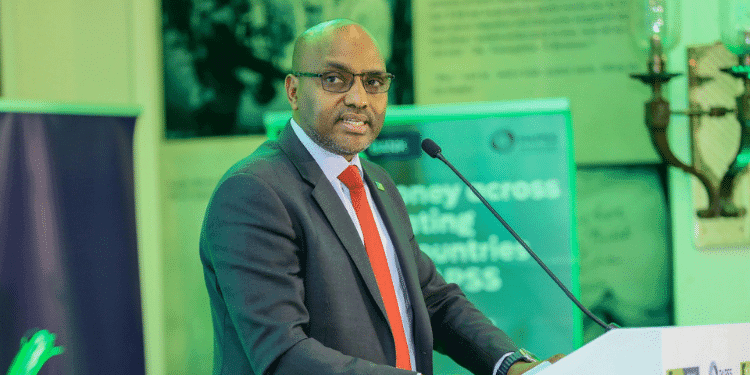
Bank loans in Kenya could increasingly be influenced by sustainability and risk considerations following the launch of a new Banking Industry Sustainable Finance Roadmap by the banking sector.
The Kenya Bankers Association (KBA) developed the Banking Industry Sustainable Finance Roadmap through its Center for Sustainable Finance and Enterprise Development (CSFED), in partnership with the International Finance Corporation (IFC) and WWF-Kenya.
The roadmap provides a framework for scaling sustainable finance, strengthening climate and nature risk management, improving sustainability disclosures and directing capital towards investments that support inclusive and sustainable economic growth.
How the Roadmap Could Influence Bank Loans
KBA’s new framework is intended to help financial institutions integrate sustainability considerations into governance, risk management, lending decisions, reporting and capital allocation across Kenya’s banking sector.
Its launch comes as Kenya seeks to accelerate sustainable economic growth, strengthen climate resilience and mobilize private-sector capital for environmental and development priorities.
It is also expected to strengthen the banking sector’s ability to identify and manage climate-related risks, unlock investment opportunities in green and sustainable projects, and support enterprises, particularly micro, small and medium-sized enterprises (MSMEs), as they transition to a more resilient and inclusive economy.
Speaking during the launch, Principal Secretary in the Ministry of Environment, Climate Change and Forestry Festus Ng’eno said the framework represents an important step in strengthening the financial sector’s contribution to Kenya’s sustainable development and climate ambitions.
“Environmental protection must be understood not merely as a conservation responsibility, but as an essential part of our economic planning and long-term prosperity,” said Ng’eno.
He said Kenya’s development ambitions could not be achieved without stronger collaboration among national and county governments, financial institutions, development finance institutions, investors, businesses and development partners.
KBA Chairman and KCB Group CEO Paul Russo said the roadmap marks a significant step towards moving the banking industry from sustainability commitments to practical implementation.
“The roadmap offers an opportunity to consolidate the industry’s progress and set a more practical direction for the next phase of our sustainable finance journey. It is intended to help translate our ambitions into an action plan that can guide financial institutions in directing capital towards green and sustainable projects, managing nature- and climate-related financial risks, and strengthening sustainability practices,” said Russo.
Industry Leaders Back New Approach
KBA Chief Executive Officer Raimond Molenje said the roadmap brings together industry initiatives and provides a clear pathway to accelerate sustainable finance adoption across the banking sector.
“This roadmap offers an opportunity to bring together the various strands of work underway and to provide clearer direction on the practical steps required to scale sustainable finance in Kenya. For financial institutions, this means strengthening the integration of sustainability into governance, risk management, reporting and capital allocation,” said Molenje.
IFC Regional Director for Eastern Africa Mary Porter Peschka described the initiative as a milestone for Kenya’s financial sector.
“The launch of the Banking Industry Sustainable Finance Roadmap marks an important milestone for Kenya’s financial sector. The roadmap provides a practical framework for strengthening climate and nature risk management, improving sustainability disclosures, and mobilizing capital towards investments that support sustainable economic growth,” she said.
Peschka said IFC was proud to partner with KBA to develop the roadmap and would continue supporting the next phase of implementation.
WWF-Kenya Chief Executive Officer Jackson Kiplagat said the framework provides a platform for aligning financial flows with environmental sustainability while strengthening resilience against climate and nature-related challenges.
“This roadmap marks an important transition from policy commitments and voluntary sustainability initiatives to measurable institutional action. The focus must now be on implementation, turning commitments into decisions that shape lending, investments, and risk management across the financial sector,” said Kiplagat.
He said WWF-Kenya would support KBA and member banks in developing Nature Transition Plans to advance the shift.
Follow our WhatsApp Channel and X Account for real-time news updates and our YouTube Channel for in-depth interviews.



Comments
No comments yet. Be the first to share your thoughts.