
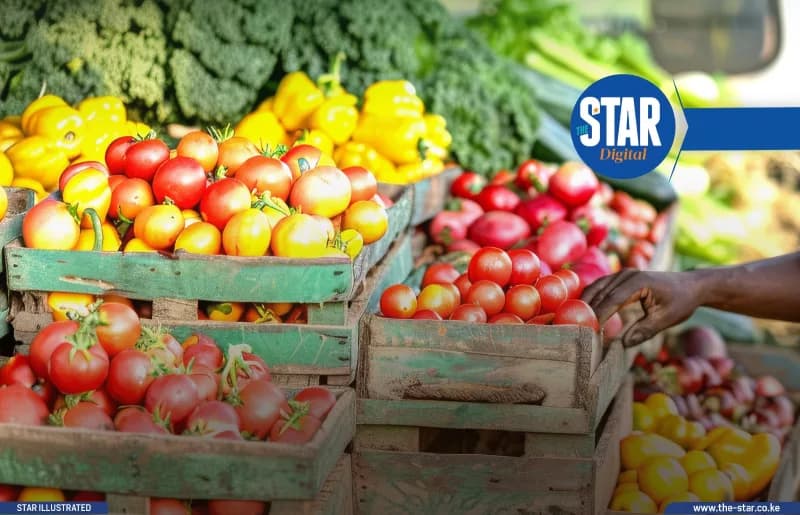
Farm produce in a market.

African countries must strengthen food storage, transport, processing and markets to protect supplies from drought, extreme heat and water shortages, researchers have warned.
Experts say building climate resilience must go beyond farms and address the entire food system, from production and storage to transportation, processing, markets and consumption.
Dr Wanjiru Kamau-Rutenberg, Managing Director for Africa at the Alliance of Bioversity International and CIAT, said climate shocks could disrupt food supplies even when farmers managed to produce enough.
“Resilience cannot end at the farm gate. If food cannot be safely stored, moved, sold and accessed when climate shocks hit, then production gains alone will not protect families,” she said.
Wanjiru said water shortages could affect food processing and markets, while high temperatures accelerated food losses and increased food safety risks.
She spoke during an event organised by the Alliance of Bioversity International and CIAT on the sidelines of the 17th Africa Day for Food and Nutrition Security (ADFNS).
The session, titled Beyond the Farm: Drought, Heat and Food Supply Chain Disruption – Building Resilient Agrifood Systems for Nutrition Security in Africa , brought together policymakers, researchers, development partners, funders, private-sector players and representatives of farmers and traders.
Wanjiru said disruptions to transport and storage could reduce food availability, push up prices and compromise the nutritional quality of food reaching consumers.
She called for stronger links between scientific research, policy, local knowledge and investment to keep food systems functioning during climate shocks, particularly for vulnerable communities.
Justin Mabeya Machini, a Senior Research Associate at the Alliance of Bioversity International and CIAT, said increasing agricultural production alone would not guarantee food security if other parts of the supply chain remained vulnerable.
He said farmers could successfully grow nutritious crops, but without proper storage, transportation, processing and access to markets, the benefits would not reach consumers.
“Resilience also depends on functioning markets, aggregation systems, processors and buyers, access to information, reliable infrastructure and value chains that can translate nutritious crops into better incomes and better diets,” he said.
Mabeya said strengthening the entire supply chain was necessary to prevent climate shocks from escalating into nutrition crises.
He also highlighted the role of women, informal traders and producer organisations in keeping food systems running, noting that they were often among the most affected when markets and supply chains were disrupted.
However, he said these groups had valuable knowledge of how markets operated, where challenges emerged and which solutions could work.
Dr Henri Rueff, Director of Climate Action and Principal Scientist at the Alliance of Bioversity International and CIAT, said climate risks spread across the food system, requiring interventions that addressed more than agricultural production.
“A drought may begin as a production shock, but it can quickly become a storage, transport, market, food-safety and nutrition challenge,” he said.
Rueff called for research findings to be translated into practical interventions that could attract financing, be scaled up and incorporated into national plans to strengthen Africa's food systems.
He said building resilience required the involvement of everyone along the supply chain, including farmers, traders, processors, transporters, businesses, consumers and local communities.
He also called for greater support for women and informal market players, saying they were already adapting to climate risks and helping keep food moving despite difficult conditions.
Rueff said they needed better infrastructure, information, financing and representation in decision-making to strengthen their ability to respond to climate shocks.


Comments
No comments yet. Be the first to share your thoughts.