
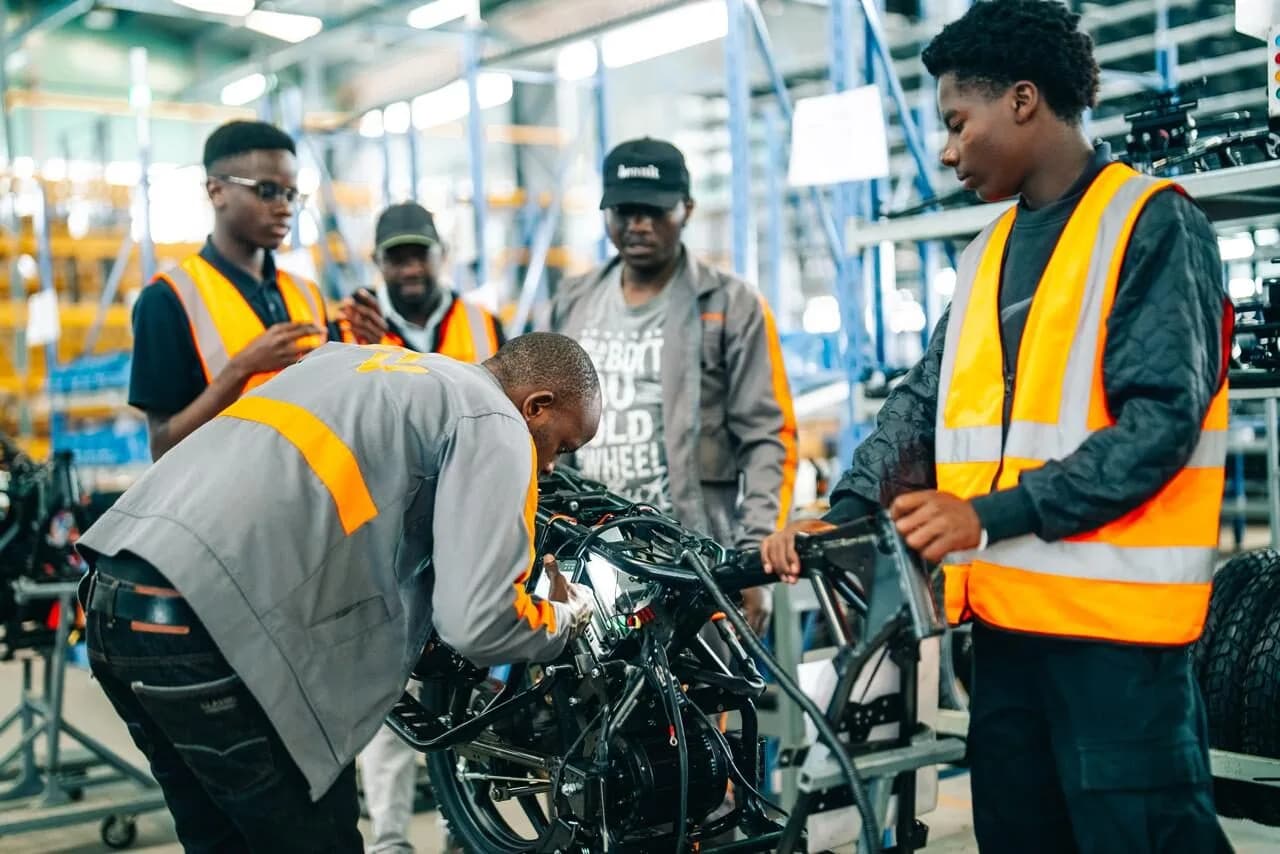
NAIROBI, Kenya, Oct 2 – Electric motorcycle manufacturer Roam has increased the share of locally manufactured components in its Roam Air model to 40% by value, as it seeks to reduce production costs and reliance on imported parts.
The company says more than 50 components are now produced by over 10 Kenyan and Tanzanian suppliers, with the shift cutting the waiting time for some replacement body parts from 18 weeks to two weeks.
Roam says the cost of replacing a locally manufactured space tank has also fallen by about 40% compared with when the component was imported, potentially reducing maintenance expenses and the time motorcycle taxi operators spend off the road.
The localization drive comes as Kenya seeks to expand domestic manufacturing and develop supply chains for electric vehicles, although the extent to which the cost savings will translate into lower motorcycle prices remains unclear.
Roam’s next target is to raise local content to 50%, including through the production of motorcycle chassis locally.
The company has not disclosed the investment required to achieve the target or the number of jobs created through its existing supplier network.
Habib Lukaya, Roam’s country manager, said the company plans to increase the number of components sourced from African suppliers as production expands.
“Our ambition is to get to a 50-50 balance, where half of the Roam Air is locally made, and half is sourced internationally,” Lukaya said.
The Kenya Association of Manufacturers said deeper local sourcing could strengthen domestic suppliers and help build technical capacity as the electric mobility industry expands.
“As local manufacturers increase their capacity to produce more components locally, the sector can create stronger opportunities for Kenyan suppliers, develop technical skills, support quality jobs and build the capabilities needed for deeper manufacturing and regional supply chains,” said Tobias Alando, Chief Executive, Kenya Association of Manufacturers.
“The focus now should be on moving further up the value chain and ensuring that the growth of e-mobility translates into broader industrial development.”
The move also comes ahead of the East African Community’s Assembling and Manufacturing of Products Regulations, 2025, scheduled to take effect in July 2027.
The rules provide a framework for sourcing raw materials, parts and components manufactured within the regional bloc.
Kenya already has localization requirements for motorcycle assemblers benefiting from duty remission, including obligations to source specified locally available parts.
However, expanding domestic production will depend on suppliers’ ability to meet manufacturers’ quality standards, supply volumes and pricing requirements.
Roam says locally produced helmets, rims, mirrors, body panels and electrical components are also being purchased by riders outside its own customer network, creating a potential market beyond electric motorcycles.


Comments
No comments yet. Be the first to share your thoughts.