
NAIROBI, Kenya, Oct 1 – Stronger policies, suitable financing and access to technology are key to Kenya’s transition from a linear economy to a circular model that keeps resources in use and creates new business and livelihood opportunities.
Stakeholders at the 11th Annual Circular Economy Conference said gaps in policy implementation and financing were limiting the ability of businesses and communities to move away from the traditional model of producing, using and disposing of products.
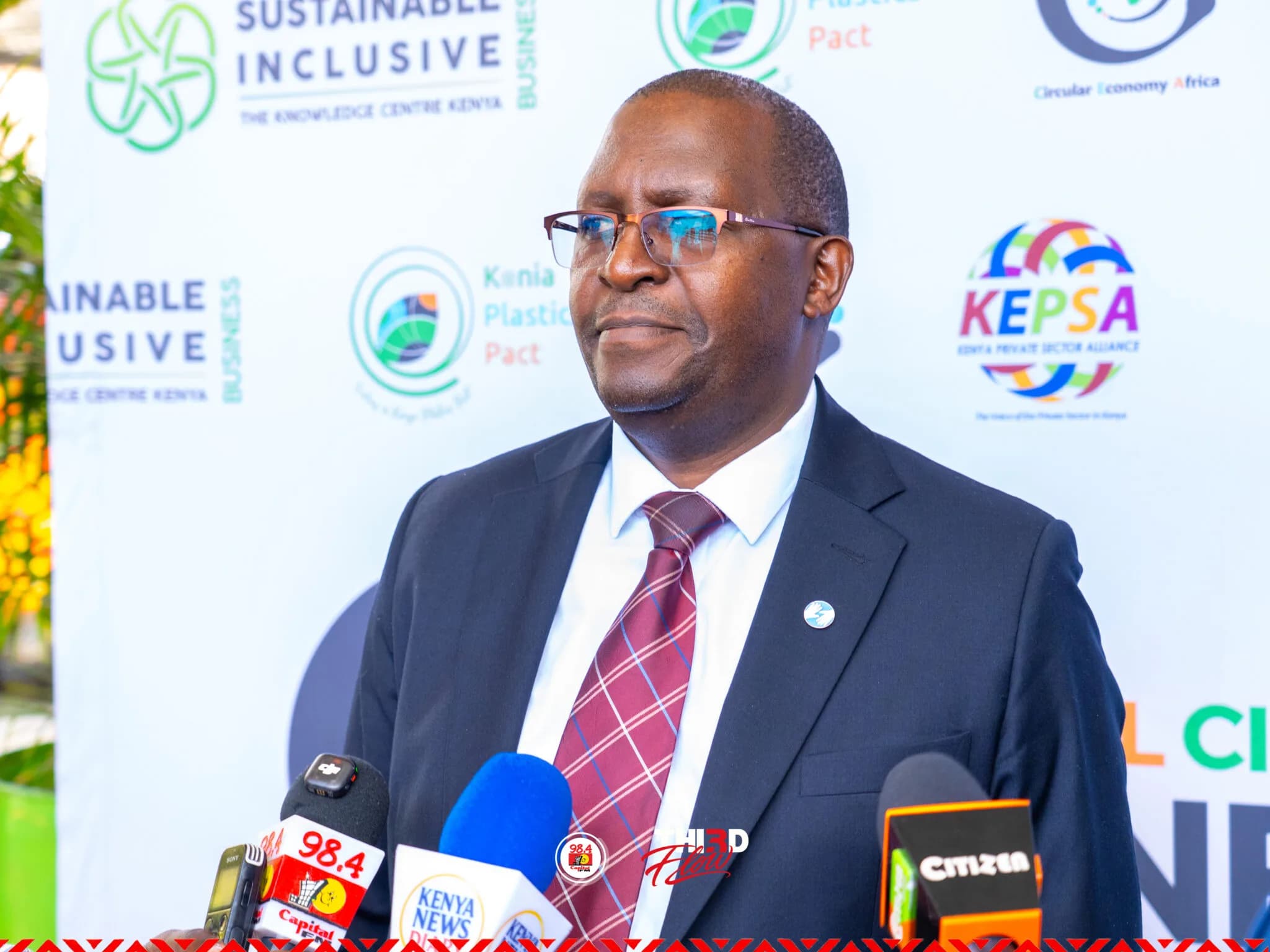
Hand in Hand Eastern Africa Chief Executive Officer Albert Wambugu said national and county governments need to strengthen policies supporting circular businesses while communities are brought into the transition.
“There are several gaps for me and perhaps the first is to adopt national level policies and even the county government also taking up policies at the county level.”
“If you look at it from a circular aspect you will also realize that all these value chains would do well and they might even employ more than twice the number of people who are currently employed.”
Wambugu said financing, skills and technology were also necessary to help enterprises operating in the waste value chain grow, noting that circularity could turn materials currently treated as waste into sources of income.
He cited banana value chains where fibre, fertilizer and beauty products can be developed from parts of the plant that would otherwise be discarded.
Karin Boomsma, founder of the Sustainable and Inclusive Business Organization, said policy was critical to creating conditions for businesses to invest in circular models.
“So definitely if there’s no policies in place, people don’t feel compliant and things move slowly.”
“Also then it might still be the transition more expensive, because in a linear economy as we have it right now, we do not consider environment into our true price, we don’t consider social impact in our true price of products.”
Boomsma said developments including extended producer responsibility (EPR) regulations were helping to advance circularity, although businesses still faced challenges in making circular models financially viable.
Rosemary Amondi, Senior Advisor for Strategy and Programmes at the Aspen Network of Development Entrepreneurs, said financing must be matched to the needs and maturity of circular enterprises.
“It’s a question about the fit between the need and the current domestics of the business.”
“A lot of the projects that we are seeing that are pursuing commercial capital are actually never going to receive commercial capital because they are never going to get to that point where they’re profitable.”
Amondi said some community-based projects may require grants rather than commercial debt or equity, pointing to the need for financing models that reflect both commercial and development objectives.
The stakeholders said circularity could unlock opportunities in recycling, repair, refurbishment, remanufacturing and recovery of agricultural and food waste.


Comments
No comments yet. Be the first to share your thoughts.