
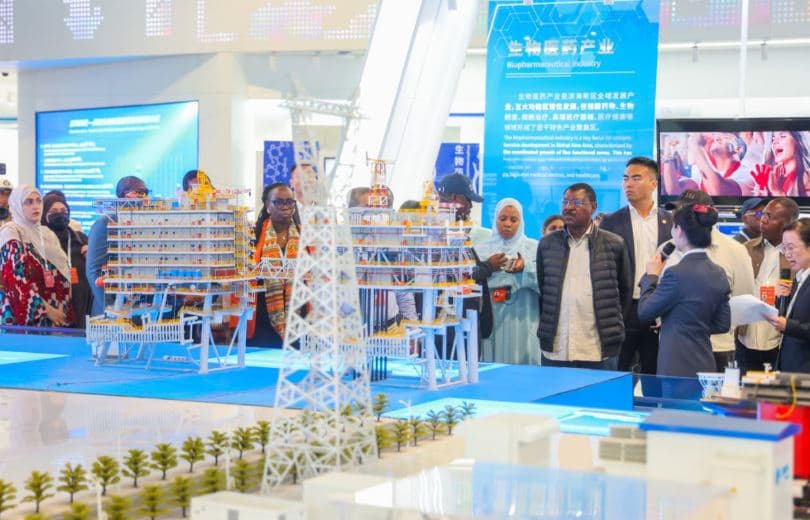
 National Assembly Speaker Moses Wetangula says Kenya can adopt automated port operations from China to overhaul Lamu Port, streamline cargo handling, and position the country as a major logistics hub in East Africa.
During a tour of Tianjin Port and the Modern Industrial Exhibition and Exchange Centre in Binhai New Area, China, Speaker Wetangula highlighted how lessons from Tianjin, a primary Chinese maritime gateway, can transform operations at Lamu Port by digitizing processes, boosting efficiency, and drawing international shipping lines and investors.
The tour took place on the sidelines of the 2026 Legislators Forum for Friendly Exchanges, an international summit bringing together over 60 current and former lawmakers across five continents to foster parliamentary dialogue, peace, and economic partnership.
Wetangula detailed how advanced technology can catalyze regional trade:
“What we have seen in Tianjin is how automation, artificial intelligence, and green energy can turn a port into a driver of industrial growth. Kenya can adapt these lessons to make Lamu more efficient, competitive, and attractive to shipping lines and investors,” Wetangula said.
As a central pillar of the Lamu Port-South Sudan-Ethiopia Transport (LAPSSET) Corridor project, Lamu Port aims to relieve congestion at the Port of Mombasa while offering a direct maritime gateway for landlocked neighbors.
Wetangula noted that fully unlocking the port’s potential requires major investments in automated cargo systems, digital logistics frameworks, and streamlined customs protocols to eliminate delays and introduce predictability for regional shippers. Bilateral collaboration between Tianjin and Lamu could further facilitate direct technology transfers, specialized training, and eco-friendly equipment upgrades.
Addressing the Bilateral Trade Imbalance
Connecting infrastructure upgrades directly to national manufacturing, the Speaker cited Kenya’s severe trade imbalance with China as a compelling reason to expand local value addition. In 2025, Kenya imported approximately $5.19 billion worth of goods from China while exporting only $130.8 million.
Wetangula observed that modernized logistics combined with strong domestic production will empower Kenyan businesses to export products more affordably and compete on the global stage.
The Speaker also pointed to growing green energy investments, highlighting potential ventures such as a proposed Dangote refinery alongside an electric vehicle partnership with Endelevu Enterprise Corporation targeting charging infrastructure and assembly plants.
Accompanying the Speaker were Kilifi North MP Owen Baya, Nominated MP Irene Mayaka, and Kiminini MP John Chikati. Chikati noted that Parliament will actively craft legislation to ensure foreign investments deliver sustainable local benefits. He noted that upcoming frameworks must prioritize environmental protections, local content mandates, and skills acquisition as Kenya integrates port automation and electric vehicle technology.
Focusing on sustainable development, Speaker Wetangula urged both nations to move past simple finished-goods trade:
“Our goal is to turn the friendship between Kenya and China into jobs, inclusive growth, and lasting prosperity,” he said.
He cited vocational education cooperation as a successful model, noting that Kenya-China programs have already equipped 144 technical training institutions and trained 314 instructors nationwide. Expanding this collaborative model into clean energy, advanced manufacturing, and agriculture will allow local producers to scale output, add value, and expand Kenya’s export footprint.

Comments
No comments yet. Be the first to share your thoughts.