
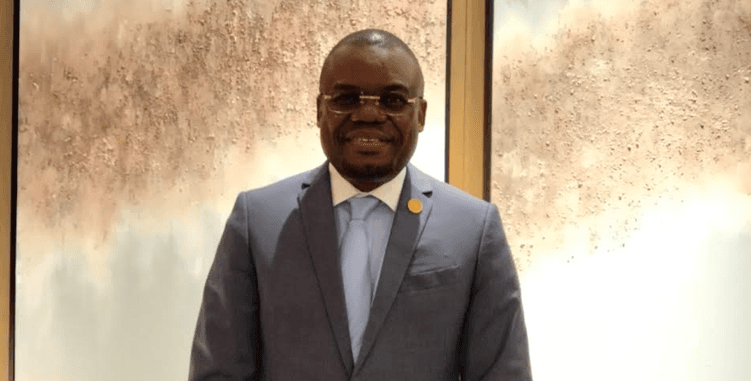
As the African continent battles a rising toll of Ebola infections, the Africa Centres for Disease Control and Prevention (Africa CDC) is stepping-up measures to support affected nations, enhance regional coordination, and build long-term health resilience.
During an exclusive interview with Kenya News Agency (KNA) in Nairobi, Africa CDC Director-General, Dr. Jean Kaseya, shared insights on the current status of the outbreak, operational challenges, cross-border health security, and Africa’s broader health sovereignty agenda.
Section 1: Continental Ebola Response & Strategy
- KNA (Current Status): What is the current assessment of the continental Ebola situation, and which specific regions or countries are facing the highest risk?
Dr. Jean Kaseya: Currently, we have reached 10,000 confirmed cases. We reached around 5,000 deaths, and we have three African regions affected: Central Africa, Eastern Africa, and Western Africa. And we had four countries affected, with Uganda preparing for the end of the Ebola outbreak. It’s so far, the most geographically extended Ebola outbreak. And we are hoping we can stop this trend.
- KNA (Lessons Learned): What key lessons from previous outbreaks are being actively integrated into Africa CDC’s current continental response framework?
Dr. Jean Kaseya: We learned a lot from other outbreaks. For any Ebola outbreak, we know one of the lessons is implementing public health measures that can stop the spread of the outbreak.
In 2025, there was an Ebola outbreak in DRC in a region called Bulape. By implementing these public health measures, we managed to contain this outbreak in three months. But this one, due to factors like insecurity, humanitarian situation, huge mobility of people due to the mining sector, all of these reasons were making the management of this outbreak a little bit challenging. But now we know all of that, and we have an idea of what to do.
- KNA (Gaps & Challenges): What are the most critical gaps—such as medical supplies, funding, or personnel—currently hinder affected countries from containing the spread effectively?
Dr. Jean Kaseya: There are so many gaps. We don’t have sufficient human resources. This is a major gap. We don’t have vaccines and medicines. We don’t have appropriate funding coming from African countries to respond to that.
And there was a lack of involvement of communities. And also, this paper-based information system didn’t really help to have timely, full information. And we are trying to address all of that under what we call the African Health Security and Sovereignty Agenda, with the five pillars: pandemic preparedness and response, sustainable financing for African countries, local manufacturing of vaccines and products, the digital agenda for timely data, and the reform of the global health architecture.
Section 2: Regional Coordination & Border Health
- KNA (Cross-Border Collaboration): How is Africa CDC coordinating cross-border surveillance and information sharing between affected nations and their neighbours to prevent regional spillovers?
Dr. Jean Kaseya: This is one of the reasons we are calling for the meeting today, October 28, the meeting of African Ministers of Health. It’s a virtual meeting. One of the topics to be discussed will be cross-border advocacy. Because we need African countries to know that you will not be safe if you isolate yourself. And we need to be open, we need to be transparent, but we need also to take the right action. I think cross-border advocacy will help us do that.
- KNA (Logistical Support): How is regional coordination being optimized, to ensure that medical countermeasures, testing kits, and protective equipment reach remote or vulnerable affected areas rapidly?
Dr. Jean Kaseya: You know, we cannot have an agenda on local manufacturing without having visibility on the market. This is why we created the African Pooled Procurement Mechanism.
This African Pooled Procurement Mechanism is a kind of market-shaping tool. And it brings African countries together. And by bringing African countries together, countries are buying huge volume, less price. And that is also supporting our agenda of local manufacturing.
Section 3: Africa CDC’s Support & Partnerships
- KNA (Direct Assistance): What specific technical, financial, or operational support is Africa CDC deploying directly to the countries currently affected?
Dr. Jean Kaseya: Yeah, we are even changing our business model. We started to put in place country offices. Even like in Kenya, we have a Country Director for Africa CDC. We are empowering these country directors. They are reporting to regional authorities, Africa CDC authorities, whom we call special representatives of the Director General.
And more than that, what is critical for us is we need to strengthen the capacity of countries. We are approaching that by saying, how can we bridge countries together to procure commodities at the lowest price, to have sufficient technical assistance from Africa CDC, but to also help them to coordinate external support. And we have success with this.
- KNA (International & Local Synergy): How is Africa CDC collaborating with international health bodies (such as the WHO) and local health workforces to maximise the impact of the intervention?
Dr. Jean Kaseya: Africa CDC is collaborating with four partners—WHO, UNICEF, and all of them. And we believe that without this collaboration, things will not move well. We need to work with all partners to make things move well. Africa CDC is not an NGO. We are the convening power in Africa. Therefore, we don’t have any competition with anyone. This is why we are working together with health bodies.
- KNA (Long-term Resilience): Beyond immediate containment, what long-term capacity-building initiatives is Africa CDC implementing to strengthen health security and preparedness in vulnerable regions?
Dr. Jean Kaseya: If you see the African Health Security and Sovereignty Agenda, a major pillar is pandemic preparedness, prevention, and resilience. The preparedness for us is first about human resources—how to build capacity, how to respect them, how to motivate them.
You will see also that we managed to expand our network of laboratories. We had only seven countries’ capacity to conduct genomic sequencing before COVID; today we have around 52 countries with this capacity.
We are also talking about Public Health Emergency Operations Centres. My colleague. Dr. Lul Riek, who is responsible for the region, is supporting a lot of the Public Health Emergency Operations Centres like in Kenya, where we provided $350,000 to upgrade the PHEOC (Public Health Emergency Operations Centre).
Why is it important? Because without this public health emergency operations centre, we have what we call the ad-hoc committees, working without institutional memory. Now when the outbreak is over, the ad-hoc committee is over. By having the PHEOC, we are collecting data from everywhere, feeding the national public health institute, which is now the institutional memory, and giving timely information to political authorities to declare an outbreak. Combined with treatment centres, digital agenda, laboratory networks, and pooled mechanisms, this is the complete package of preparedness we are bringing.
By Lilian Gichohi and Michael Omondi
Comments
No comments yet. Be the first to share your thoughts.