
How SHA gaps are leaving Lamu residents paying thousands out of pocket for healthcare

Kadzo Mweri, a community advocate, said hospitals had increasingly become a last resort for many residents as medical bills, drug prices and consultation fees continued to rise beyond their reach.
Asha Guruba is a registered member of the Social Health Authority (SHA) from Mangai, a remote village in the security-affected Boni Forest in Lamu County.
Despite being fully registered with SHA, the 50-year-old mother of four continues to face financial and physical barriers to accessing healthcare because of gaps in the health system.
Her experience highlights the contrast between the government's universal health coverage (UHC) policy and the reality facing marginalised communities such as those living in Boni Forest.
In her home village of Mangai, the local dispensary is non-functional, lacking both essential medicines and healthcare workers.
Whenever Asha or her children fall ill, there is no immediate medical assistance available within Boni Forest. This forces her to seek treatment outside her community.
To reach the nearest operational public health facility, Kiangwe Dispensary, Asha must undertake a difficult journey, spending Sh2,000 one way on motorcycle transport.
Latest Stories
- Lamu takes water-for-peace model to international forum in Italy
- Eastleigh Business Community appeals for help to find missing businessman
- One person swept away by floodwaters in Kajiado as rains pound Nairobi, Rift Valley
- Kenya's housing crisis in focus as World Cities Day calls for inclusive regeneration
There are no public service vehicles (PSVs) operating in the area because of the unpredictable security situation linked to Al-Shabaab militants.
According to the Lamu County Government Health Department, 99,748 of the targeted 175,704 residents have registered with SHA, representing 56.8 per cent of the county's target.
“Yes. We are registered with SHA, but the money we are spending just to access those services in the few available dispensaries in Boni Forest is a lot. We have a dispensary within our home village of Mangai, but the facility isn’t in operation since there are no doctors or nurses. We have to spend Sh4000 to and from Kiangwe Dispensary to get treated. This is too expensive for us,” says Asha.
A resident of Mararani in Boni Forest, Halima Barissa, said residents sometimes have to pay cash for treatment at Kiangwe Dispensary in addition to transport costs.
She said spending between Sh2,000 and Sh4,000 on transport alone to access healthcare was a heavy financial burden for rural families.
“I am registered to SHA. Unfortunately, many times, we have ended up paying cash for treatment whenever we visit dispensaries in Kiangwe or Kiunga because of network challenges in accessing SHA. Boni Forest generally has poor network coverage,” said Halima.
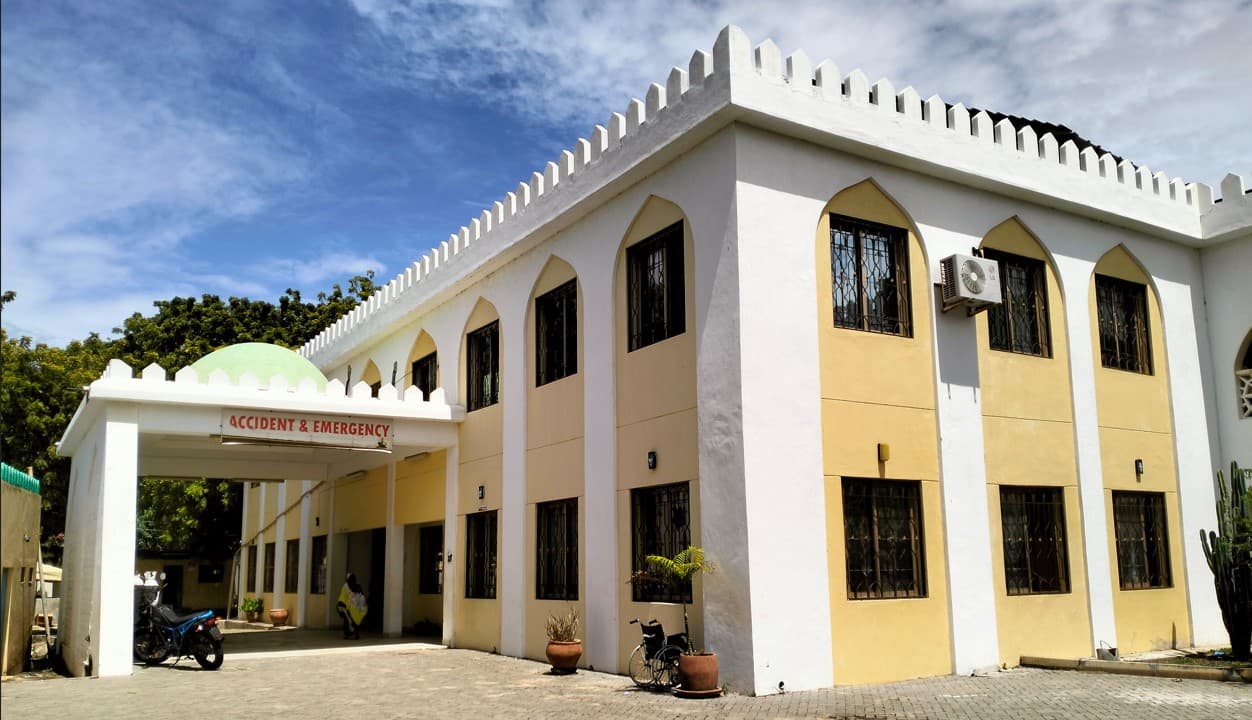
Dispensaries and health centres in Kiunga had failed to meet residents' needs. (Photo: Courtesy)At Kiunga, near the Kenya-Somalia border, Ali Athman said SHA had often forced him to choose between buying food for his six children and paying for boat transport to the Lamu King Fahd County Referral Hospital whenever they needed medical attention.
Despite registering with SHA, Ali said local dispensaries and health centres in Kiunga had failed to meet residents' needs because of persistent medicine shortages.
He said patients who visited Kiunga Dispensary were frequently informed that the SHA system was offline, the facility was not integrated into the system, or the required medicines and supplies were unavailable.
“That leaves us with the option of hiring boats to King Fahd in Lamu and other places like Mpeketoni, which is miles away from Kiunga. You can imagine spending between Sh40,000 and as high as Sh60,000 to reach Lamu Island or Mpeketoni from Kiunga,” said Ali.
He added, “You spend such a huge amount of cash just for transport only for you to reach the targeted hospital and be forced to pay cash out-of-pocket for consultation and life-saving medications in the name that the facility you have visited lacks the supplies covered by the SHA scheme you are in.”
On Faza Island in Lamu East, residents interviewed also reported out-of-pocket expenses and occasional denial of services because of persistent system and financial challenges.
Fatuma Sheikh said that despite registering with SHA, she only received basic consultations at the public hospital in Faza, while having to purchase prescribed medicines from private chemists.
“Registering with SHA only gets us basic check-ups and consultations at the public hospital in Faza. When it comes to the prescribed medicines, we are forced to buy them out-of-pocket from private chemists because they simply aren't covered,” she said.
Junior medical staff interviewed across Lamu County acknowledged that some health facilities lacked fully integrated pre-authorisation and claims-processing systems, making it difficult to process payments for critical services, particularly outpatient care and specialised diagnostic tests.
“While inpatient services see higher rates of utilisation or partial settlements, outpatient care remains erratic, with basic tests or drugs often left unfinanced by SHA. This leaves us with no option except referring the patients to private pharmacies and chemists to buy their prescribed medications,” said one medic who requested anonymity because he was not authorised to speak to the press.
The medic said gaps in SHA coverage had forced some families to delay or forgo treatment as they struggled to meet their daily living expenses.
Residents of Mararani Village in the terror-prone Boni Forest, Lamu County. (Photo: Courtesy)A spot check in Witu, Pandanguo, Maisha Masha and other remote areas of Lamu West also found that families were struggling with the rising cost of healthcare.
Kadzo Mweri, a community advocate, said hospitals had increasingly become a last resort for many residents as medical bills, drug prices and consultation fees continued to rise beyond their reach.
She said residents in Witu, Pandanguo and surrounding areas were facing heavy out-of-pocket expenses because of delays in SHA disbursements and shortages of essential medicines.
“Going to the hospital has become our absolute last resort. We travel all this way only to be told that the SHA system is down or that the government hasn’t paid for the facility,” said Mweri.
She added, “Instead of getting treatment, you are handed a prescription note and sent to private chemists where the drug prices are sky-high. We are regular citizens paying into this cover, yet we are still forced to bleed cash out-of-pocket just to save our loved ones. If you don’t have hard cash ready in your pockets, you might as well stay home and look for alternative ways to survive.”
Lamu Deputy Governor and County Executive Committee Member for Health Dr Mbarak Mohamed Salim acknowledged the challenges facing residents but said the county was making progress in SHA registration.
Dr Mbarak urged more residents to register, particularly those who had yet to enrol.
He cited poor network coverage and limited accessibility due to the poor road network as some of the challenges affecting registration in Boni Forest.
The CEC also pointed to what he described as behavioural challenges, saying some residents wait until they fall ill before seeking registration.
“So far we have achieved 56.8 per cent SHA registration in Lamu with a total of 99,748 people having been enrolled. I indeed acknowledge the existence of challenges experienced; some are just behavioural because a good number of people wait until they fall sick to begin the SHA registration process. Additionally, the high premium amounts are also putting off some people,” said Dr Mbarak.

Comments
No comments yet. Be the first to share your thoughts.