
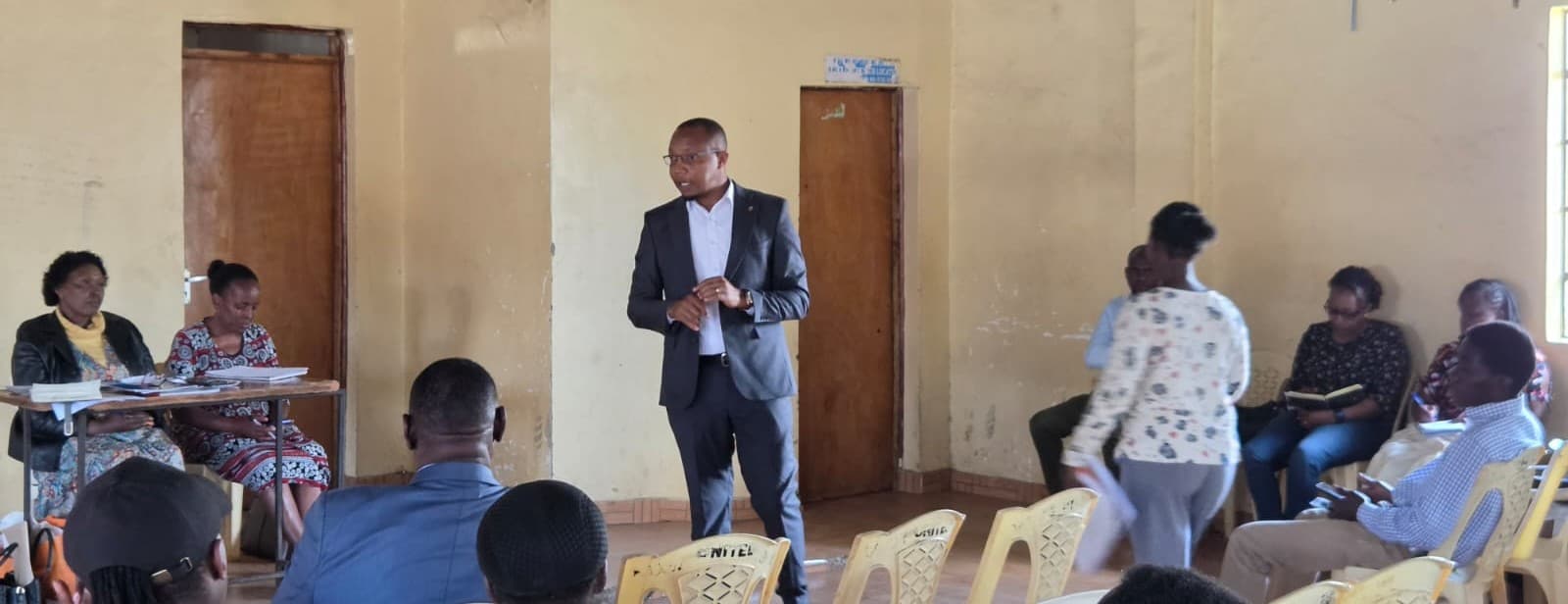
Youth in Kajiado North have been urged to join savings and credit cooperative societies (Saccos) to develop a saving culture and access affordable loans instead of relying on predatory digital lenders and shylocks.
Speaking during a sensitisation seminar organised in partnership with Ngong Multifarmers SACCO at Umoja Social Hall in Ngong, National Agricultural Value Chain Development Project (NAVCDP) Monitoring and Evaluation Officer Kasaine Ole Senkok expressed concern over the low participation of young people in Saccos.
Senkok said youth aged 40 years and below constituted a significant proportion of Kajiado’s population but remained underrepresented in Saccos, leaving many vulnerable to high-interest digital loans and other expensive forms of credit.
“If you take the youthful age to be 40 years and below, about 80 per cent of the people in Kajiado are youth, but they are nowhere to be seen in these Saccos,” he said.
He urged young people to join Saccos, saying the cooperatives offered affordable credit, were locally accessible and operated under government regulation.
Senkok said SACCO membership could help young people avoid excessive interest rates charged by some digital lenders as well as harsh debt-recovery measures associated with informal lenders.
He also challenged SACCO officials to review their recruitment strategies and tailor their messaging to attract more young people, whom he described as critical to the sustainability of cooperative societies.
Ngong Multifarmers SACCO Chairperson Anne Njoroge acknowledged the challenge, saying the cooperative would embark on an aggressive membership recruitment campaign, starting with the reactivation of dormant members.
“We want to ask young people to join the SACCO. We recognize the challenge before us and need to get to work, first by activating dormant members and then recruiting more members. We are hoping to get at least 1,000 members by December,” Njoroge said.
She urged residents to embrace saving as a way of improving their financial well-being.
“Let us not eat everything. Let us save. It is in saving that we are going to grow,” she said.
SACCO member Mary Karanja, who said she had borrowed and repaid loans from the cooperative twice, called for sustained public awareness campaigns to educate communities on how Saccos operate.
Karanja said some members had dropped out or become inactive after misunderstanding an initial grant used to establish the SACCO’s systems, believing it was free money from the World Bank.
“The SACCO is struggling, but the problem started at the beginning when the grant advanced to set the SACCO systems in place was misunderstood by people as free money from the World Bank,” she said.
Senkok acknowledged the misconception and urged youth to approach government-supported programmes with a focus on building sustainable livelihoods rather than expecting handouts.
“Our youth need to know there is no such thing as free money,” he said, urging them to use such programmes to build self-reliance.
Njoroge said the SACCO offers loans across agricultural value chains as well as short-term credit for small businesses at an interest rate of one per cent per month.
She said members could access loans to purchase stock such as vegetables for resale, enabling small traders to finance their businesses at lower costs than other available credit options.
Ngong Multifarmers SACCO is among 25 Saccos in Kajiado County, with one established in each ward and supported under the NAVCDP.
The project, a partnership between the Government and the World Bank, seeks to help smallholder farmers transition from subsistence to commercial agriculture through value addition and improved access to finance.
It supports farmers through Saccos, Community Interest Groups and Farmer Producer Organisations.
Senkok said strengthening Saccos and encouraging youth participation would help expand access to financial services and create opportunities for young people to invest in agriculture and small enterprises.
He encouraged the youth to take advantage of available financial programmes while developing disciplined saving habits and sustainable income-generating activities.
by Byron Ouma/ Joe Gachima



Comments
No comments yet. Be the first to share your thoughts.