

The National Land Commission (NLC) has intensified efforts to resolve historical land injustice claims in the country, with Kenyans pushing for faster action on disputes that have remained unresolved for decades.
NLC Historical Land Injustice Committee Chairperson Ms Mary Yiane Seneta said they had made progress in clearing its backlog, with only few of the cases currently before it remaining pending for hearing.
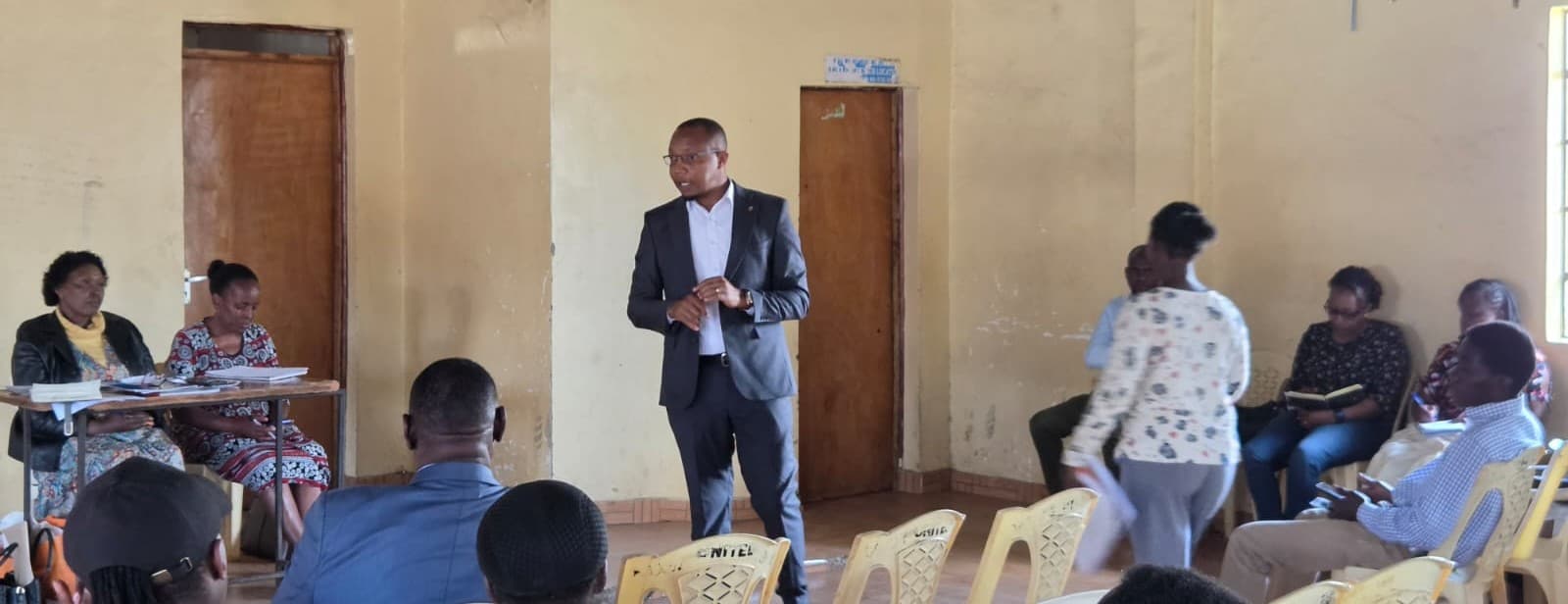
She spoke during a public participation forum at the Anglican Church of Kenya (ACK) Guest House in Nakuru town on the Draft Historical Land Injustices (HLI) Regulations, 2026 and the Review of Grants and Dispositions of Public Land Regulations, 2026.
Ms Seneta said the public participation forum on the draft Historical Land Injustices Regulations, 2026, had provided the newly constituted Commission with crucial information that would help expedite the determination of outstanding cases.
“Some of the comments will be used precisely because they have given us ideas about the timings and how this location can be used for other places, timelines, when the case started and the length of the case from beginning to the end and all that. So, we are going away with very good information that we could only get from here,” said the NLC Commissioner.
She noted that the Commission inherited a backlog of historical land injustice claims from the previous administration and was committed to processing them as quickly as possible.
“We have inherited these cases, and we are tackling them to the best. For example, in today’s interaction with the communities of Nakuru, it was recommended that historical land injustice cases shouldn’t take more than a year,” Ms Seneta stated.
Also present were NLC Commissioners Mohammed Haji and Vincent Kigen.
Ms Seneta stated that the public submissions would remain central to shaping the proposed regulations.
She stated that the residents’ experiences and recommendations would help create a legal framework capable of addressing historical grievances while providing a fair and robust process for affected communities.
Also present at the forum were Deputy Governor Dr David Kones, County Executive Committee Member (CECM) for Lands John Kihagi, national and county government officials, NLC representatives and members of the public.
The hearing brought to the fore the plight of residents who say they have waited for generations for justice and compensation over land acquired for government projects.
NLC commissioner Mr Haji said they were determined to work through the legal and administrative hurdles to ensure legitimate claims are addressed.
He said unresolved land disputes had also affected development in parts of the country, pledging that the remaining cases will be handled without further delay.
NLC is a constitutional commission established under Article 67 of the Constitution of Kenya with a mandate of managing public land, investigating historical land injustices and advising government entities on land policy.
Mr Haji said land is emotive, a heritage and an identity. He said the commissioners sit in that important place to govern and determine the land rights in Kenya.
“Far beyond an economic resource, it is deeply intertwined with identity, history, community and unity. Questions of land have shaped our past and continue to influence our present, making the work of the commission integral to our nation’s pursuit of justice, dignity and social transformation,” he said.
The Commissioner said the frameworks of the constitution envisage the NLC to serve as a guardian of the public interest, an institution entrusted with extremely large resources in a manner that is transparent, equitable and inclusive.
The National Land Commission (NLC) has invited Kenyans to submit their views on historical land injustices through a public participation exercise aimed at informing ongoing investigations into long-standing land disputes across the country.
The commission said the exercise seeks to gather views from individuals, communities and other stakeholders to support its mandate of investigating historical land injustice claims and recommending appropriate remedies.
Mr Haji encouraged members of the public countrywide with relevant information or claims to participate in the exercise and share their experiences as part of the ongoing review process.
“Public participation is a key part of ensuring that investigations are informed by the experiences of those directly affected by historical land injustices,” the commissioner said.
The exercise comes at a time when land disputes remain one of Kenya’s most persistent legal and social challenges, with many communities seeking justice over ancestral land, alleged unlawful evictions, irregular land allocations and disputed ownership.
Over the years, courts have handled numerous cases involving contested land ownership, fraudulent title deeds and claims of illegal land transfers, highlighting the growing need for proper documentation and transparent processes in resolving disputes.
A 2025 report by the National Crime Research Centre established land-dispute problems in many counties, with Nairobi at 12 percent, Kakamega at 6.3 percent, and Nakuru at 5 percent among unresolved land disputes in the counties it surveyed.
The latest public participation exercise also follows a recent High Court ruling that declared there is no time limit for pursuing justice over historical land injustices.
In the landmark judgment, the court held that Parliament could not impose statutory deadlines that limit the National Land Commission’s constitutional mandate to investigate historical land injustice claims, effectively allowing older claims to continue being considered.
However, the courts have also maintained that historical land claims and allegations of fraud must be supported by credible evidence. The rulings underscore the importance of maintaining proper land records, including title deeds, survey maps and other ownership documents, as land disputes continue to feature prominently before Kenyan courts.
Further, the NLC has urged eligible Kenyans to take part in the public participation exercise, saying the views collected will help inform its investigations and future recommendations on addressing historical land injustices across the country.
Deputy Governor Dr Kones urged NLC to prioritize longstanding land challenges affecting communities and work with local administrators and other institutions to secure lasting solutions.
Dr Kones said generations of residents in several parts of the county continue to occupy land without formal documentation, leaving families vulnerable to disputes and limiting their ability to fully benefit from their property.
The Deputy Governor singled out Ndundori, Soin, Kiptangwany, Elementaita, Maiella, Mauche and Neissuit among areas where residents have experienced prolonged land disputes.
He called for closer coordination between the NLC, county government, national government administration and other relevant institutions to address the challenges.
“Resolving land documentation problems would strengthen tenure security and create a more stable foundation for residents to invest in homes, farming and other economic activities,” Kones said.
The call comes as the NLC conducts nationwide consultations on regulations intended to strengthen the framework for investigating and determining historical land injustices.
The Commission has held similar public participation exercises in several counties, including Samburu, Laikipia, Isiolo, Kajiado, Mombasa, Kwale, Kilifi and Tana River.
The consultations seek views from affected communities and other stakeholders before the regulations are finalized.
Under Article 67 of the Constitution, the NLC is mandated to initiate investigations, either on its own initiative or following a complaint, into present or historical land injustices and recommend appropriate redress.
The Constitution also gives the Commission responsibility for advising the national government on a comprehensive programme for land title registration and encouraging traditional dispute-resolution mechanisms in land conflicts.
The National Land Commission Act defines historical land injustice as a grievance arising from a violation of land rights that resulted in displacement and occurred between June 15, 1895 and August 27, 2010.
The law requires such claims to meet specific criteria before they can be admitted and processed by the Commission, including verification that the alleged injustice resulted in displacement or another form of historical land injustice.
by Jane Ngugi and Jefther Afuyo


Comments
No comments yet. Be the first to share your thoughts.