
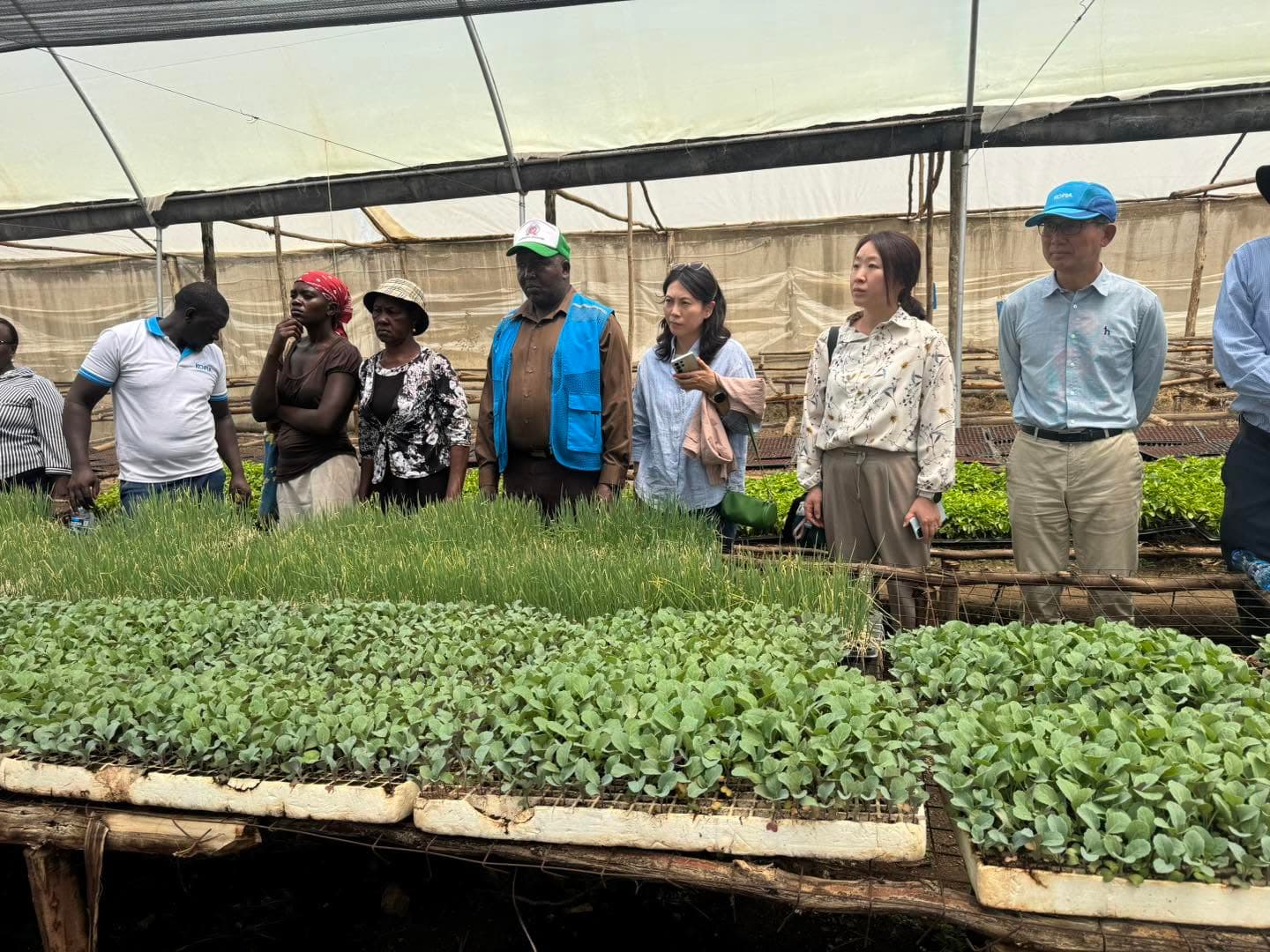
Tomato farmers in Kiambu County are set to improve productivity and increase their earnings following training on modern grafting technology aimed at addressing persistent pests and diseases affecting the crop.
More than 100 farmers from Juja Farm in Juja Sub-County participated in a practical training program conducted by agricultural experts from the Korea Partnership for Innovation of Agriculture (KOPIA) in collaboration with the Kiambu County Government.
The initiative seeks to equip farmers with modern vegetable production skills to improve yields, enhance incomes and strengthen food security in the county and beyond.
Tomato grafting involves joining the fruit-producing upper part of one plant, known as the scion, to the root system of another plant, known as the rootstock, selected for its vigour and resistance to soil-borne diseases.
Speaking during the training, KOPIA Kenya Director Dr. Ji Gang Kim said the technology could help farmers overcome some of the major challenges that have contributed to losses in tomato production.
He noted that grafted tomato plants can offer improved resistance to soil-borne pathogens and pests, including Fusarium wilt, Verticillium wilt, corky root rot, bacterial wilt and root-knot nematodes.
“Most farmers have been incurring losses because of over-reliance on conventional farming methods. We are training them on the latest technologies that will maximize their yields and generate better returns while playing a crucial role in enhancing food security in the region and across the country,” said Dr. Kim.
He added that grafting strengthens the root system, enabling plants to absorb more water and nutrients, thereby improving their vigour and productivity.
According to Dr. Kim, studies indicate that grafted tomatoes can increase marketable yields by between 30 and 50 per cent compared to ungrafted plants, although actual results depend on growing conditions and crop management practices.
He further observed that grafting can improve the resilience of tomato plants to environmental stresses, including drought, excessive moisture, high soil salinity and extreme temperatures.
Agricultural research scientist Joseph Munyua urged farmers to embrace modern farming technologies to address recurring pest and disease challenges that have affected tomato production.
Munyua noted that limited access to quality hybrid vegetable seedlings remained a major constraint for many farmers, urging them to invest in quality planting materials, including grafted seedlings suited to their production needs.
Kiambu County Chief Officer for Agriculture Benson Njoroge said the partnership with KOPIA was expected to contribute to improved agricultural practices and increased productivity across the county.
Njoroge emphasized that equipping farmers with appropriate skills, quality planting materials, fertilizers and extension services would be critical to improving harvests and increasing household incomes.
He said the county government had continued distributing quality seeds to farmers as part of efforts to improve agricultural productivity, enhance livelihoods and strengthen food security.
The training follows a memorandum of understanding signed between the Kiambu County Government and KOPIA in November 2025 to promote agricultural innovation and improve farmers’ livelihoods.
Farmers participating in the program, led by Margaret Waithera, welcomed the partnership, saying it could open up opportunities for improved production, better incomes and stronger market linkages.
They expressed optimism that access to modern farming techniques and quality planting materials would help them address production challenges and make vegetable farming more profitable.
The partnership is part of broader efforts to promote modern agricultural technologies and equip farmers with practical skills to respond to production challenges while meeting the growing demand for food.
by Grace Naishoo



Comments
No comments yet. Be the first to share your thoughts.