
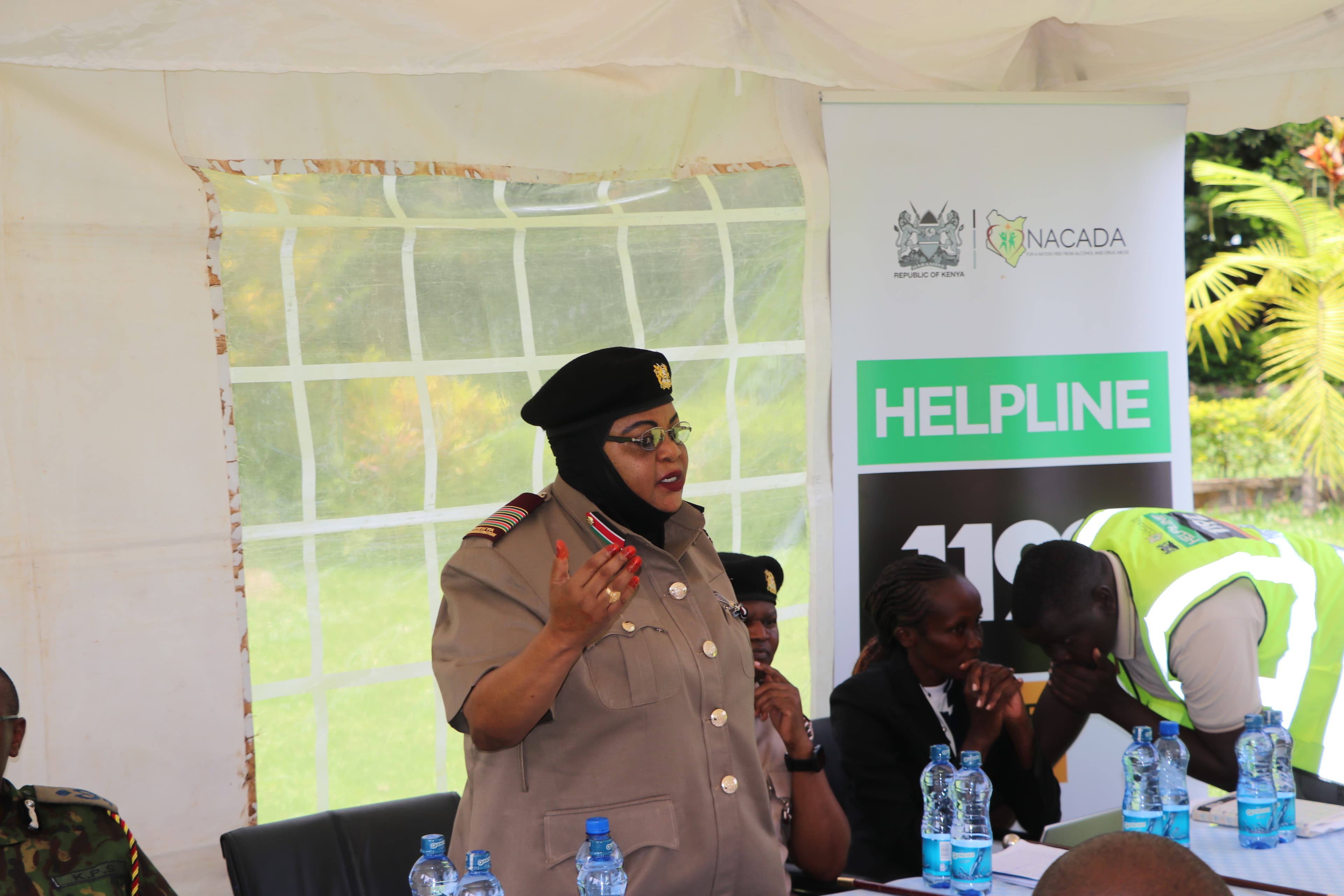
Kirinyaga County Commissioner Sufaa Omar Mjuma has called on young people to work with the government in the fight against illicit brews, alcohol and drug abuse, saying community engagement is key to addressing the problem.
Mjuma said the government had shifted focus from routine raids and inspections to directly engaging young people to understand the challenges pushing them into alcohol and substance abuse.
“Today we took a slightly different approach in this fight. Instead of doing routine crackdowns or conducting raids and inspections, we focused on community and youth engagement,” Mjuma said.
She said unemployment, idleness and the desire to feel happy or relaxed were among the reasons cited by young people for turning to alcohol and drugs.
The Commissioner urged the youth to take advantage of government programmes such as Nyota and Uwezo Fund to establish businesses as they await opportunities for formal employment.
Mjuma also linked substance abuse to other social problems, including HIV/AIDS and suicide, saying the county had recorded 97 new HIV infections, while 130 people were currently on medication.
“This shows that our youth are at risk, so I advised them to get tested and know their status,” she said.
She further said the county records an average of three to four suicide cases involving young people every month, with some cases linked to illicit alcohol, general alcohol and drug abuse.
Mjuma said the meeting also addressed defilement and rape, urging young people to avoid sexual offences and instead focus on legitimate businesses, earning income and building responsible families.
The Commissioner said local administration and security officers, including the Assistant County Commissioner for Kirinyaga Central and area OCSs, participated in the meeting.
She called on the youth to provide information to security agencies on the sale and distribution of illicit brews, second-generation alcohol and tax-evading products as part of a multi-agency approach to tackling the problem.
Youth representatives welcomed the engagement but called for stronger action against specific illicit and dangerous alcohol products rather than focusing mainly on business licences.
Comedian and youth representative Bonny Rep KE said young people needed clear information to distinguish legitimate alcohol that meets required standards from counterfeit and harmful products.
“We want the government to explain how to identify safe products versus harmful ones so that people know what they are dealing with,” he said.
Bonny said the youth were ready to support the government’s crackdown but wanted authorities to target harmful drinks being sold rather than concentrating only on licensing.
“Licenses alone do not sell in bars—the actual drinks do. We need them to address the specific illicit drinks being sold, as that is where the real danger lies,” he said.
Another youth leader, Lenis Karu, called for increased enforcement against unverified high-potency spirits and illicit brews sold in rural areas.
“What we want the government to focus on right now is strictly regulating local brews and illegal spirits in rural areas,” Karu said.
He said authorities should target areas where illicit alcohol is sold, particularly villages where cheap and unverified spirits are easily accessible to young people.
Karu also urged the government to address places where cannabis and other illegal substances are sold alongside alcohol, saying the combination was contributing to problems among the youth.
He said the youth had exchanged ideas with the security team during the meeting and expressed optimism that the measures discussed would lead to action on the ground.
“With the commitment shown today, we expect to see real action on the ground that will bring positive changes,” Karu said.
by David Wandeto

Comments
No comments yet. Be the first to share your thoughts.