
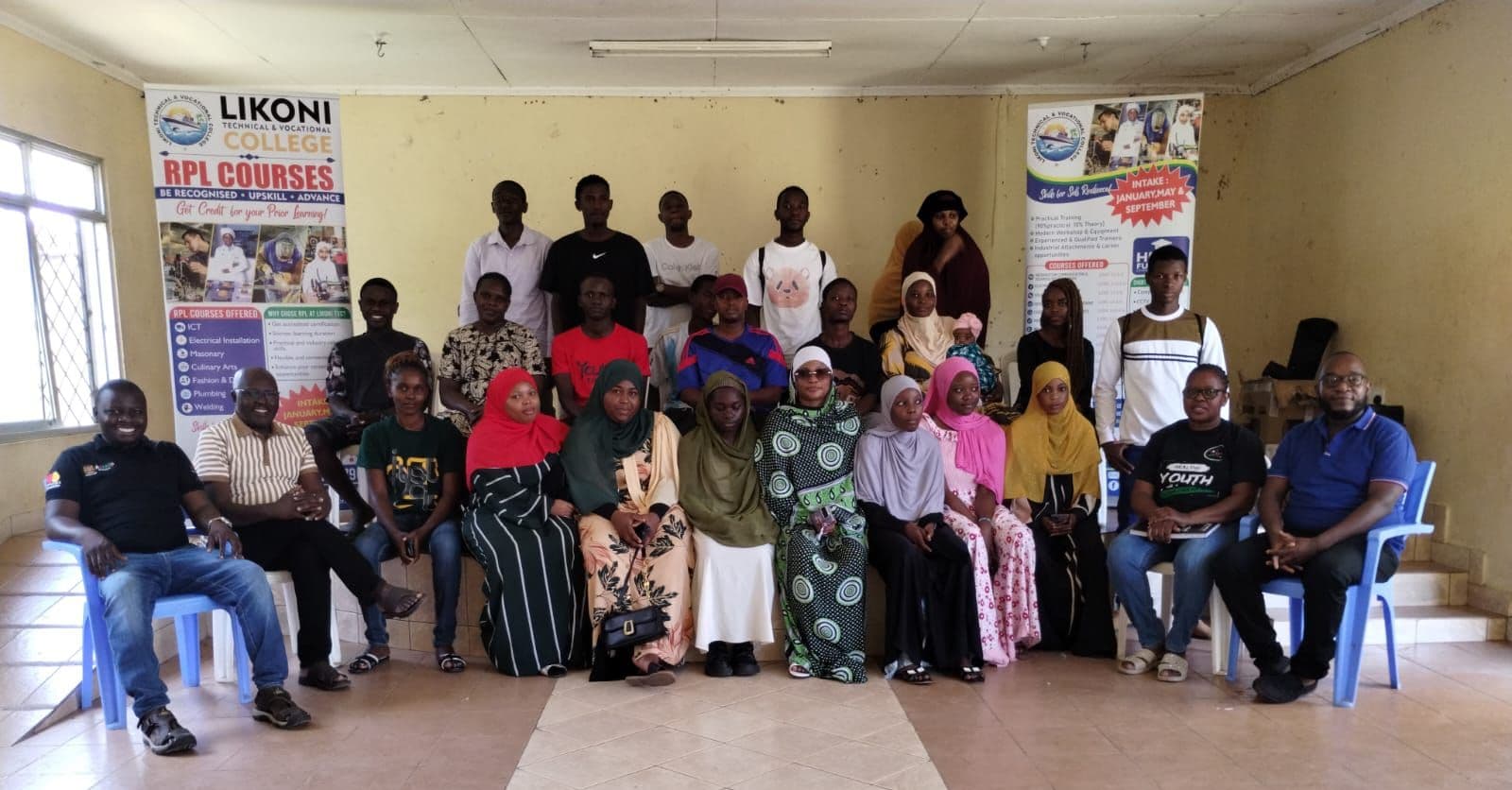
Youths in Likoni sub county, Mombasa county have been challenged to turn the digital revolution into a source of employment, income and improved livelihoods by acquiring skills that can open doors to the rapidly growing online economy.
Speaking at Shikaadabu, Likoni, during the induction of the second cohort of the Free Computer Training Programme, State Department for Youth Affairs Mombasa County Regional Coordinator Samuel Ayacko said digital skills were increasingly essential for young people seeking employment and economic opportunities.
Ayacko said the programme is aimed at equipping youths with basic and essential computer skills while preparing them for the Ajira Digital online work training programme and other employment opportunities.
He urged the trainees to take advantage of the training and use their digital knowledge to explore online work and other opportunities created by technological advancement.
“The digital era has created new opportunities for young people, and acquiring the right skills can help them improve their livelihoods,” he said.
He added that the government targets training more than 4,000 youths in different courses to promote self-employment and create job opportunities.
Ayacko, however, challenged the youths to remain committed to programmes when they start.
“The Government of Kenya has good plans for the youths, but the problem with our youths is that they don’t finish what they start,” he said.
The Free Computer Training Programme seeks to bridge the digital skills gap among young people by providing practical computer knowledge and preparing them to participate in the digital economy.
The induction of Cohort Two at Shika Adabu brought together more than 70 youths seeking to develop their digital skills and position themselves for emerging opportunities in online work and employment.
Abdalla Muishe, an officer with the Ajira Digital Programme in the Coast region, said Kenya has a large population of young people, many of whom use the internet mainly for entertainment but could also harness it to improve their livelihoods.
“There are so many opportunities that the internet has brought; you can work for any company around the world using the internet, whatever can be done in a physical office can be done virtually,” Muishe said.
He added that the programme was creating awareness and providing training on online work and various job opportunities available through digital platforms to clients from across the world.
“We have different modules that we train on, including digital marketing, content creation, transcription and others, giving them these skills to handle these jobs,” he said.
Muishe said the programme targets to prepare youths aged between 18 and 35 years for the international market by equipping them with skills that meet global standards.
“To prepare someone to those standards, you need to really do a lot of practicals to understand from the basic to the advanced part of the course,” he said.
Meanwhile, Likoni Technical and Vocational Training College Registrar Titus Ceasar encouraged participants to register for Recognition of Prior Learning (RPL), a TVET programme that assesses and recognizes knowledge and skills acquired through work experience, informal training and self-learning, even where an individual lacks formal qualifications.
He said 500 slots had been set aside for youths in Likoni through an initiative supported by Likoni Member of Parliament Mishi Mboko.
“Take advantage of the 500 slots that Mboko has provided for the youths in Likoni for this programme,” Caesar said.
He explained that the RPL programme provides experienced workers with an opportunity to obtain nationally recognised certificates without having to start training from the beginning.
“It is an open programme with no academic qualification, with an assessment on site; 90 per cent is practical and 10 per cent theory,” Caesar said.
Rehema Mohamed, one of the trainees, said the programme would benefit many youths in Likoni by helping them apply and develop existing skills.
She urged the government to introduce more youth-focused projects and provide grants to help young people expand their businesses and create employment opportunities for others.
“Most youths are educated and have talents, and with such projects, we feel empowered by the government,” Mohamed said.
Another trainee, Joseph Ngatia, said the programme would enhance his computer application skills and encouraged other youths to enrol in similar programmes to improve their skills.
He also called on the government to expand training opportunities to include courses such as beauty, masonry and plumbing.
“We need more of these projects; if they have started with computer training, let the government also bring other courses like masonry, plumbing and others because we are not the same in what we like doing,” Ngatia said.
by Mary Mtawa

Comments
No comments yet. Be the first to share your thoughts.