
Kenya stands as a culturally rich nation shaped by distinct Bantu, Nilotic, and Cushitic migrations, with 43 officially recognised tribes within its borders shaping its customs, languages and traditions.
Over time, both colonial authorities and post-independence Kenyan governments worked to unite these diverse groups under a single national identity, symbolized by the national flag with the national and official languages being Swahili and English.
However, historical migrations also resulted in hardship for various communities, leading to shifting settlements and systemic cultural absorption.
While historians frequently note that between 10 and 15 distinct sub-tribes or hunter-gatherer lineages were heavily assimilated over time, modern constitutional recognition demonstrated by the official inclusion of groups such as the Abasuba in Nyanza, the Makonde in Coast, and Asian communities has sparked a movement among several marginalised groups to revive their distinct heritage.
Among these, the Abasuba (Suba) present a notable example; as Bantu-speaking populations who originally migrated from Uganda to Lake Victoria locations such as Mbita, Rusinga Island, and Mfangano Island in Nyanza region.
The vast majority of the Abasuba people were linguistically and culturally assimilated by the Luo throughout the 19th and 20th centuries, adopting Dholuo as their primary language.
According to the United Nations (UN) views on world cultures and traditions; a sub-tribal assimilation in Kenya for example, was not merely seen as a numerical metric, but as an ongoing human rights and cultural preservation challenge.
Rather than assigning a static figure to assimilated groups, the UN has continuously urged the nations, Kenyan included, to grant formal recognition, safeguard ancestral land tenure rights, and deliver targeted support to prevent remaining minority and hunter-gatherer sub-tribes from losing their identity.
Despite international programmes created to revive these vulnerable sub-tribes across Africa, some remain deeply assimilated to the extent that younger generations can no longer speak their ancestral languages.
In response to this threat, the Abamuhoro community, a sub-tribe of the Bantu Suba group found in Muhuru Bay has embarked on a journey to reclaim their origins and trajectory.
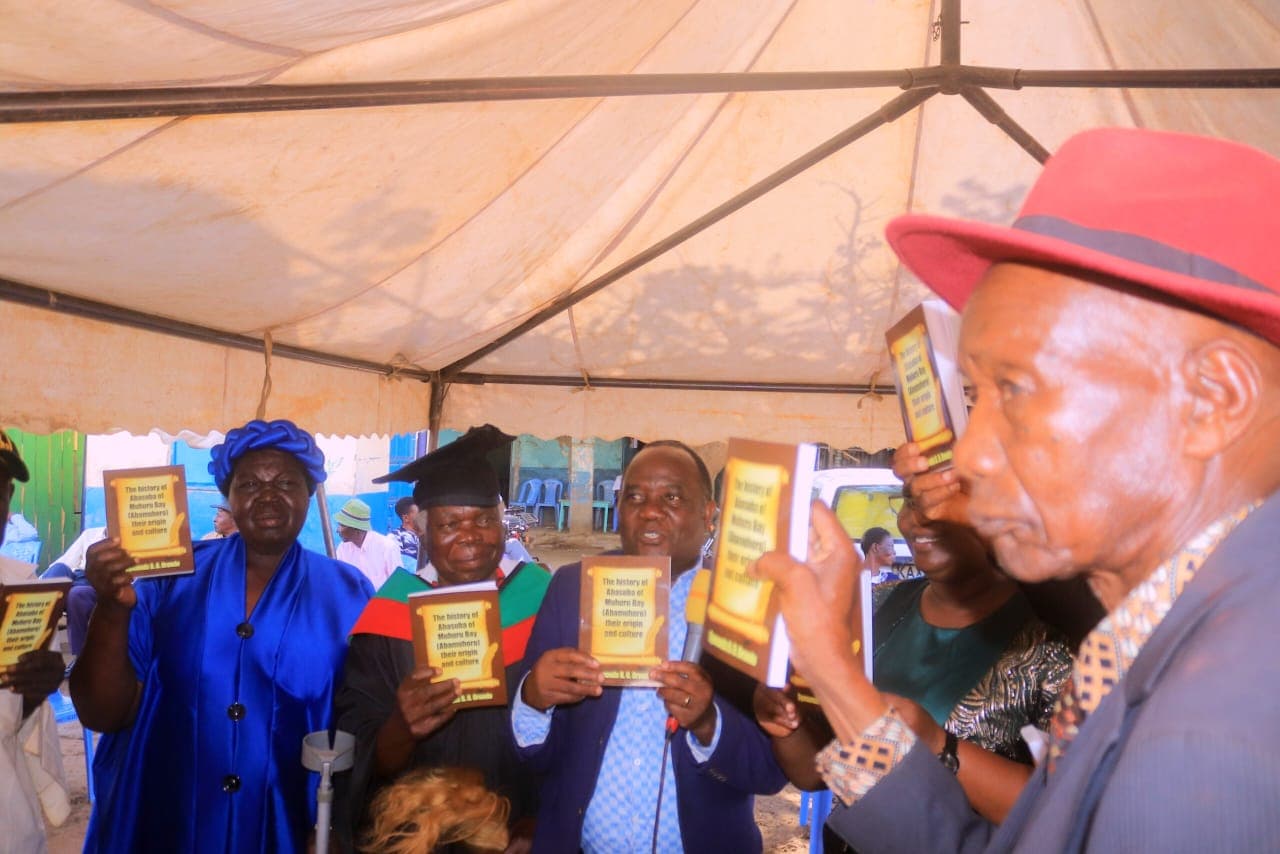
Led by Suba elder Ogada Orondo, the effort culminated in the authoring of a dedicated book titled: The history of Abasuba of Muhuru Bay (Abamuhoro).
Even though the 85-year- old author from Muhuru Bay professional background was in science rather than writing, he developed an intense passion to document his people’s history and educate younger generations; after realizing that much of the Abasuba history was undocumented and at risk of being lost.
Driven by oral traditions passed down by his grandfathers regarding the Suba community, the Abamohoro sub-tribe, and their historical migration to modern-day Muhuru Bay in Nyatike Sub-County became his biggest aspirations to understand his culture, roots and traditions.
Orondo, a retired Forest Officer, purchased a cassette recorder to capture consistent accounts directly from community elders where he validated these oral testimonies through visits to historical sites across the region, spending 15 years in the process to compile the manuscript.
Encouraged by his family and the community members across local areas like Uhanya Beach in Siaya and Osieko in Busia along the lake basin, he soldiered on despite initial rejections from major publishers in the country; who declined his manuscript because he lacked a formal literary background.
Starting his draft by hand in 2010, Orondo taught himself computer skills, studied the methodological approaches of established historians such as Professor Bethwell Ogot to sharpen his authoring skills.
He personally funded the research and production costs and eventually launched the book in August 2026 in Muhuru Bay-Nyatike South Sub County, bringing together key community figures, scholars, and local leaders.
The book which is currently retailing at between Sh500 to Sh1,000 in Migori despite high costs of production is a self-satisfaction to Orondo who has prioritized educational impact over profit.
“I am an old man now and my major motivation for writing the book was to pass a very important message to our people, the Abamuhoro, to preserve their identity, culture and traditions”, he said.
Odunga Nyamusi, a Suba elder from Abamuhuru sub clan, praised Orondo for dedication in authoring the book to preserve the culture, language and traditions of the Suba community.
Nyamusi now calls upon the Abasuba tribe that has five major sub tribes spread in Homabay, Migori and some parts of Siaya and Busia counties, and the neighbouring Tanzania, to unite for the purposes of preserving their language.
The elder is however proud that despite the assimilation they have been advancing their culture through naming rights with names like Nyamusi, Orondo, Sagia and Chacha being the Suba’s but also closely shared by their cousins from Kuria and Kisii tribes.
Mzee Nyamusi urges the national government to ensure equitable development funds to preserve the culture, traditions and languages of the minority groups as well as an equal treatment for minority sub-tribes, noting that the Abamuhoro continues to practice key cultural traditions in food preparation, domestic layouts, and marriage practices despite heavy linguistic assimilation.
The first Suba woman academician from the Abamuhoro clan, Prof. Rose Ogwang says that the book will not only educate the future generations, but also contribute to the cultural preservation of the nation’s historic moments.
Prof. Ogwang who is also the Migori Chief Officer in Charge of Gender Inclusivity Culture and Social Services states that the county has committed in supporting the book initiative by stocking the Orondo’s book across bookshops and libraries in all the 40 wards to foster a reading culture and inspire local authors.
She affirms that the county will soon launch a local library in Muhuru Bay town to promote readership of local books as well as stocking some to other local libraries in Migori and Awendo towns.
“The community should be able to write something about their traditional roots to contribute to different generations within our communities. Writing also refreshes our memories as well as giving one an investment and income,” said Ogwang during an interview recently.
The county official also urged the Suba community to value their cultures by creating open spaces where children can be taught local languages, customs and traditions.
Samson Oganda, a youth, detailed his father’s arduous journey through late-night writing, manual manuscript creation, self-taught typing, and custom hand-drawn diagrams.
Oganda highlighted the Abamuhoro community’s distribution strategy, which includes hand-autographed copies, distribution via local community-based organisations, secondary school laboratories, government offices, and social media outreach.
The process underscored major structural barriers facing local historians, including prohibitive publication costs, paid access to historical source sites, publisher bias against non-academic authors, and editorial pressures to alter authentic hand-drawn cultural diagrams.
To address these hurdles, the Abamuhoro community stakeholders emphasised that the government must act as an enabler by providing tax relief on paper production, reviving domestic paper production like the Webuye paper factory to reduce printing costs, and establishing local cultural resource centers.
He said that his father’s book fills a vital historical knowledge gap for future generations in Muhuru Bay, expressing the community’s cultural evolution, including the total abandonment of (FGM) Female Genital Mutilation.
The son of the author however, urges the education sector to combine school-based reading of Orondo’s books and other informal elder-led instruction to provide a vital foundation for preserving Abamohoro cultural heritage.
by Beryl Akinyi/George Agimba


Comments
No comments yet. Be the first to share your thoughts.