
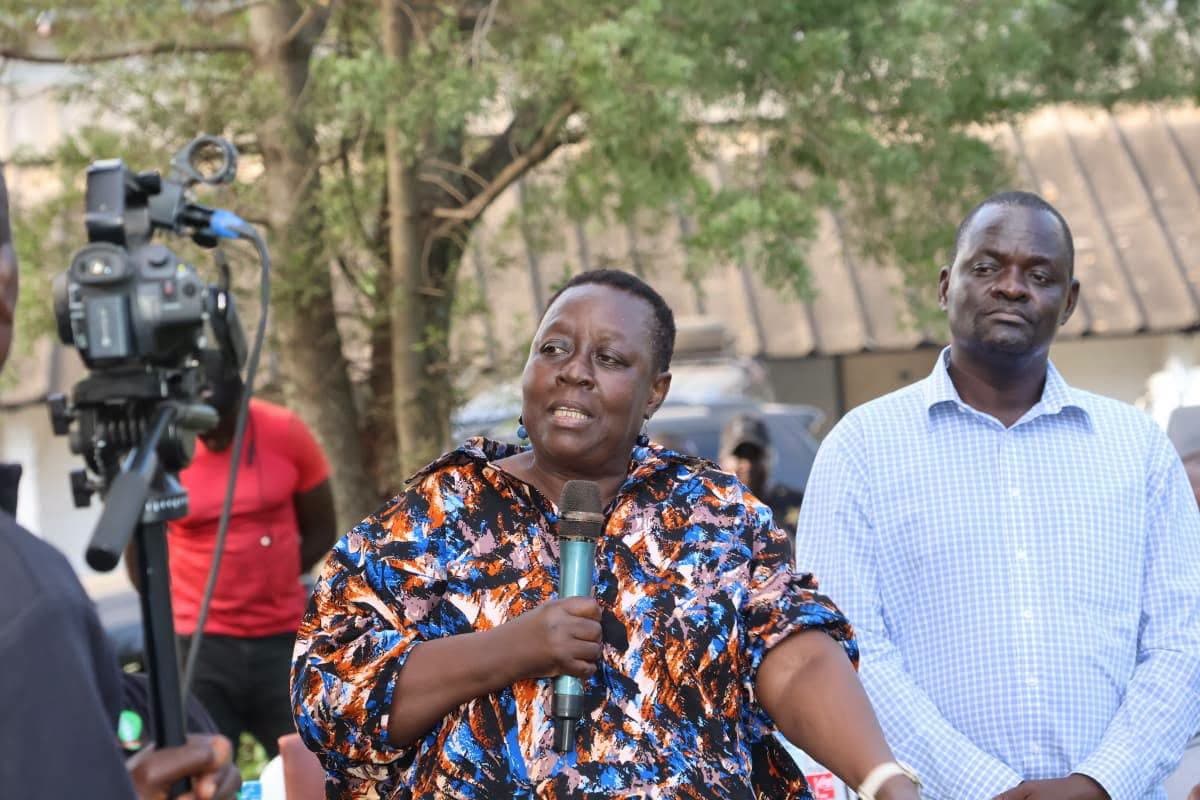
Sugarcane farmers and stakeholders in Muhoroni Sub-County, Kisumu County have strongly opposed the proposed Crops Laws (Amendment) Bill, 2026, warning that the legislation could undermine ongoing reforms in the sugar industry.
The cane growers, transporters, members of the local business community, sugar-sector processor groups and miller representatives raised concerns over the proposed Bill, warning that it could weaken farmers’ influence over the sector and revive longstanding challenges that have hindered its growth.
These concerns were voiced during a public participation exercise conducted by the National Assembly Departmental Committee on Agriculture and Livestock, in Muhoroni and Chemelil towns on Tuesday.
The Committee was represented by a delegation consisting of legislators Jared Okello- Nyando, Patrick Kibagendi-Borabu alongside Kisumu Women Representative Ruth Odinga.
The Crops Laws (Amendment) Bill, 2026, proposes amendments to the Sugar Act, the Kenya Agricultural and Livestock Research Institute Act and the Tea Act.
Speaking during the forum, Ms. Odinga said the Bill seeks to scrap the lending powers of the Kenya Agricultural and Livestock Research Organisation (KALRO), the Kenya Sugar Board and the Tea Board of Kenya and transfer them to the proposed Kenya Agribusiness Development Corporation (KADCO), a limited company established under the Government Owned Enterprises.
Odinga stressed that farmers’ concerns about the proposed Bill were legitimate and deserved serious consideration.
“The engagements make it clear that farmers and other stakeholders oppose the Bill in its entirety. As a sugarcane farmer myself, and as a leader elected by the very farmers, I can say that their sentiments are anything but far-fetched,” she said.
The women rep proposed strengthening the Kenya Sugar Board, established under the Sugar Act, 2024 and allowing it to continue collecting the sugar levy to support the development of the sector.
The Committee was questioned on the necessity and timing of the proposed changes, with farmers arguing that the existing legal framework needed to be fully implemented before Parliament considers further amendments.
Chairperson of the Kenya Association of Sugarcane and Allied Products (KASAP), Atiang Atiang, observed that the Sugar Act had yet to be fully operationalized, questioning the rationale for amending legislation whose implementation was still pending.
“The Sugar Board is yet to be constituted. We are waiting for the elections to elect board members. What is the sense of bringing amendments to an Act that you yourselves enacted and have not seen implemented?,” posed Atiang.
He further argued that KADCO resembled the former Agricultural Development Corporation (ADC), which he accused of contributing to the near collapse of the sugar sector and failing to pay farmers for their produce. He maintained that the proposed corporation did not adequately represent farmers’ interests.
A farmer with disability and a representative of the Muhoroni branch of the farmers’ federation, Maurice Omondi, argued that the proposed model mirrored the challenges associated with previous legislation and risked reintroducing cartels into the industry.
Omondi appealed to Parliament to allow the reforms envisaged under the Sugar Act to take effect before introducing further amendments.
The Rift Valley Sugarcane Planters Association representative, Gerald Ruto also questioned the intentions behind the Bill, warning that transferring existing functions and financing arrangements to KADCO could negatively affect farmers.
He noted that the four per cent levy currently allocated to support the sector directly benefits farmers and cautioned that transferring the associated functions to another entity could disrupt these benefits.
He also questioned how the proposed changes would preserve the technical expertise and institutional capacity of existing agencies.
“In the spirit and age of devolution, removing the functions and management of the sector away from the farmers and centralizing it in Nairobi is ill-advised,” he said.
Ruto instead proposed the revival of farmers’ societies to work alongside the Kenya Sugar Board in addressing challenges facing the sugar industry.
Similarly, David Rop, a farmer from Tinderet, urged the Government to prioritize the revival of struggling cooperatives, noting their historical contribution to improving livelihoods and alleviating poverty.
During the engagement in Chemelil, farmers reiterated their opposition to the Bill, warning that its enactment in the proposed form could further cripple the sugar industry.
Dr. Mboya Kagumba, a former Director at the Kenya Sugar Board who represented growers from the Chemelil, Nandi Hills and Soin zones, cautioned that the proposed establishment of KADCO mirrored past shortcomings witnessed with the introduction of the Agriculture and Food Authority (AFA), which he said had brought the sugar sector close to collapse.
The Chairperson of the Kisumu Sugar Belt Union, Zedekiah Okene, questioned the repeated disruptions to reforms intended to benefit farmers.
“When did the rain start beating us?,” he posed, observing that whenever positive developments emerge in the sector, external interventions often disrupt progress at the expense of farmers.
At the same time, an advocate representing Kibos and Chemelil sugar millers, Nick Oloo, criticized what he termed a reactive approach to policy making, arguing that the proposed amendments lacked sufficient justification.
“It is alarming that the Government has perfected the art of shooting and then aiming later,” he said.
Oloo argued that the proposed legislation did not adequately reflect the views and aspirations of the people, warning that Parliament should consider public concerns when formulating laws.
He also raised concerns over potential legislative overlap, noting that provisions contained in the Sugar Development Fund (SDF) manual and the existing Sugar Act appeared to address matters similar to those contemplated in the Bill.
“There is no substantive policy necessity and no reason whatsoever to change the lending infrastructure,” he stated.
The committee conducted public participation forums in Kisumu, Kericho and Bungoma counties on Tuesday.
Further hearings are scheduled for Busia, Homa Bay, Migori, Narok and Kakamega counties between October 28 and 29.
By Robert Ojwang’

Comments
No comments yet. Be the first to share your thoughts.