
The government has called for greater investment in modern technologies, scientific research and climate-resilient livestock breeds to boost animal production, improve food security and reduce Kenya’s reliance on imports.
The Principal Secretary for Science, Research and Innovation, Prof. Shaukat Abdulrazak said Kenya must embrace innovations such as artificial intelligence (AI), precision livestock farming and biotechnology to increase productivity, particularly during prolonged dry spells.
Prof. Abdulrazak challenged livestock professionals to develop practical solutions to persistent milk shortages and the country’s dependence on imported food products.
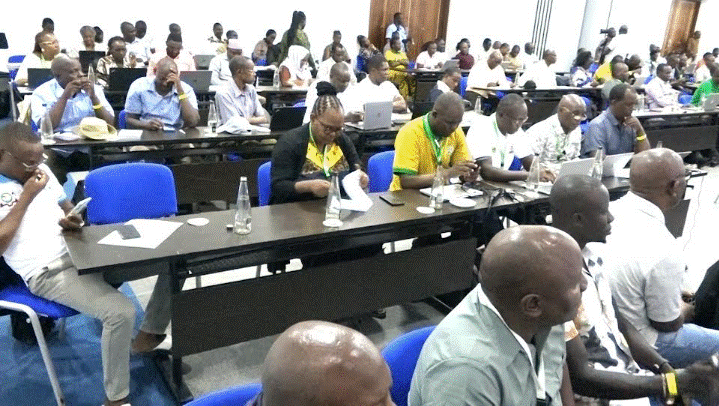
He said this at a Malindi hotel on Wednesday while officially opening this year’s Animal Production Society of Kenya (APSK) Annual Scientific Symposium, whose theme is ‘Pioneering a Climate-Smart Circular Economy for Sustainable, Resilient and a Future-Complaint Livestock Production.’,
He said Kenya should strengthen its capacity to anticipate droughts and other climate-related challenges through early warning systems, noting that predictable weather patterns should enable farmers and policymakers to prepare adequately.
“Anyone can produce milk when there is plenty of pasture, but only smart people can do it during the dry spell,” he said, urging experts to develop strategies that would sustain production even in arid and semi-arid areas.
Prof. Abdulrazak observed that livestock production remained particularly important in arid and semi-arid lands, which account for a substantial proportion of Kenya’s territory and where communities depend on animals for their livelihoods and financial security.
He said livestock should be viewed not merely as an agricultural activity but as a critical pillar of food security, food safety and food sovereignty, with significant opportunities across the production, processing and by-products value chains.
The PS expressed concern over declining interest in agriculture and animal production courses, despite the sector’s economic importance and its role in supporting livelihoods across the country.
He urged professionals to do more to demonstrate the value of livestock farming to society and encourage young people to pursue careers in the sector.
“Livestock is not just about animals. It is about the entire food value chain, from production and processing to the utilisation of by-products,” he said.
Prof. Abdulrazak also challenged researchers and livestock experts to speak more forcefully on matters affecting the sector, arguing that policy decisions should be informed by scientific evidence rather than political rhetoric.
He said stronger collaboration between government agencies, universities, researchers and international institutions, including the International Livestock Research Institute (ILRI), was necessary to accelerate innovation and improve productivity.
The PS identified artificial intelligence as one of the technologies that could transform livestock farming, noting that sensors, cameras and computer algorithms could help farmers monitor animal health, regulate feed intake and improve herd management.
He said AI could also help detect when animals were ready for mating, enabling more precise timing of artificial insemination and improving breeding outcomes.
Other technologies he highlighted included DNA testing, isotope-based techniques, precision breeding, reproductive technologies and biotechnology, which he said could help researchers understand animal genetics, nutrition and productivity better.
Prof. Abdulrazak said Kenya needed to develop livestock breeds that could withstand harsh climatic conditions while meeting the country’s nutritional and production requirements.
He advocated a multidisciplinary approach that brings together animal breeders, nutritionists and other specialists to ensure that livestock breeds are suited to the feed resources and environmental conditions available to farmers.
He cautioned against breeding animals whose nutritional and management requirements farmers could not adequately meet, saying the mismatch could undermine productivity.
“We must ensure that the animals we breed can be managed under our conditions. We need technologies that will enable us to produce more with less,” he said.
The PS further called for the adoption of climate-smart livestock practices and the development of resilient herds capable of maintaining production amid changing weather patterns.
He said investing in research, modern technology and appropriate breeding systems would be essential to strengthening the livestock sector’s contribution to the economy and securing sustainable food supplies.
Prof. Abdulrazak urged livestock professionals to take the lead in developing evidence-based solutions that would help Kenya achieve higher production levels while reducing vulnerability to drought and other climate-related shocks.
Meanwhile, Animal Production Society of Kenya chairman Evans Makokha said the livestock sector had endured severe challenges following the failure of the October-December 2025 rains, which triggered a critical shortage of animal feed and fodder.
Mr Makokha called on the government to support the passage of the Animal Production Professionals and Technicians Bill, which he said is currently before the Cabinet, describing it as a potentially far-reaching reform for the subsector.
He said the proposed legislation would establish a clear regulatory framework for animal production professionals and technicians, promote accountability and ensure that farmers received advice from qualified practitioners.
“The Bill is not about exclusion. It is about ensuring that when a pastoralist in Turkana seeks advice on drought-tolerant fodder, or a dairy farmer in Kiambu invests in improved semen, they receive guidance from someone who has met defined standards of competence,” he said.
Mr Makokha said the proposed law would protect farmers’ livelihoods while raising professional standards and strengthening public confidence in animal production services.
He urged the government to recognise the critical role of trained professionals in addressing livestock productivity challenges, particularly as climate change continues to threaten feed availability and pastoralist livelihoods.
He also called for greater investment in research, technology and professional expertise to strengthen the livestock sector, improve resilience to drought and secure sustainable food supplies.
by Emmanuel Masha


Comments
No comments yet. Be the first to share your thoughts.