
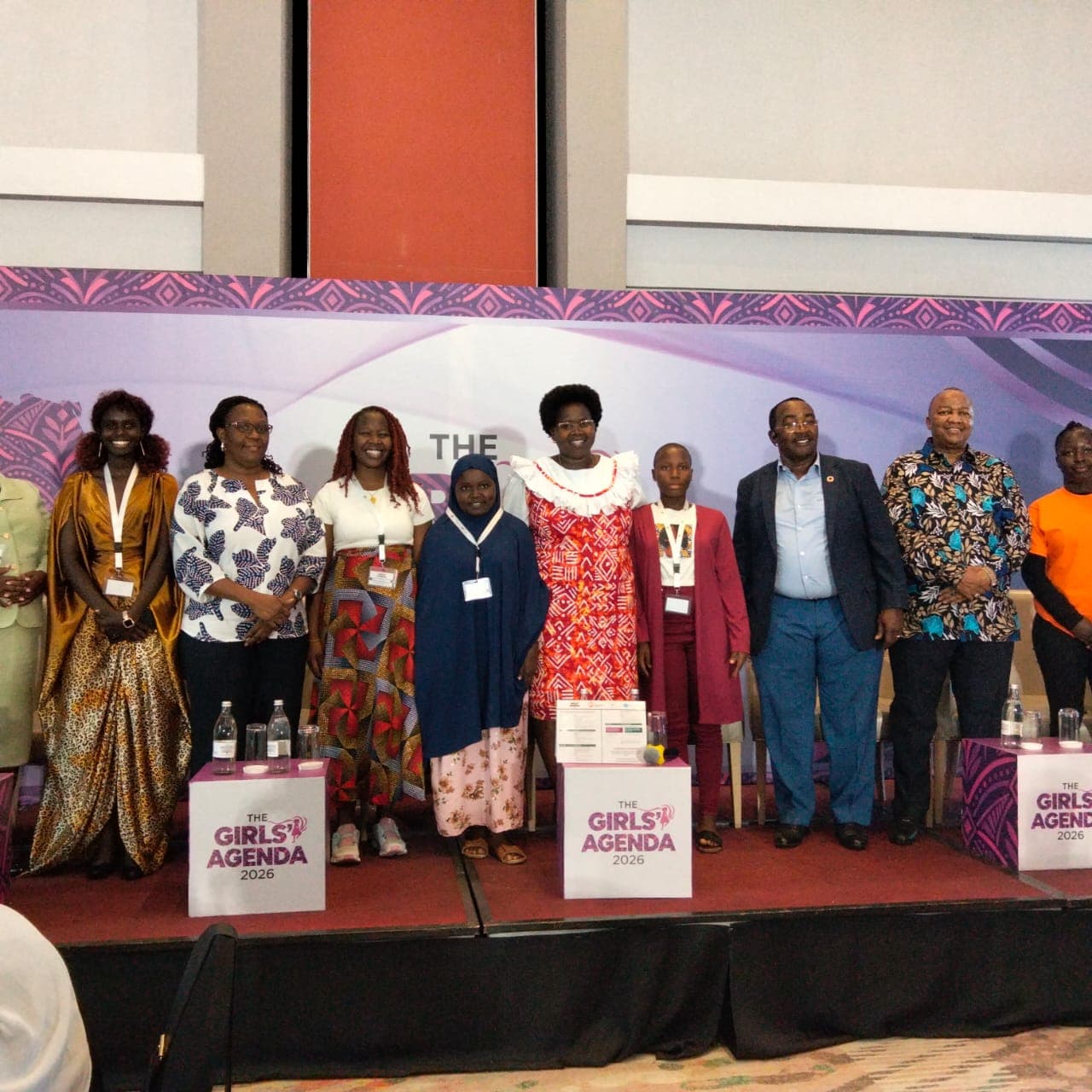
Regional policymakers, state officials, and development advocates convened in Nairobi for the Annual Girls’ Agenda Conference 2026, centering discussions on menstrual health and hygiene (MHH), policy research, and youth economic inclusion.
Held under the theme ‘Sustaining the Girls’ Agenda: Building Systems, Partnerships, and Investments for Lasting Impact’, the three-day forum emphasized that securing dignity and educational retention for adolescent girls requires both policy reform and financial empowerment.
Addressing delegates on economic empowerment, Micro and Small Enterprises Authority (MSEA) Board Chairman Dr. James Mureu underscored the need for women and youth to actively engage with state-backed financing and affirmative action opportunities.
He urged entrepreneurs to leverage government funding windows such as the Hustler Fund, the Wezesha Fund, the Youth Enterprise Development Fund, and the Women Enterprise Fund, which provide interest-free capital for small enterprises.
“There is nothing as dangerous as an idea whose time has come”, Dr. Mureu declared, highlighting that MSEA continues to support grassroots enterprises.
Further, he also reminded delegates of the legally mandated Access to Government Procurement Opportunities (AGPO) scheme, which reserves 30 percent of public procurement for women, youth, and persons with disabilities.
“If you are not on the table discussing these opportunities, you are on the menu being consumed,” the Chairman cautioned.
Adding an international perspective on female leadership, the Honorary Consul for Namibia to Kenya, Mr. Said Ali, encouraged young women to proactively claim their positions in leadership and governance.
Drawing from Namibia’s progress, where women hold key executive, parliamentary, and ministerial roles, Ali urged delegates not to wait for opportunities to be handed to them on a silver platter.
“Compete and earn your place in society. You have the numbers, you have the willpower, and you have the resilience,” he rallied.
Turning to the core theme of menstrual dignity, Ugandan Member of Parliament Faith Nakut stressed that menstrual health must be treated as a fundamental human right rather than an afterthought.
She called for an end to social taboos and urged governments to normalize conversations surrounding MHH across all public sectors.
“Menstruating with dignity means having access to clean water, sanitary products, proper infrastructure, and pain management without fear or stigma,” Nakut explained.
In addition, she emphasized the importance of embedding MHH allocations into national budgets and ensuring those funds are rigorously audited to reach schools and rural communities.
Equally, Rosette Nanyanzi, a Gender and Social Development Specialist from Uganda’s Ministry of Education and Sports, detailed the severe impact of inadequate menstrual management on school attendance.
She pointed out that up to one in ten girls in Africa misses school during her monthly period, resulting in a loss of 20 to 28 percent of total academic learning time.
“We cannot talk about gender equality or achieving Africa’s Agenda 2063 when girls continue to drop out of school due to manageable biological processes,” Nanyanzi stated.
She therefore advocated for regional harmonization of school infrastructure standards, local manufacturing of affordable reusable pads, and the inclusion of boys and community leaders as allies in breaking social taboos.
Reinforcing the imperative for evidence-based governance, Ministry of Health MHH Champion Neville Okwaro emphasized the critical need for targeted research and relevant data measurement to inform government decisions across policy cycles.
“Let us measure what is relevant to the Government and build decisions around policy cycles. Lastly, let us move girls and women from statistics to stakeholders,” Okwaro urged delegates during the MHH side event
Ultimately, the conference concluded with a collective call for multi-sectoral partnerships between health, education, and finance ministries across East Africa to institutionalize gender-responsive budgeting and data-driven systems, ensuring every girl is equipped to remain in school and thrive.
By Lilian Gichohi
Comments
No comments yet. Be the first to share your thoughts.