
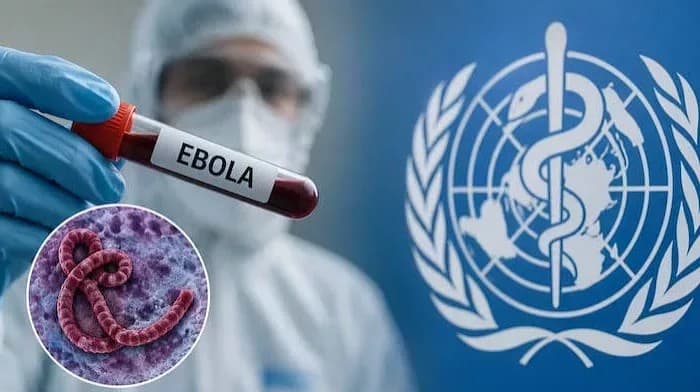
The United Nations has allocated Sh 258 million (USD 2 million), to strengthen Ebola preparedness and response in Kenya.
This will include surveillance at border crossing points, training of frontline health workers and infection prevention measures.
The funding, provided through the Kenya Humanitarian Fund managed by the UN Office for the Coordination of Humanitarian Affairs (OCHA), will support government-led efforts to contain the spread of Bundibugyo virus disease, a strain of Ebola.
According to the UN, the resources will enable humanitarian partners to train rapid response teams, strengthen surveillance at border points, and improve preparedness along high-risk refugee and travel routes, linked to the Kakuma refugee, complex in northwestern Kenya.
The funding will also support the provision of emergency health and infection prevention kits, alongside public awareness campaigns to promote Ebola prevention, early detection and timely reporting of suspected infections.
The backing comes as Kenya continues to respond to an Ebola collection linked to the country’s first confirmed imported case, reported on October 6, 2026.
The Ministry of Health confirmed the initial case in a Kenyan man, who had been living in the Democratic Republic of Congo (DRC) and travelled to Kenya through Uganda, arriving in Nairobi on October 3. He later tested positive for Bundibugyo virus and died on October 5.
The World Health Organization (WHO), has been supporting the Ministry of Health with contact tracing, laboratory testing, case management, infection prevention and control, and screening at points of entry.
In an update on October 26, Kenya’s Ministry of Health Director General, Dr. Patrick Amoth, said that 20 people who had been placed under monitoring had been cleared to return home after completing the mandatory 21-day monitoring period.
Dr. Patrick Amoth said the contacts were in good health and had met the criteria for release, including remaining symptom-free for 21 days since their last exposure, adding that the remaining 98 contacts were expected to be released in four phases beginning November 3, 2026, subject to individual health assessments.
The UN funding is expected to strengthen Kenya’s capacity to detect suspected cases early, protect frontline health workers and prevent further transmission, as authorities sustain surveillance and response measures.
Bundibugyo virus disease is a rare form of Ebola caused by the Bundibugyo virus. It spreads through direct contact with the blood or other bodily fluids of an infected person, or contaminated materials.
Early detection, isolation of suspected cases, contact tracing and infection prevention measures are essential in controlling transmission.
By Wangari Ndirangu
Comments
No comments yet. Be the first to share your thoughts.