
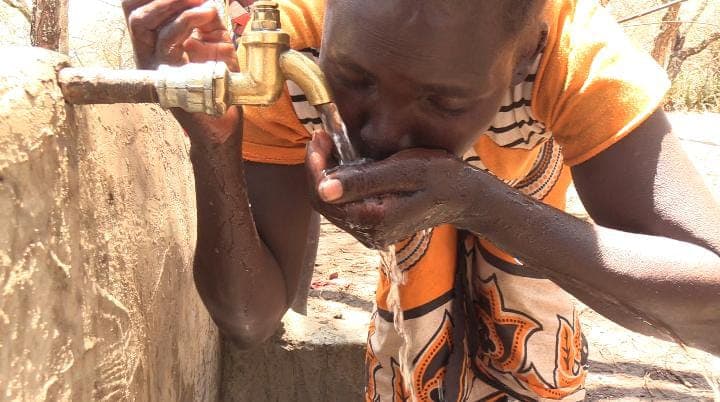
Residents of Longeruk in Pokot North Sub-County have a reason to smile following the construction of the area’s first-ever water well, offering relief to a community grappling with perennial water shortages occasioned by prolonged drought.
The water project, initiated by Pokot South MP David Pkosing, is expected to improve access to clean water for domestic use, support livestock rearing, and ease the burden on residents who have endured months of water scarcity.
The residents said the area last received rainfall in June last year, triggering a prolonged dry spell that has forced some pastoralists to migrate to neighbouring Uganda in search of water and pasture for their livestock.
Chemkei Kember, a resident, said women had borne the brunt of the water crisis, walking long distances in search of the precious commodity, often settling for unsafe sources.
She said the prolonged drought had dried up most rivers and streams that communities traditionally relied on for their water needs.
“We always depend on river water when the rains fall. As you can see, this place is mountainous, but this time all the streams have dried up, and the closest place where one can get water is over six kilometres away,” said Kember.
The residents appealed to both the national and county governments to establish more water projects in the marginalised area to cushion communities against recurrent drought.
Cheyech said the government should also prioritise the construction of water pans to harvest and store rainwater for use during prolonged dry spells, although the ever-existing ones dried up.
“The government should also help in the construction of water pans to store more water when it rains and harvest surface runoff,” she said.
The drought has severely affected pastoralist communities, with more than 40,000 residents across several villages reportedly facing acute water shortages for domestic consumption and livestock.
In some areas, residents have resorted to digging in dry riverbeds or laghas in search of underground water for drinking and watering their livestock.
The worsening situation has also triggered cross-border migration, with pastoralists moving into Uganda in search of water and pasture.
The movement has, at times, complicated the capture of population statistics and voter registration in the affected areas, as some residents remain away from their homes for extended periods.
The newly constructed well is expected to bring water closer to households, improve access to safe water for schools and health facilities, and help revive livestock production in the drought-stricken area.
Residents expressed hope that the project would mark the beginning of sustained investment in water infrastructure to address the region’s long standing water challenges.
By Richard Muhambe
Comments
No comments yet. Be the first to share your thoughts.